

You’ll want rugged, multi‑stage systems that match your well’s issues: PUREPLUS or Membrane Solutions cartridges handle heavy sediment; iSpring WGB32BM targets iron, manganese and chlorine with catalytic media; Express Water’s 3‑stage setup tackles metals, PFAS and chloramine while giving handy gauges; Aquasana EQ‑WELL‑UV‑PRO‑AST adds UV for bacteria/viruses and long service life. Check flow, pressure, certifications and test your water first so you pick the right combo—keep going to get model‑specific fit and maintenance tips.
| PUREPLUS 5 Micron 10″ x 4.5″ Whole House Pleated Sediment Filter for Well Water Replacement Cartridge for GE FXHSC Culligan R50-BBSA Pentek R50-BB DuPont WFHDC3001 W50PEHD GXWH40L 2Pack | 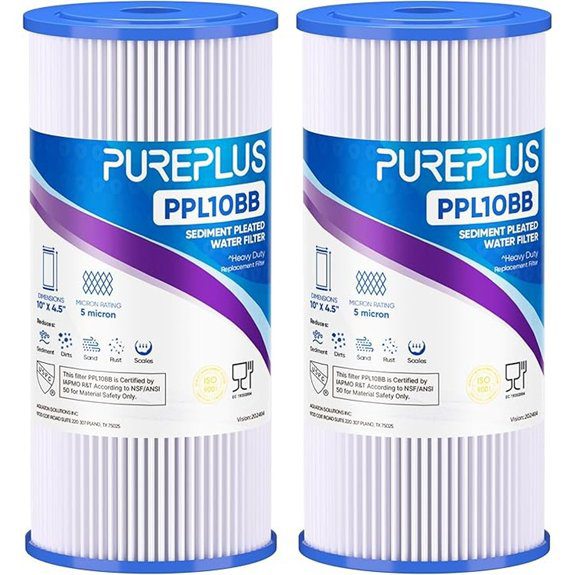 | Best Value | Intended use: Whole-house / well water sediment filtration | Filtration target: Sediment (sand, rust, silt, color) | Micron or stage capability: 5-micron pleated filter | VIEW LATEST PRICE | Read Our Analysis |
| Membrane Solutions 5 Micron 10″x2.5″ String Wound Whole House Water Filter Replacement Cartridge Universal Sediment Filters for Well Water – 6 Pack | 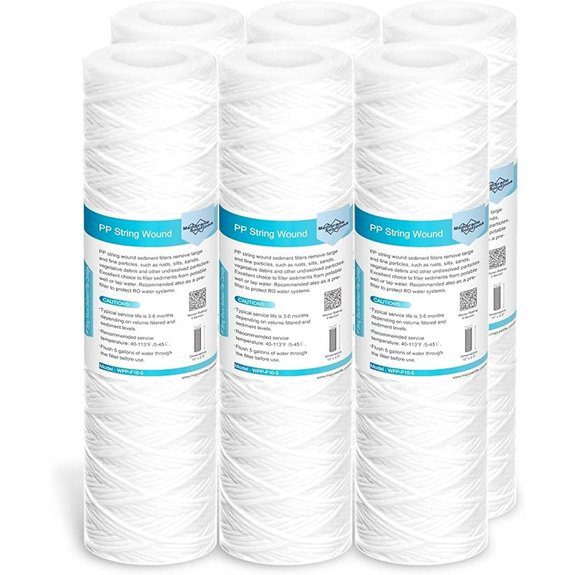 | Budget-Friendly Pick | Intended use: Whole-house / well water sediment prefilter | Filtration target: Sediment (rust, silt, sand, particulates) | Micron or stage capability: 5-micron string-wound filter | VIEW LATEST PRICE | Read Our Analysis |
| Express Water 3-Stage Whole House Water Filter System Reduces Heavy Metals Scale Chloramine Chlorine PFAs Lead & Arsenic Free-standing Stainless Steel Frame & 3 Pressure Gauges | 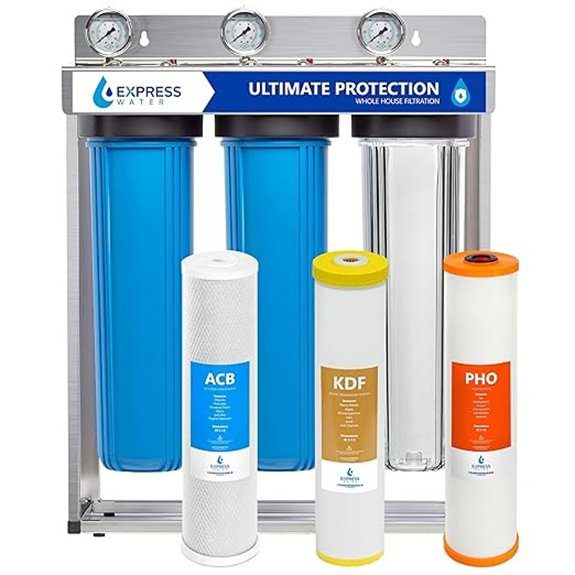 | Advanced Contaminant Reduction | Intended use: Whole-house treatment for well water | Filtration target: Sediment plus chemicals/contaminants (chlorine, heavy metals, PFAs) | Micron or stage capability: Multi-stage system (includes sediment removal stage) | VIEW LATEST PRICE | Read Our Analysis |
| iSpring Whole House Water Filter System Reduces Iron Manganese Chlorine Sediment Taste and Odor 3-Stage Iron Filter Whole House Model: WGB32BM | 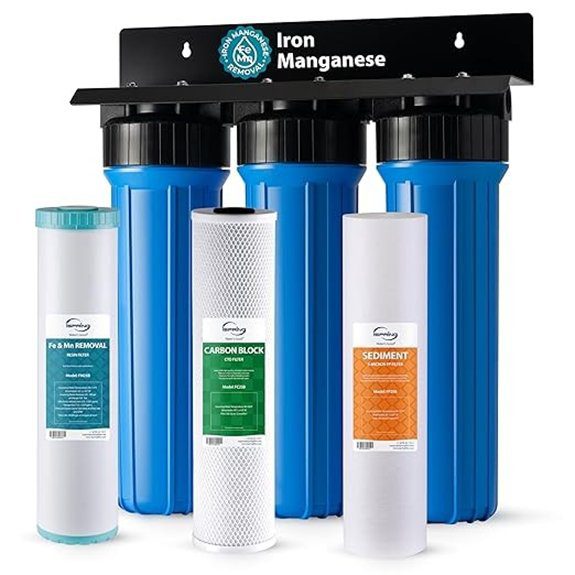 | Best for Iron Removal | Intended use: Whole-house treatment for well water (iron systems) | Filtration target: Sediment plus iron, manganese, chlorine, taste/odor | Micron or stage capability: Stage 1: 5-micron sediment cartridge | VIEW LATEST PRICE | Read Our Analysis |
| Aquasana Whole House Well Water Filter | 500K Gallons | UV Carbon & KDF | Salt-Free Softener Alternative | Install Kit | Tackles up to 99.99% Chlorine Bacteria Viruses & Scale | EQ-WELL-UV-PRO-AST | 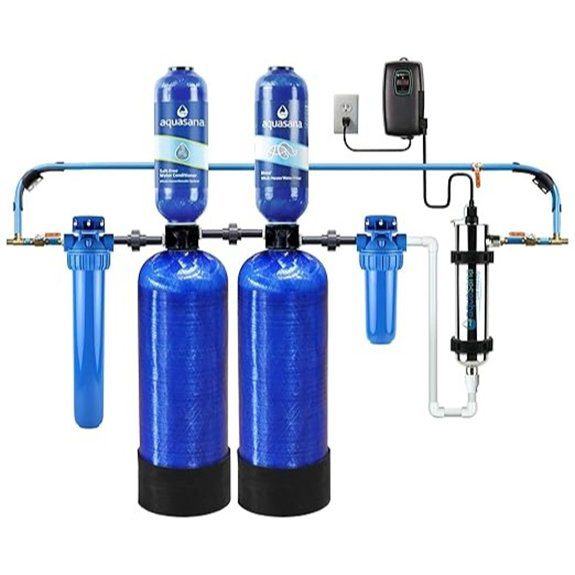 | Premium Whole-House Protection | Intended use: Whole-house treatment for private well water | Filtration target: Sediment plus biological/chemical contaminants (bacteria, chlorine, VOCs, metals) | Micron or stage capability: Includes pre-filter (sediment stage) as part of multi-stage system | VIEW LATEST PRICE | Read Our Analysis |
More Details on Our Top Picks
PUREPLUS 5 Micron 10″ x 4.5″ Whole House Pleated Sediment Filter for Well Water Replacement Cartridge for GE FXHSC Culligan R50-BBSA Pentek R50-BB DuPont WFHDC3001 W50PEHD GXWH40L 2Pack
If you have well water with visible sand, rust, or sediment and want a low-maintenance, high-capacity solution, the PUREPLUS 5‑micron pleated whole‑house cartridge is a strong choice—it’s built to trap up to 99% of particulate while maintaining high flow and can last up to about 30,000 gallons depending on your water quality. You’ll get a 10″ x 4.5″ washable pleated filter that fits common housings and replaces GE FXHSC, Culligan R50‑BBSA, Pentek R50‑BB, DuPont WFHDC3001 and equivalents. It’s made from food‑grade, BPA‑free materials, produced under ISO standards, pressure‑tested, and sold in convenient multi‑packs. Replace every 3–6 months.
- Intended use:Whole-house / well water sediment filtration
- Filtration target:Sediment (sand, rust, silt, color)
- Micron or stage capability:5-micron pleated filter
- Replacement / service interval:Replace every 3–6 months (depending on use)
- Compatibility / system type:10″ x 4.5″ standard cartridge (fits common housings and brand equivalents)
- Certifications / safety materials:Food-grade materials (EC1935-2004), REACH, BPA-free; ISO 9001 / ISO 14000 production
- Additional Feature:Pleated washable design
- Additional Feature:30,000-gallon capacity
- Additional Feature:Extensive production testing
Membrane Solutions 5 Micron 10″x2.5″ String Wound Whole House Water Filter Replacement Cartridge Universal Sediment Filters for Well Water – 6 Pack
Homeowners with well water heavy in rust, silt, or sand will appreciate the Membrane Solutions 5‑micron string‑wound cartridges, which use a graded, deep‑pleat design to trap large particles on the outside and finer sediment toward the core. You get six 10″ x 2.5″ polypropylene, lead‑free cartridges that NSF tested for material safety (NSF/ANSI 42). They claim up to 99% sediment removal, four times the dirt‑holding capacity and double the flow of standard PP filters, and service lives up to 15,000–20,000 gallons depending on water quality. Use them as whole‑house or RO prefilters and replace every six months.
- Intended use:Whole-house / well water sediment prefilter
- Filtration target:Sediment (rust, silt, sand, particulates)
- Micron or stage capability:5-micron string-wound filter
- Replacement / service interval:Replace at least every 6 months (or up to 15k–20k gallons)
- Compatibility / system type:10″ x 2.5″ standard cartridge (fits standard 10″ housings)
- Certifications / safety materials:100% food-grade polypropylene; NSF/ANSI material testing (NSF certified)
- Additional Feature:String-wound graded core
- Additional Feature:6-pack economy set
- Additional Feature:NSF/ANSI 42 tested
Express Water 3-Stage Whole House Water Filter System Reduces Heavy Metals Scale Chloramine Chlorine PFAs Lead & Arsenic Free-standing Stainless Steel Frame & 3 Pressure Gauges
Choose the Express Water 3-stage system when you need whole-home protection against heavy metals and PFAs while keeping scale and sediment out of your plumbing. You get a 3-stage setup that treats every faucet, with a heavy-duty stainless steel free-standing frame and pressure-release buttons for easier cartridge changes. Three pressure gauges let you monitor performance, while polyphosphate prevents scale and sediment filters protect pipes and appliances. It reduces chlorine, chloramine, lead, arsenic, mercury, chromium, cadmium, and PFAs. Expect filter changes every 6–12 months or ~100,000 gallons; flow is about 0.25 gps at 45–80 PSI. It won’t lower TDS.
- Intended use:Whole-house treatment for well water
- Filtration target:Sediment plus chemicals/contaminants (chlorine, heavy metals, PFAs)
- Micron or stage capability:Multi-stage system (includes sediment removal stage)
- Replacement / service interval:Replace filters every 6–12 months (or ~100,000 gallons per manufacturer guidance)
- Compatibility / system type:Integrated 3-stage whole-house system (installed at point of entry)
- Certifications / safety materials:(Described testing/specs) Pressure gauges and engineered system; manufacturer performance claims (third-party testing implied)
- Additional Feature:Free-standing stainless frame
- Additional Feature:Built-in pressure gauges
- Additional Feature:Polyphosphate anti-scale
iSpring Whole House Water Filter System Reduces Iron Manganese Chlorine Sediment Taste and Odor 3-Stage Iron Filter Whole House Model: WGB32BM
For well owners dealing with moderate iron and manganese who want a low-maintenance, whole-house solution, the iSpring WGB32BM stands out for its targeted 3-stage design that treats iron (up to 3.0 ppm), manganese (up to 1.0 ppm), sediment, chlorine, taste, and odor while leaving beneficial minerals intact. You’ll get a 5-micron polypropylene sediment pre-filter, a coconut-shell carbon block for chlorine and organics, and FM25B catalytic media for iron/manganese that lasts up to three times longer than greensand. Each 20″x4.5″ cartridge filters ~100,000 gallons, supports 15 GPM, uses 1″ NPT fittings, is DIY-friendly, and includes U.S.-based support and a one-year warranty.
- Intended use:Whole-house treatment for well water (iron systems)
- Filtration target:Sediment plus iron, manganese, chlorine, taste/odor
- Micron or stage capability:Stage 1: 5-micron sediment cartridge
- Replacement / service interval:Cartridges rated ~100,000 gallons (annual replacement guidance for family of four)
- Compatibility / system type:Integrated 3-stage whole-house system (20″ x 4.5″ cartridges, 1″ NPT)
- Certifications / safety materials:Independently third-party tested to meet NSF/ANSI standards
- Additional Feature:Catalytic iron media
- Additional Feature:20″ x 4.5″ cartridges
- Additional Feature:1″ NPT connections
Aquasana Whole House Well Water Filter | 500K Gallons | UV Carbon & KDF | Salt-Free Softener Alternative | Install Kit | Tackles up to 99.99% Chlorine Bacteria Viruses & Scale | EQ-WELL-UV-PRO-AST
If you rely on a private well and want comprehensive, low-maintenance protection at every tap, the Aquasana EQ-WELL-UV-PRO-AST is built to handle large households and long service intervals—treating up to 500,000 gallons (about five years) with multi-stage carbon, KDF, salt-free scale control, and UV disinfection for bacteria, viruses, chlorine, and scale without adding salt or stripping minerals. You’ll get a pre-filter, main HDPE tank, post-filter, UV unit, and pro-grade install kit. It conditions (not softens) water, preserves minerals, supports up to 14.7 GPM, and suits homes with hardness under 15 gpg; five-year warranty.
- Intended use:Whole-house treatment for private well water
- Filtration target:Sediment plus biological/chemical contaminants (bacteria, chlorine, VOCs, metals)
- Micron or stage capability:Includes pre-filter (sediment stage) as part of multi-stage system
- Replacement / service interval:Up to 5 years for main media (system rated to 500,000 gallons); includes pre-filter replacement needs
- Compatibility / system type:Integrated whole-house system with pre-filter, main tank, UV and install kit
- Certifications / safety materials:Food-grade HDPE tank; product testing and rated performance; 5-year limited warranty
- Additional Feature:Integrated UV disinfection
- Additional Feature:Salt-free scale control
- Additional Feature:500,000-gallon lifespan
Factors to Consider When Choosing a Whole House Water Filter for Well
Before you pick a whole house filter for your well, get a water quality test so you know what contaminants you’re dealing with. Match those contaminant targets to the right filtration technologies and check system flow rate, capacity, and expected lifespan to ensure reliable performance. That way you’ll choose a system that handles your specific needs without undersizing or overpaying.
Water Quality Testing
Why test your well water thoroughly? You need a broad panel—bacteria (total coliform/E. coli), iron, manganese, nitrate/nitrite, hardness (Ca/Mg), pH, TDS, and turbidity—to capture microbial, dissolved, and particulate issues common to wells. Use certified labs for comprehensive testing ($50–$300) and do basic in-home checks (pH strips, TDS meter, turbidity tube) for interim monitoring. Test at least annually for bacteria and nitrates, every 2–3 years for most inorganics, and immediately after repairs, flooding, or odd taste/clarity changes. Collect samples per lab instructions: sterile bottles, purge lines, avoid contamination, and log well depth, last pump service, season, and nearby land-use. Compare results to EPA or state action levels to prioritize treatment.
Contaminant Targets
When choosing a whole-house filter for your well, start by matching the system to the contaminants your water test shows so you get the right media and capacity for the job. Test results (iron ppm, manganese ppm, hardness gpg, bacterial presence, PFAS ppt) tell you what to target: use graded, pleated, or wound particulate filters (5 micron or finer) for sediment and rust; catalytic or oxidizing media for iron and manganese; activated or catalytic carbon for chlorine, chloramine, and many organics including some PFAS. For microbiological risks, add certified disinfection like UV or a rated membrane—carbon and sediment filters won’t reliably remove pathogens. If hardness bothers you, choose a salt-free scale controller or a water softener. Multi-stage setups combine these elements to match varied profiles.
Filtration Technologies
Although no single technology handles every well-water issue, you’ll usually combine several to protect your plumbing and match your contaminant profile. Start with mechanical sediment filters (pleated, string-wound, spun polypropylene) to remove particulates (1–50 μm) and shield downstream media; their life depends on sediment load. Use activated carbon (granular or block) for chlorine, organics, VOCs, tastes and odors—performance depends on carbon type, contact time, and flow. Add KDF (copper-zinc) to reduce chlorine, some heavy metals, and limit bacterial growth; it pairs well with carbon. For dissolved contaminants like hardness, iron, manganese or ammonium, choose ion-exchange or catalytic media with finite capacity and regeneration schedules. If microbial contamination is a concern, UV disinfection inactivates pathogens but needs low turbidity prefiltration and uninterrupted power.
System Flow Rate
Start by matching the filter’s continuous flow rating (GPM) to your household’s peak simultaneous demand — add up showers, appliances, and outdoor uses — and choose a system rated at or above that total. Include typical fixture flows (showers ~2.5 GPM, washer 2–3 GPM, dishwasher 1–2 GPM). Verify the stated GPM at realistic operating pressure (e.g., 45–80 PSI) because lower incoming pressure reduces actual flow. Account for pressure drop by picking media and cartridge designs with ample surface area (pleated or larger elements) so pressure at fixtures stays adequate during peak use. For high-sediment wells, build margin by using higher dirt-holding media or a prefilter. If you have a specific pump, booster, or irrigation, confirm system peak and continuous specs to avoid cavitation or pressure swings.
Capacity And Lifespan
Because your well water’s sediment load and household habits vary, match a filter’s capacity and rated service life to the gallons you actually use so you won’t be changing cartridges prematurely. Estimate daily household usage and multiply by days between planned replacements to pick a cartridge with adequate gallon or dirt-holding capacity. Check manufacturers’ rated service life (15,000–100,000+ gallons) and convert to months so you replace on schedule before performance drops. Balance micron rating and media capacity: finer microns trap smaller particles but shorten service life unless you add larger-capacity or pre-sediment stages. For heavy sediment, choose high dirt-holding, pleated, or washable elements to extend intervals. Also confirm flow-rate capacity matches peak demand—undersized filters clog faster and shorten lifespan.
Maintenance Requirements
When sizing and selecting a whole-house filter for well water, consider not just cartridge life but the routine upkeep you’ll need to keep water quality and flow steady. Check recommended replacement intervals for each stage—sediment prefilters typically every 3–6 months, carbon or catalytic media 6–12 months, and specialty media or UV lamps per manufacturer guidance. Monitor pressure differentials with gauges or pressure-release buttons; a rising pressure drop means clogging and signals cleaning or replacement. Keep spare cartridges and basic tools (precut O-rings, lubricant, wrench) so you can change parts quickly. Always follow manufacturer sanitization and flushing procedures when swapping media to avoid particulates or bacterial growth. Log service dates, flow rates, and inlet quality since heavy sediment shortens filter life.
Installation And Space
Although you’ll probably focus on filter media and flow rates, plan the installation space early so maintenance and performance aren’t compromised. Measure your mechanical room or basement and leave 24–36 inches vertically and 6–12 inches laterally for cartridge removal. Verify the incoming main line diameter and pick a filter housing with matching pipe sizes (¾”–1″ or larger), plus room for shutoff valves and a bypass loop. If the system has powered components like a UV lamp or controller, provide a nearby grounded outlet and 12–18 inches of service space. Account for weight—tanks or multi-cartridge assemblies can weigh 50–200+ pounds full—so ensure a sturdy floor, wall support, or free‑standing frame. Allow drainage and position pressure gauges at eye level.
Certifications And Standards
After you’ve planned space and access for the equipment, check the filter’s certifications and standards so you know it’ll perform as promised and be safe for long-term use. Look for third-party NSF/ANSI approvals: 42 for chlorine/aesthetics, 53 for health-related contaminants, and 61 for component safety. Verify material and food-contact compliance (e.g., EC1935/2004 equivalents or NSF material requirements) so housings and media are lead-free, BPA-free, and non-toxic. Check manufacturer quality systems like ISO 9001 and ISO 14001 and request documented factory tests for pressure, flow, and durability. Confirm each certification’s scope—some cover only materials, not contaminant reduction. Finally, ensure test conditions (rated flow, influent levels, lifespan gallons) reflect your household’s expected well-water use.