
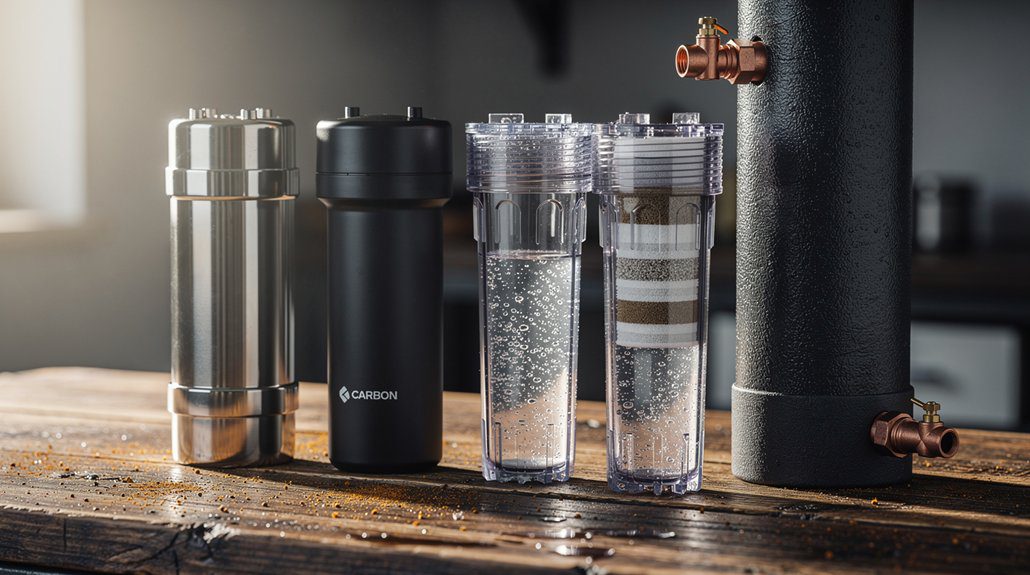
Look for whole‑house systems that handle iron, manganese and sulfur while keeping flow steady. Top picks include Waterdrop WD‑WHF21‑FG (5‑stage iron/manganese reduction + GAC), iSpring WGB32BM (3‑stage with catalytic media), PUREPLUS 1‑stage housing with iron‑reducing composite, Fleck 5600 SXT air‑injection iron eater, and Durawater air‑injection Black Series. Match media to your iron form, concentration and temperature, size by peak GPM and cartridges’ capacity — keep going and you’ll get sizing, media and installation tips.
| Waterdrop Whole House Water Filter System Reduce Iron & Manganese with Carbon and Sediment Filters 5-Stage Filtration Reduce Iron Lead Chlorine Odor 2-Stage WD-WHF21-FG 1″ Inlet/Outlet | 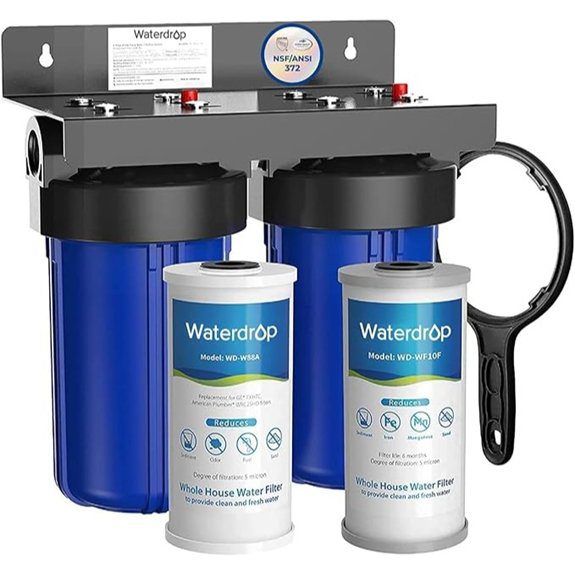 | Best for Iron Removal | Target contaminants: Iron, manganese, chlorine, lead, rust, odor, taste, particulates | Installation type: Whole-house system | Filter media/technology: Multi-stage (GAC coconut shell + iron/manganese reducing + sediment) | VIEW LATEST PRICE | Read Our Analysis |
| iSpring Whole House Water Filter System Reduces Iron Manganese Chlorine Sediment Taste and Odor 3-Stage Iron Filter Whole House Model: WGB32BM | 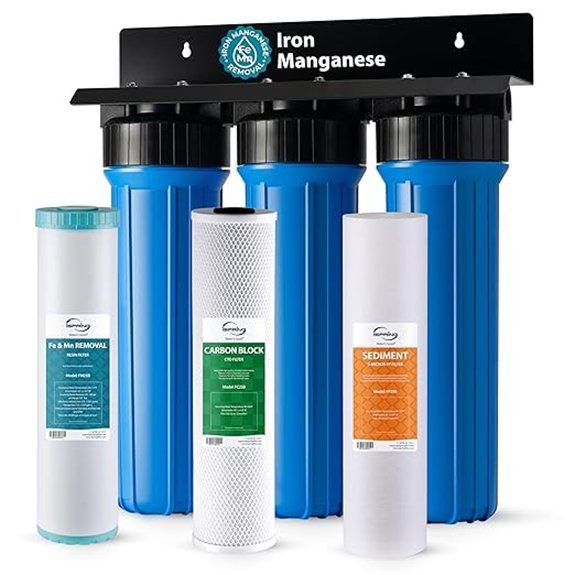 | Best Flow & Capacity | Target contaminants: Iron, manganese, chlorine, sediment, rust, taste, odor, herbicides, solvents | Installation type: Whole-house system (main supply line) | Filter media/technology: Multi-stage (polypropylene sediment + coconut-shell carbon block + catalytic iron/manganese media) | VIEW LATEST PRICE | Read Our Analysis |
| PUREPLUS 1-Stage Whole House Water Filter with Iron Manganese Reducing Water Filter for Well Water 10″x4.5″ Universal Housing | 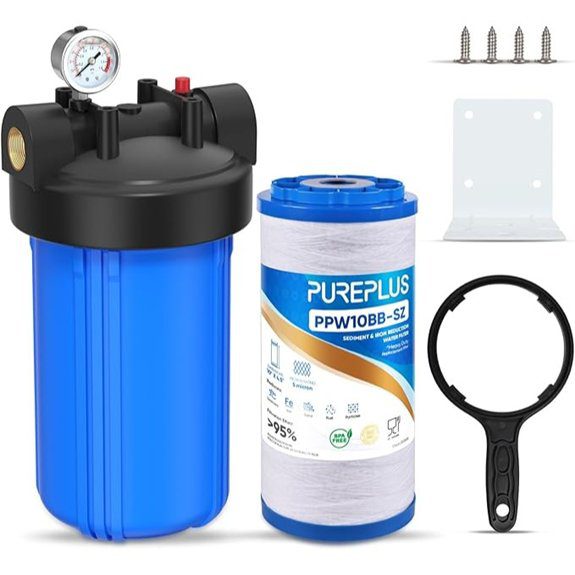 | Simple Well Solution | Target contaminants: Iron, manganese, sediment, rust, heavy metals | Installation type: Whole-house system (10″ x 4.5″ housing) | Filter media/technology: Iron-removal media + sediment/carbon-compatible cartridge(s) | VIEW LATEST PRICE | Read Our Analysis |
| Fleck 5600 SXT Air Injection Iron Eater Filter. Removes Iron Manganese H2S. Black Series. 1.5 cubic ft | 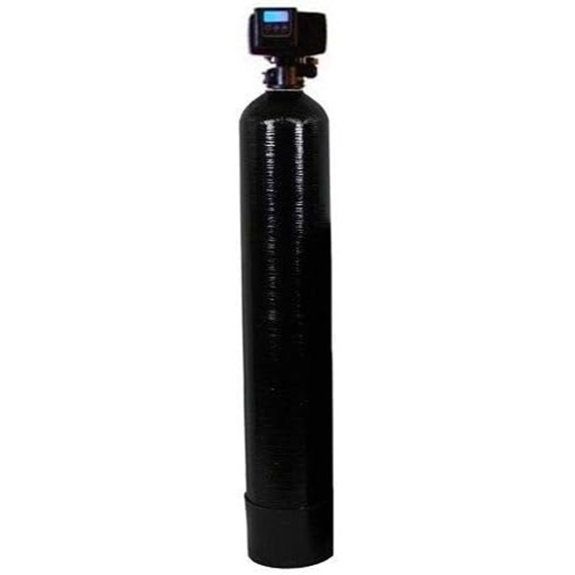 | Professional Grade Filtration | Target contaminants: Iron, manganese, hydrogen sulfide (H2S/sulfur) | Installation type: Whole-house iron filter (installed at well/point-of-entry) | Filter media/technology: Catalytic carbon with air-injection oxidation | VIEW LATEST PRICE | Read Our Analysis |
| Fleck 5600 SXT Air Injection Iron Eater Filter. Removes Iron Manganese H2S. Black Series. 1.5 cubic ft | | Heavy-Duty Sulfur & Iron Fix | Target contaminants: Iron, manganese, hydrogen sulfide (H2S/sulfur) | Installation type: Whole-house iron filter (installed at well/point-of-entry) | Filter media/technology: Catalytic carbon with air-injection oxidation | VIEW LATEST PRICE | Read Our Analysis |
More Details on Our Top Picks
Waterdrop Whole House Water Filter System Reduce Iron & Manganese with Carbon and Sediment Filters 5-Stage Filtration Reduce Iron Lead Chlorine Odor 2-Stage WD-WHF21-FG 1″ Inlet/Outlet
If you’re dealing with iron- and manganese-stained well water and want whole-house protection, the Waterdrop WD-WHF21-FG is a solid choice—it combines a 5-stage setup (including an iron/manganese-reducing filter, coconut-shell GAC, and sediment removal >5 µm) to cut iron up to 99.3% and manganese up to 96.8%, protecting pipes and appliances while improving taste and odor. You’ll get a 1″ inlet/outlet, 10″ x 4.5″ cartridges rated for 50,000 gallons or about six months, and NSF/ANSI 372 lead compliance. It handles 25–90 psi, 40–100°F, removes chlorine, rust, lead, and particulates, and installs DIY with included wrench.
- Target contaminants:Iron, manganese, chlorine, lead, rust, odor, taste, particulates
- Installation type:Whole-house system
- Filter media/technology:Multi-stage (GAC coconut shell + iron/manganese reducing + sediment)
- Sediment rating / particle removal:Sediment removal down to 5 microns
- DIY-friendly installation / maintenance:DIY-friendly; includes wrench and installation notes
- Operating temperature / limits:Working temperature 4–38°C (40–100°F); do not use below 40°F
- Additional Feature:50,000-gallon capacity
- Additional Feature:NSF/ANSI 372 certified
- Additional Feature:Passed 100,000+ water-hammer tests
iSpring Whole House Water Filter System Reduces Iron Manganese Chlorine Sediment Taste and Odor 3-Stage Iron Filter Whole House Model: WGB32BM
Homeowners dealing with moderate iron and manganese levels will appreciate the iSpring WGB32BM, a 3-stage whole-house system that removes up to 3.0 ppm iron and 1.0 ppm manganese while keeping healthy minerals in your water. You get a 5-micron polypropylene sediment stage, a coconut-shell carbon block for chlorine, taste, and organic contaminants, and an FM25B catalytic media that lasts up to three times longer than greensand. Each 20″ cartridge treats about 100,000 gallons (roughly a year for a family of four). It supports up to 15 GPM, uses 1″ NPT fittings, is DIY-friendly, NSF-tested, and backed by U.S. support.
- Target contaminants:Iron, manganese, chlorine, sediment, rust, taste, odor, herbicides, solvents
- Installation type:Whole-house system (main supply line)
- Filter media/technology:Multi-stage (polypropylene sediment + coconut-shell carbon block + catalytic iron/manganese media)
- Sediment rating / particle removal:Sediment filtration down to 5 microns (stage 1)
- DIY-friendly installation / maintenance:DIY installation; manuals and video instructions available
- Operating temperature / limits:No specific temp range listed (designed for normal household water temperatures)
- Additional Feature:20″ x 4.5″ cartridges
- Additional Feature:Up to 15 GPM flow
- Additional Feature:1-year warranty with registration
PUREPLUS 1-Stage Whole House Water Filter with Iron Manganese Reducing Water Filter for Well Water 10″x4.5″ Universal Housing
For well owners dealing with iron and manganese, the PUREPLUS 1-Stage whole-house filter is a practical choice because it combines iron-reducing media with a universal 10″ x 4.5″ housing that fits common cartridges and keeps household water clear without complex installs. You’ll get a composite cartridge that targets sediment, rust, iron, manganese, and heavy metals while maintaining high flow to preserve household pressure. Installation’s straightforward with a steel mounting bracket, wrench, O-ring, screws, and a pressure-release valve. The food-grade polypropylene housing tolerates up to 100°F, supports TDS up to 500 ppm, and aims for durable, low-maintenance service.
- Target contaminants:Iron, manganese, sediment, rust, heavy metals
- Installation type:Whole-house system (10″ x 4.5″ housing)
- Filter media/technology:Iron-removal media + sediment/carbon-compatible cartridge(s)
- Sediment rating / particle removal:Removes sediment (fits 10″ x 4.5″ sediment cartridges)
- DIY-friendly installation / maintenance:Easy installation; includes mounting bracket, wrench, screws, O-ring
- Operating temperature / limits:Upper temperature rating 100°F
- Additional Feature:Universal 10″x4.5″ housing
- Additional Feature:Includes mounting bracket
- Additional Feature:Red pressure-release valve
Fleck 5600 SXT Air Injection Iron Eater Filter. Removes Iron Manganese H2S. Black Series. 1.5 cubic ft
Choose the Fleck 5600 SXT Air Injection Iron Eater if you need a DIY-friendly whole-house filter that tackles high iron, hydrogen sulfide, and manganese levels—its air-injection oxidation plus 1.5 cu ft of catalytic carbon handles up to 12 ppm iron, 10 ppm H2S, and 2 ppm manganese while the digital 5600 SXT control automates backwash and regeneration. You’ll get the Fleck Black Series durability and Centaur catalytic carbon for enhanced contaminant removal. Installation is aimed at homeowners with basic plumbing skills and includes instructions. The system’s automated cycles reduce maintenance, and the air pocket oxidation improves filter longevity and performance.
- Target contaminants:Iron, manganese, hydrogen sulfide (H2S/sulfur)
- Installation type:Whole-house iron filter (installed at well/point-of-entry)
- Filter media/technology:Catalytic carbon with air-injection oxidation
- Sediment rating / particle removal:Designed to remove oxidized particulates after air injection (specs imply particulate removal)
- DIY-friendly installation / maintenance:Designed for DIY installation with instructions
- Operating temperature / limits:Not specified (designed for well-water treatment; typical ambient/household temps)
- Additional Feature:1.5 cu.ft. media volume
- Additional Feature:Digital 5600 SXT control
- Additional Feature:Air-injection oxidation
Fleck 5600 SXT Air Injection Iron Eater Filter. Removes Iron Manganese H2S. Black Series. 1.5 cubic ft
If you need a compact, high‑capacity solution for well water with heavy iron, manganese, or sulfur, the Durawater Black Series HD Air Injection Iron Eater is built for you. You’ll get digital control for precise regeneration and an air injection system that creates an air pocket to super‑oxidize contaminants, improving filtration. It handles iron up to 12 ppm, hydrogen sulfide up to 10 ppm, and manganese up to 2 ppm. Installation’s straightforward with provided instructions and only basic plumbing skills required. The Black Series design is space‑efficient and reliable, making it a strong choice for homes dealing with stubborn well water issues.
- Target contaminants:Iron, manganese, hydrogen sulfide (H2S/sulfur)
- Installation type:Whole-house iron filter (installed at well/point-of-entry)
- Filter media/technology:Catalytic carbon with air-injection oxidation
- Sediment rating / particle removal:Designed to remove oxidized particulates after air injection (specs imply particulate removal)
- DIY-friendly installation / maintenance:Easy to install with provided instructions
- Operating temperature / limits:Not specified (designed for well-water treatment; typical ambient/household temps)
- Additional Feature:HD digital control
- Additional Feature:Air-injection oxidation
- Additional Feature:Black Series cosmetic finish
Factors to Consider When Choosing a Water Filter for Well Water With Iron
Before you pick a filter, check your well water for iron and manganese levels so you know what removal capacity you need. Consider the filter media type, required flow rate and capacity, plus how easy installation and routine maintenance will be. Also confirm the unit’s operating temperature range matches your well conditions to ensure reliable performance.
Iron And Manganese Levels
Start by testing your well water so you know the exact iron and manganese concentrations and species present, since treatment choices hinge on those numbers—ferrous (clear‑water) iron, ferric (red‑water) iron, and organic‑bound iron behave differently and require different methods. Once you have ppm (mg/L) results, match treatment to levels: low iron (<0.3 ppm) often needs different approaches than high iron (>3 ppm). Identify speciation because soluble ferrous iron needs oxidation then removal, ferric iron responds to sediment filtration, and organic‑bound iron may resist standard oxidizers. Treat manganese separately—noticeable above ~0.05–0.1 ppm—and consider catalytic/oxidizing options when it coexists with iron. Calculate total load (concentration × daily use) to size media and anticipate maintenance, noting pH, DO, sulfide, and organics affect effectiveness.
Filter Media Type
Choosing the right filter media is the single most important decision you’ll make for treating well water with iron, because media type determines how iron (and often manganese or organics) is transformed and removed. Oxidizing media (catalytic carbon, manganese greensand, or air-injection–compatible media) converts soluble ferrous iron to insoluble ferric iron so you can trap it; it’s effective from trace levels up to several ppm depending on media volume. Adsorptive media like GAC helps with dissolved organics and taste/odor but won’t handle high soluble iron without prior oxidation. Ion-exchange resins remove ferrous iron by swapping ions for sodium or potassium, suited for low-to-moderate iron and requiring regeneration. Biological or manganese-oxide media can remove manganese and some iron species but need correct pH, oxygen, backwash, and maintenance.
Flow Rate And Capacity
When sizing a filter for well water with iron, match the system’s maximum flow rate (GPM) to your household’s peak demand so showers, appliances, and faucets all get adequate pressure without significant drop; add up fixture flow rates (shower ~2–2.5 GPM, dishwasher ~1.5 GPM) and choose a whole‑house unit that meets or exceeds that combined GPM. Also check cartridge/media capacity (gallons or media volume) and the vendor’s iron‑loading rating so you know when effectiveness will decline. Factor your water’s iron ppm and daily usage to pick larger‑capacity cartridges or plan replacements sooner. Verify the system’s micron rating and design (sediment prefilter vs catalytic media) to avoid clogging at peak GPM. Confirm operating pressure and pipe‑size compatibility so the filter can actually deliver the advertised flow.
Installation And Maintenance
Because proper installation and regular maintenance make the difference between a working system and one that underperforms, you should confirm pipe sizes, flow and pressure specs, and placement before buying and have replacement cartridges and spare O‑rings on hand. Verify inlet/outlet connection size (e.g., 1″) and target household GPM so the filter won’t choke flow or force plumbing changes. Install at the main shutoff with a bypass loop and pressure-relief valve to service without cutting water. Plan cartridge replacement by rated capacity and your iron/sediment load — heavy loads can shorten life to months — and store spares. Follow manufacturer torque, sealing and wrench instructions, use proper Teflon tape, and employ the pressure-release when changing cartridges to avoid leaks and damage.
Operating Temperature Range
Although you may not think about it often, the temperature of your well water directly affects filter performance, component longevity, and which iron-removal method will work best. Most iron-removal filters and housings are rated roughly 40°F (4°C) to 100–104°F (38–40°C); running below the lower limit risks media and seal damage, while sustained temperatures near or above ~100°F accelerate media degradation and harm plastic parts. Cold installations need freeze protection or insulation to prevent cracking of housings, seals, and relief valves. Temperature also shifts water chemistry—colder water holds more dissolved oxygen and alters iron oxidation—so choose media or methods (oxidizing media, air injection, catalytic carbon) that suit your water’s thermal profile. Finally, size components with temperature-driven pressure and seal performance in mind.