
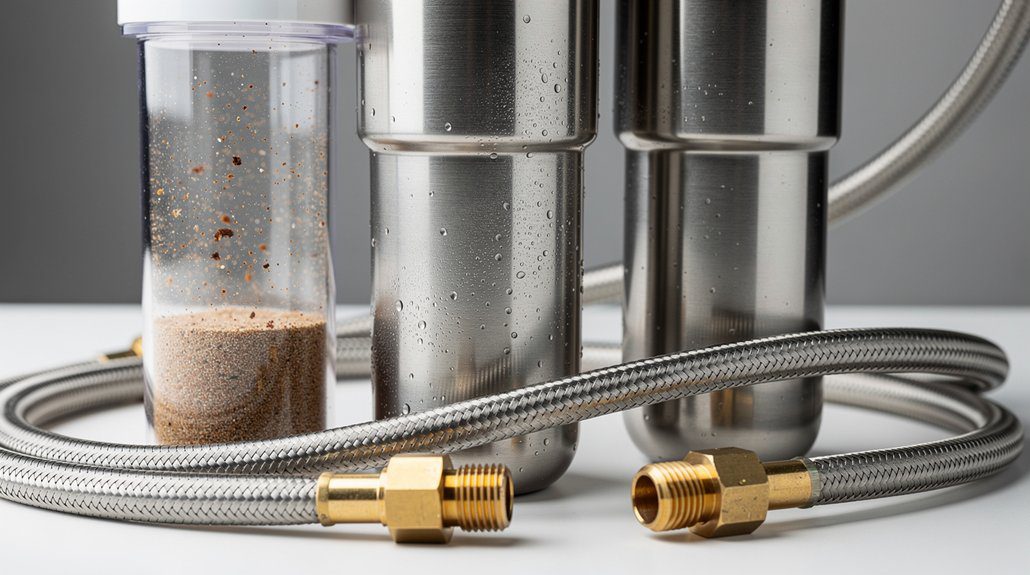
For well water, go with systems built for heavy duty removal and pre‑treatment: the iSpring RCC7AK (NSF 58, 6‑stage RO with pH+ remineralization, 75 GPD) for balanced taste and solid PFAS/lead reduction; the Waterdrop G3P600 (8‑stage tankless, 600 GPD, 2:1 pure‑to‑drain, NSF certified) for high demand and space savings; or the Express Water 10‑stage (50 GPD, alkaline addback) for compact, mineral‑restored water—keep reading to compare fit, maintenance, and well‑specific needs.
| iSpring RCC7AK NSF Certified 75 GPD Alkaline 6-Stage Reverse Osmosis System pH+ Remineralization RO Water Filter System Under Sink Patented Top-Mounted Faucet Design for Easy Installation | 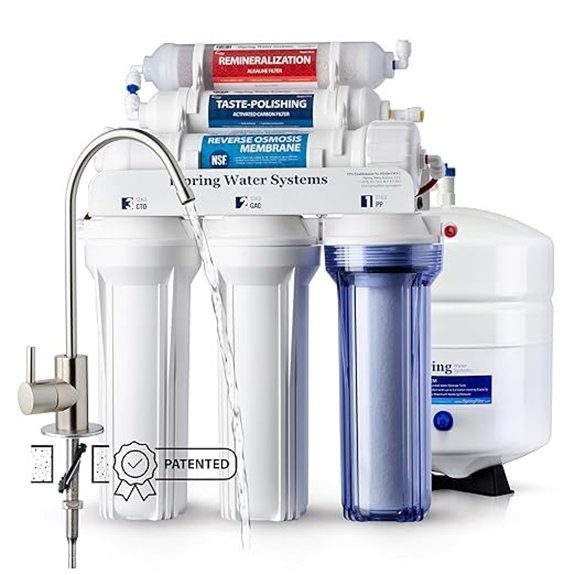 | Best for Mineral Balance | Filtration type: Reverse osmosis (6-stage with alkaline remineralization) | Under-sink installation: Under-sink system (top-mounted faucet fastener for countertop install) | Includes faucet: Brushed nickel faucet included | VIEW LATEST PRICE | Read Our Analysis |
| Waterdrop G3P600 Reverse Osmosis System 8 Stage Tankless Reverse Osmosis Water Filter NSF/ANSI 42 & 53 & 58 & 372 Certified Under Sink RO System 2:1 Pure to Drain Smart LED Faucet | 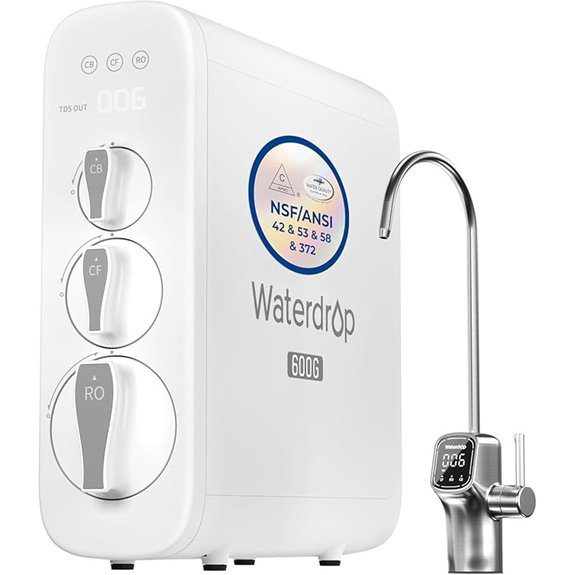 | High-Performance Tankless | Filtration type: Reverse osmosis (8-stage tankless RO) | Under-sink installation: Under-sink tankless system (requires cabinet space and power) | Includes faucet: Smart LED faucet included | VIEW LATEST PRICE | Read Our Analysis |
| Express Water Reverse Osmosis Alkaline Water Filtration System – 10 Stage RO Water Filter with Faucet and Tank – Under Sink Water Filter with Alkaline Filter for Added Essential Minerals – 50 GPD | 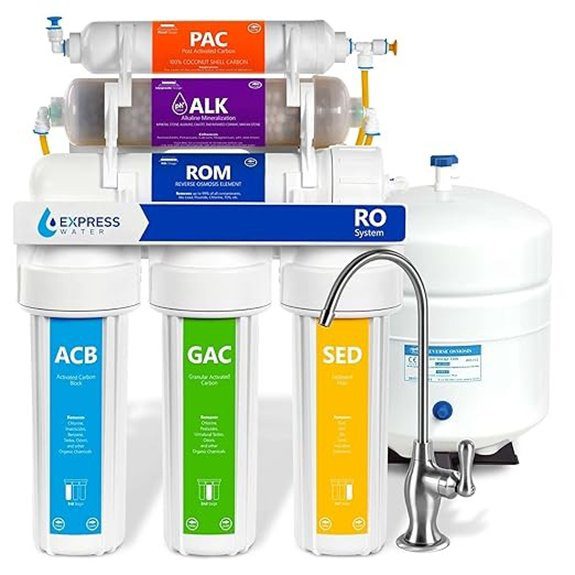 | Best for Heavy Contaminants | Filtration type: Reverse osmosis (10-stage with alkaline/mineral restoration) | Under-sink installation: Under-sink system (standard tank + faucet) | Includes faucet: Faucet included | VIEW LATEST PRICE | Read Our Analysis |
More Details on Our Top Picks
iSpring RCC7AK NSF Certified 75 GPD Alkaline 6-Stage Reverse Osmosis System pH+ Remineralization RO Water Filter System Under Sink Patented Top-Mounted Faucet Design for Easy Installation
If you rely on well water and want near-complete contaminant removal plus restored minerals, the iSpring RCC7AK is a smart pick: its 6-stage RO with pH+ remineralization removes PFAS, heavy metals, fluoride, chlorine and over 1,000 other contaminants while returning beneficial minerals for balanced taste. You’ll get NSF/ANSI 58 certification, 75 GPD capacity, and reductions like 96–99% PFAS and >98% lead. Installation’s simple with the patented top-mounted faucet fastener, transparent prefilter housing, and quick-fit connections—no power needed. The kit includes faucet, tank, extra tool set, lifetime Atlanta-based support, and a one-year limited warranty.
- Filtration type:Reverse osmosis (6-stage with alkaline remineralization)
- Under-sink installation:Under-sink system (top-mounted faucet fastener for countertop install)
- Includes faucet:Brushed nickel faucet included
- Remineralization / alkaline stage:pH+ remineralization (mineral AK stage)
- Certified testing / standards:NSF/ANSI 58 full-system certification
- Warranty / support:1-year manufacturer limited warranty; lifetime technical support (Atlanta, GA)
- Additional Feature:Patented top-mounted faucet
- Additional Feature:Transparent prefilter housing
- Additional Feature:DIY quick-fit connections
Waterdrop G3P600 Reverse Osmosis System 8 Stage Tankless Reverse Osmosis Water Filter NSF/ANSI 42 & 53 & 58 & 372 Certified Under Sink RO System 2:1 Pure to Drain Smart LED Faucet
Choose the Waterdrop G3P600 if you want a high-capacity, tankless RO that handles tough well-water contaminants while saving under-sink space. You get an 8-stage system rated 600 GPD with NSF/ANSI 58, 42, and 372 certifications, plus SGS-tested reduction of TDS, PFAS, fluoride, arsenic, radium, chlorine and more. Tankless design frees roughly 70% of cabinet space; quick-change filters swap tool-free in seconds. It needs under-sink power, fits cabinets that exceed its 18.12 x 5.67 x 17.72-inch footprint, and delivers a 2:1 pure-to-drain ratio. Includes metal faucet, pipes, fittings, one-year warranty and U.S. support.
- Filtration type:Reverse osmosis (8-stage tankless RO)
- Under-sink installation:Under-sink tankless system (requires cabinet space and power)
- Includes faucet:Smart LED faucet included
- Remineralization / alkaline stage:Contains carbon/CF stages (noted for broad chemical reduction) — (system focuses on RO; no explicit dedicated alkaline stage listed)
- Certified testing / standards:NSF/ANSI 58, 42 and 372 certified (plus FCC, EU/UKCA compliance)
- Warranty / support:1-year manufacturer/seller warranty; USA technical support
- Additional Feature:Tankless space-saving design
- Additional Feature:2:1 waste-to-pure ratio
- Additional Feature:Smart LED faucet
Express Water Reverse Osmosis Alkaline Water Filtration System – 10 Stage RO Water Filter with Faucet and Tank – Under Sink Water Filter with Alkaline Filter for Added Essential Minerals – 50 GPD
Homeowners with well water who want near-complete contaminant removal and added minerals will appreciate the Express Water 10-stage reverse osmosis system; it delivers up to 50 GPD and removes up to 99.99% of lead, fluoride, PFAs/PFOs, arsenic, and other common well-water contaminants while the alkaline stage restores calcium, magnesium, and potassium for better-tasting water. You’ll get a compact under-sink unit (17 x 15 x 5 in) plus a 15 x 12 x 12 in tank that automatically fills with treated water. Installation is user-friendly and quick, no pro needed, and a one-year warranty covers the system.
- Filtration type:Reverse osmosis (10-stage with alkaline/mineral restoration)
- Under-sink installation:Under-sink system (standard tank + faucet)
- Includes faucet:Faucet included
- Remineralization / alkaline stage:Alkaline filter with Active Mineral Technology (adds Ca, K, Mg)
- Certified testing / standards:Lab-claimed removals; 1-year warranty (no specific NSF listed in summary)
- Warranty / support:1-year warranty on system
- Additional Feature:10-stage filtration design
- Additional Feature:Active Mineral Technology
- Additional Feature:Automatic tank filling
Factors to Consider When Choosing an Under Sink Water Filter for Well Water
Before you pick an under-sink filter for well water, check your water’s contaminant profile so you know which pollutants need removal. Match that profile to the filtration technology, flow rate capacity, and wastewater efficiency to ensure performance and practicality. Also consider whether you want remineralization to restore beneficial minerals after treatment.
Water Contaminant Profile
Because well water quality can vary widely over time and depth, you should test a comprehensive panel at least annually—including bacteria, nitrate/nitrite, TDS, hardness, pH, iron, manganese, lead/arsenic, fluoride, PFAS, and coliforms—to establish a clear contaminant profile. Use measured concentrations and regulatory/action levels (e.g., nitrate >10 mg/L, arsenic >10 µg/L, lead >15 µg/L, high TDS) to prioritize risks. Distinguish particulate/sediment issues (sand, rust, turbidity), dissolved inorganics (nitrates, salts, metals), and microbial contaminants (coliforms, E. coli), since they demand different remedies. Account for seasonal and depth variability—levels can spike after heavy rain or groundwater shifts. Finally, review pH, hardness, iron/manganese and oxidant demand to predict fouling, scaling, or corrosion and plan pretreatment (sediment removal, softening, pH adjustment) accordingly.
Filtration Technology Type
When choosing an under‑sink filter for well water, match the technology to the contaminants you found in your test results: sediment filters trap sand and rust to protect downstream components, activated carbon removes VOCs and bad tastes, reverse osmosis strips dissolved salts and many metals, ion‑exchange softeners cut hardness to prevent scaling, and UV units inactivate microbes—often you’ll need a combination (prefilter → treatment → postfilter) to get safe, durable, and palatable water. Use sediment prefilters (5–1 μm) to protect cartridges and RO membranes. Pick carbon block for VOCs, chlorine, and taste issues, but not for dissolved salts or most metals. Choose RO when TDS, heavy metals, or fluoride are high. Add ion exchange if hardness causes scaling. Use UV only after turbidity is removed to ensure microbial control.
Flow Rate Capacity
Although flow rate and daily capacity are often overlooked, they determine whether your under‑sink system actually meets your household’s needs. For well water, match a unit’s GPD and tap flow to demand: typical under‑sink RO units deliver 50–75 GPD, often too low for larger families or heavy kitchen use. Look at both peak flow (GPM at the tap) and daily production—aim for ≥0.3–0.5 GPM to cut wait time. Decide between tankless on‑demand systems, which need sufficient feed pressure and power, or tank‑based units that give faster immediate flow from stored water. Account for well TDS and membrane recovery—high TDS lowers output—so choose systems rated for higher TDS or larger membranes. Use pre‑filtration (sediment/iron) to prevent clogging and flow loss.
Wastewater Efficiency
Flow rate and daily capacity matter, but you’ll also want to watch how much wastewater your system produces. For well water, favor low waste-to-pure ratios (1:1 or 2:1) versus older RO units that waste 3–5+ gallons per gallon. Tankless or high-efficiency RO designs can cut reject flow by about 50–70% compared with conventional tanks, which helps if your well recharge or septic capacity is limited. Check the manufacturer’s recovery rate or waste ratio at your expected feed pressure and TDS, since low inlet pressure and high TDS raise waste. Keep prefilters and membranes maintained—clogged or aged components increase reject volume. If reject water is still a concern, plan reuse (irrigation, laundry) or add a permeate pump/booster to improve recovery.
Mineral Remineralization Needs
Because reverse osmosis and some other under-sink treatments strip out beneficial minerals, you’ll want to decide if a remineralization stage is necessary to restore taste, hardness, and pH balance. If your well water loses calcium and magnesium, a remineralizer improves flavor, mouthfeel, and nutritional value while raising pH toward alkaline. Look for systems that add calcium, magnesium, and potassium rather than sodium. Aim for a modest post-treatment TDS (roughly 50–150 ppm) to stay within pleasant taste and health ranges. Pick a compatible media—calcite, magnesium oxide, or proprietary cartridges—matching flow rate and maintenance needs, since media replaceable schedules affect performance. After installation, monitor pH, hardness, and TDS to avoid scaling, plumbing problems, or warranty issues.
Power And Installation
Plan your power and installation needs before you buy, since under-sink systems vary from fully mechanical cartridges to electric tankless ROs and smart units that need an outlet and can stop working during outages. Check whether a unit requires electricity and confirm outlet location and outage behavior. Measure cabinet height, depth, and clearance for a storage tank if it’s not tankless, and ensure you’ll have room to reach filters for routine changes. Evaluate installation complexity: prefer quick-fit or tool-free connections for DIY, or budget for a plumber if drilling a faucet hole or adding a drain saddle is needed. Verify water pressure and temperature specs—ROs often need minimum pressure or a booster pump—and plan space for spare parts and easy access.
Filter Lifespan Costs
Budget for ongoing filter and membrane replacements so your under‑sink system keeps protecting well water without surprising costs. Replaceable pre‑filters (sediment/carbon) generally need swapping every 3–12 months; skipping them will shorten downstream membrane life. RO membranes usually last 2–5 years, but high TDS, turbidity, or heavy use reduces that. Plan annual consumable costs of roughly $50–$300, varying by filter type, frequency, and local prices. If your well has elevated sediment, iron, or organics, expect more frequent cartridge or media changes and possible iron‑specific pretreatment, which raises maintenance and cost. Watch for reduced flow, rising TDS, or visible discoloration as triggers to replace components promptly and avoid performance loss or costly membrane damage.
Certification And Testing
When you’re choosing an under‑sink system for well water, don’t rely on marketing—look for independent certifications and test reports that prove a unit does what it claims. Seek NSF/ANSI marks relevant to well risks: 58 for RO TDS reduction, 53 for health contaminants (lead, cysts), and 42 for chlorine/taste. Demand third‑party lab reports listing quantitative removal rates for your specific concerns—bacteria, nitrates, iron, manganese, fluoride, arsenic, PFAS—with inlet concentrations, flow, and temperature. Verify microbial safety via cyst/bacteria testing or EPA‑validated methods. Check certified operational ranges (max TDS, pressure, temperature) and rated capacity (GPD). Finally, confirm waste-to-pure water ratios and long‑term data showing filter life and reduction efficiency over time so performance holds until replacements are due.