

As the days grow shorter and temperatures drop, it’s crucial to adjust your garden care routine. I’ve found that focusing on key tasks like cleaning up fallen leaves and applying mulch can make a big difference in plant health over winter. But there’s more to autumn gardening than just tidying up—preparing the soil and protecting vulnerable plants are equally important. Let’s explore essential steps that ensure your garden thrives when spring returns.
Clean Up Fallen Leaves and Debris

Although it might seem like a chore, cleaning up fallen leaves and debris is essential for maintaining a healthy garden in autumn.
Leaving leaves can smother grass and encourage pests or diseases. I recommend regularly raking and removing debris to improve air circulation and prevent mold.
This simple task creates a cleaner, healthier environment for your plants to thrive through colder months.
Plant Spring-Flowering Bulbs
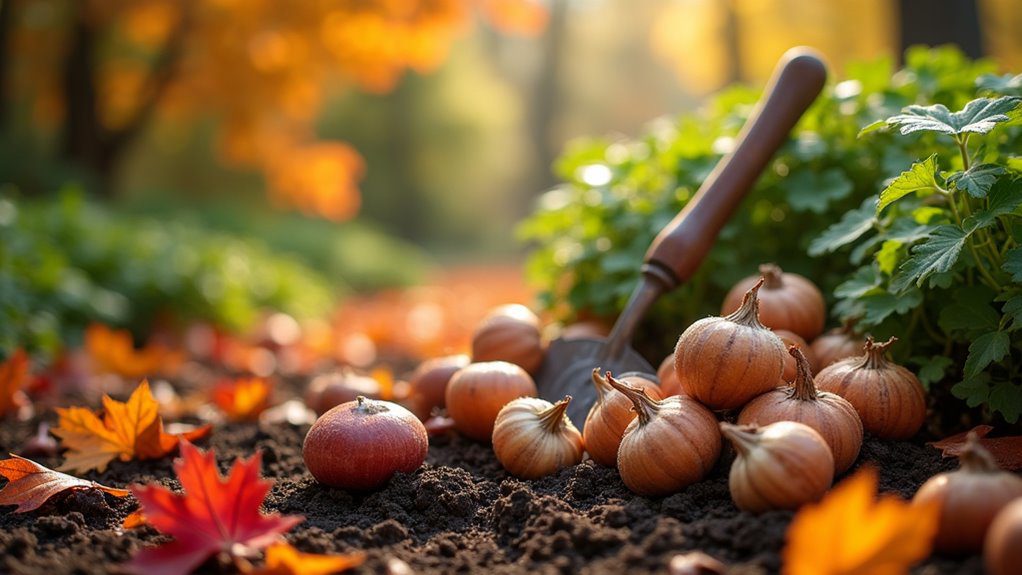
Once you’ve cleared away fallen leaves and debris, it’s the perfect moment to plant spring-flowering bulbs.
Choose healthy bulbs, plant them at a depth three times their height, and space them according to the variety.
Position bulbs with the pointed end up in well-drained soil. This ensures strong root development and vibrant blooms come spring, giving your garden an early burst of color.
Protect Tender Plants From Frost
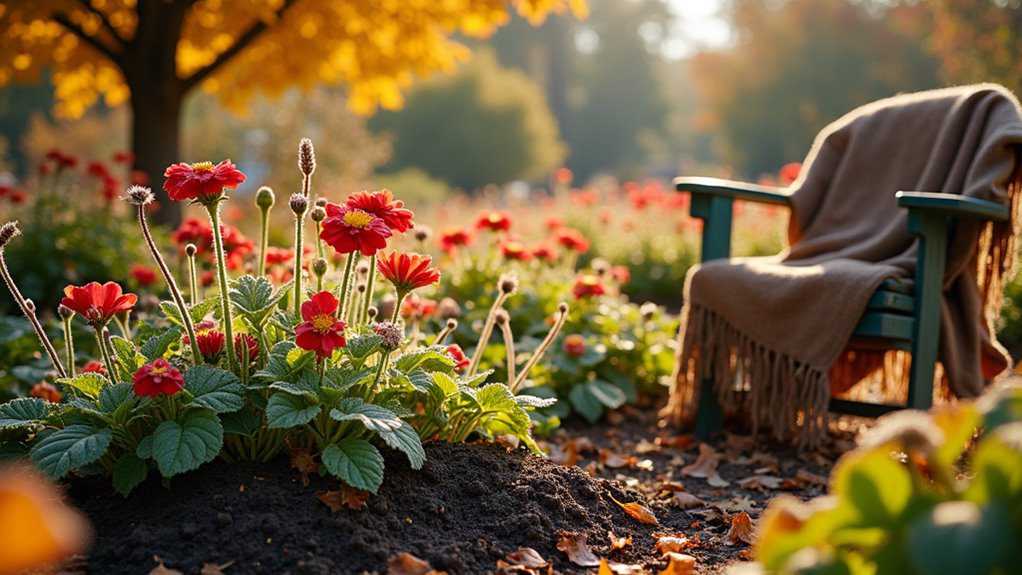
Since temperatures can drop unexpectedly in autumn, I always recommend taking proactive steps to protect tender plants from frost.
Use frost cloths or blankets to cover plants overnight, securing edges to trap heat. Move potted plants indoors or to sheltered spots.
Water soil thoroughly before frost; moist soil retains heat better.
These simple actions prevent frost damage and preserve your garden’s vitality.
Prune Dead or Diseased Branches
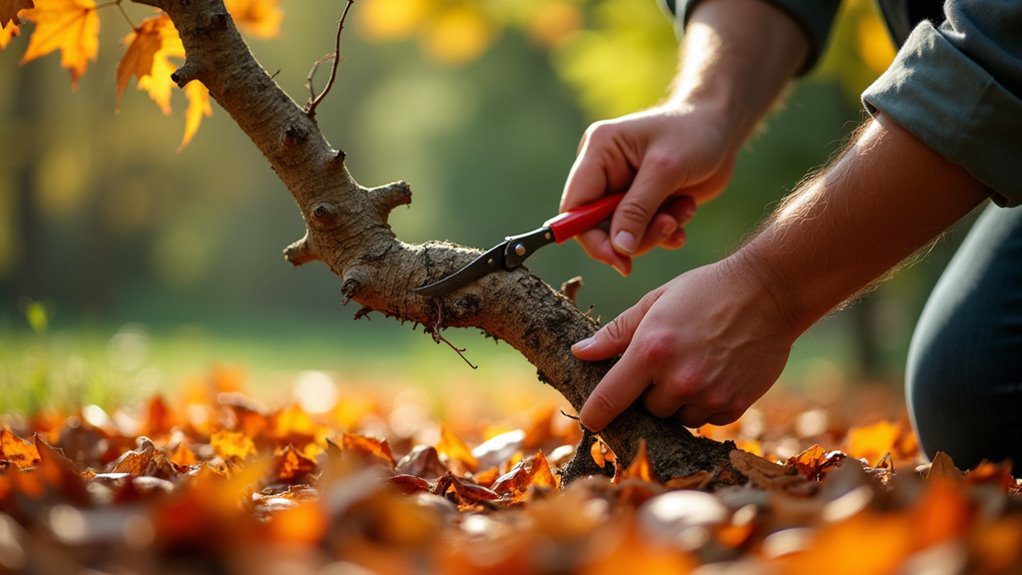
When you spot dead or diseased branches in your garden, pruning them promptly is crucial to maintaining plant health and preventing further spread of disease.
Use clean, sharp tools to make cuts just outside the branch collar.
Removing these damaged parts improves air circulation and directs energy to healthy growth, keeping your plants vigorous through autumn and beyond.
Mulch Garden Beds for Insulation

After pruning, it’s important to protect your garden beds as the weather cools.
Mulching provides insulation, stabilizing soil temperature and preserving moisture. Apply a 2-3 inch layer of organic mulch like shredded leaves or bark, avoiding direct contact with plant stems to prevent rot.
This simple step shields roots from freeze-thaw cycles, promoting healthier plants come spring.
Divide and Transplant Perennials

I recommend dividing and transplanting your perennials in early autumn to give them the best chance to establish before winter.
Carefully dig up the clumps, separate healthy roots and shoots, then replant at the same depth. This reduces overcrowding and rejuvenates growth.
Water thoroughly after transplanting to help roots settle.
Avoid dividing late bloomers to prevent stress.
Prepare Soil With Compost and Fertilizer
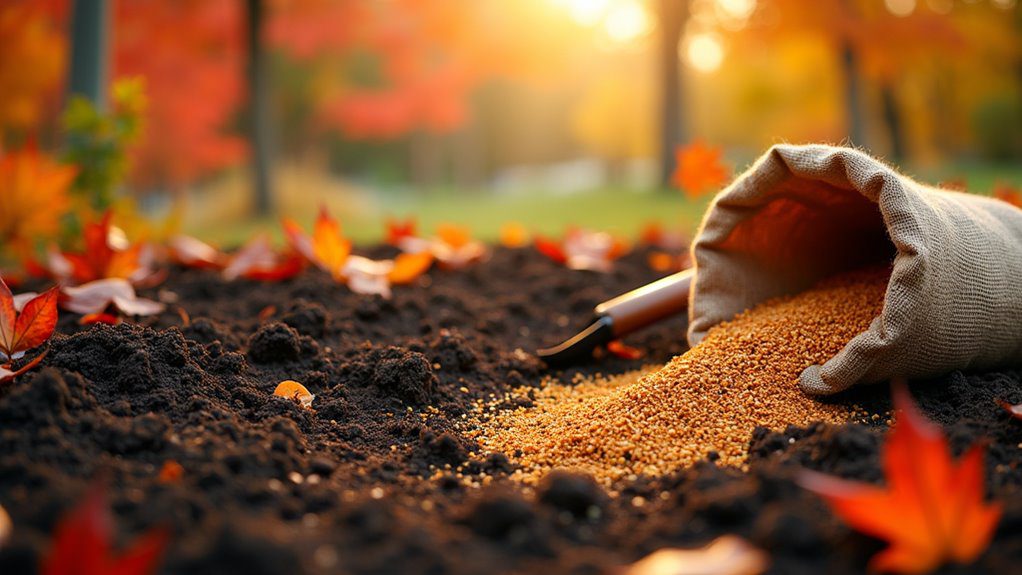
Three essential steps will improve your garden soil’s health before winter sets in.
First, I mix rich compost into the topsoil to enhance nutrients and structure.
Next, I apply a balanced fertilizer tailored to your soil’s needs, ensuring plants get vital minerals through dormancy.
Finally, I gently turn the soil, promoting aeration and microbial activity for a thriving spring garden.
Water Plants Deeply Before Winter

Although the weather cools down, watering your garden deeply before winter is crucial to help plants store enough moisture for the dormant months ahead.
I make sure to soak the soil thoroughly, allowing water to reach deep roots. This prevents dehydration when the ground freezes, promoting healthier growth in spring.
Shallow watering won’t suffice; deep hydration is essential for plant survival.
Store Garden Tools and Equipment Properly

Once the plants are well-hydrated for winter, it’s time to focus on storing your garden tools and equipment properly.
Clean and dry each tool to prevent rust and damage. Sharpen blades and oil metal parts before storage.
Store tools in a dry, ventilated area, hanging them to avoid moisture contact. Proper care extends their life and ensures readiness for spring.