
When I started cultivating succulents, I quickly realized that success hinges on more than just picking attractive plants. Factors like soil composition, watering routines, and light exposure all play critical roles. Understanding these elements can prevent common pitfalls like root rot or stunted growth. If you want your succulent garden to thrive consistently, there are key tips you should follow—some of which might surprise you. Let’s explore what really makes a succulent garden flourish.
Choose the Right Succulent Varieties

Although selecting the right succulent varieties can seem straightforward, I’ve found that understanding their specific growth requirements is crucial.
Each species varies in light tolerance, water needs, and temperature resilience. Choosing varieties compatible with your environment ensures healthy development and longevity.
Avoid assuming all succulents thrive under identical conditions; precise selection based on growth parameters optimizes your garden’s success.
Use Well-Draining Soil

One key factor I always emphasize is using well-draining soil for your succulents.
Succulents require soil that quickly disperses water to prevent root rot and oxygen deprivation. I recommend a mix of coarse sand, perlite, and potting soil to ensure optimal drainage and aeration.
Avoid heavy, moisture-retentive soils that retain water and harm succulent roots. Proper soil composition supports healthy growth.
Select Proper Containers With Drainage Holes
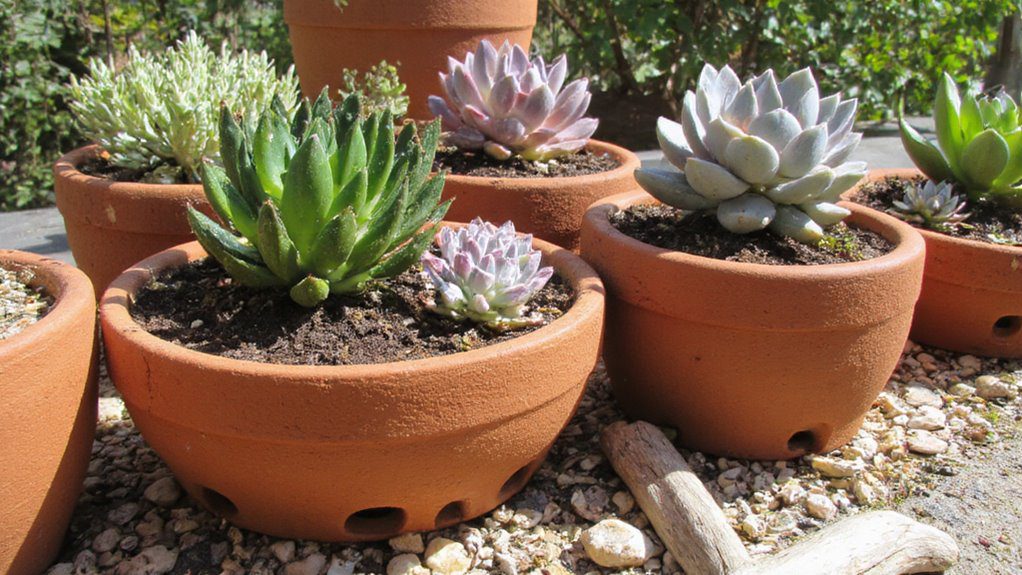
After choosing the right soil for your succulents, the container you select plays a major role in their health.
Always pick containers with drainage holes to prevent water accumulation, which causes root rot. Proper drainage ensures excess moisture escapes, maintaining optimal soil aeration.
Avoid containers without holes or use them only with careful watering and monitoring to keep succulents thriving.
Provide Adequate Light

Since succulents rely heavily on light for photosynthesis, providing adequate light is essential for their growth and health.
I ensure they receive at least six hours of bright, indirect sunlight daily, avoiding harsh midday sun that can cause leaf scorch.
Using grow lights can supplement natural light in low-light environments, maintaining optimal light intensity and duration for vigorous development.
Water Succulents Appropriately
While succulents are drought-tolerant, I water them carefully to prevent root rot and overhydration.
I ensure the soil dries out completely between watering sessions. Using well-draining soil and pots with drainage holes helps excess water escape.
I water directly at the base, avoiding the leaves to reduce fungal risks. Timing and method are crucial for succulent health.
Avoid Overwatering
If you want your succulents to thrive, you have to avoid overwatering at all costs.
Excess water causes root rot, suffocates roots, and promotes fungal growth. I recommend watering only when the soil is completely dry.
Use well-draining soil and pots with drainage holes to prevent water accumulation.
Precision in watering frequency ensures healthy, robust succulents without risking water damage.
Fertilize Sparingly

Proper watering sets the foundation for succulent health, but nutrition plays a different role that requires restraint.
I fertilize sparingly, using a diluted, balanced fertilizer no more than once a month during the growing season. Excessive feeding can cause rapid, weak growth and root damage.
Succulents store nutrients efficiently, so minimal supplementation maintains vigor without stressing the plants.
Control Temperature and Humidity
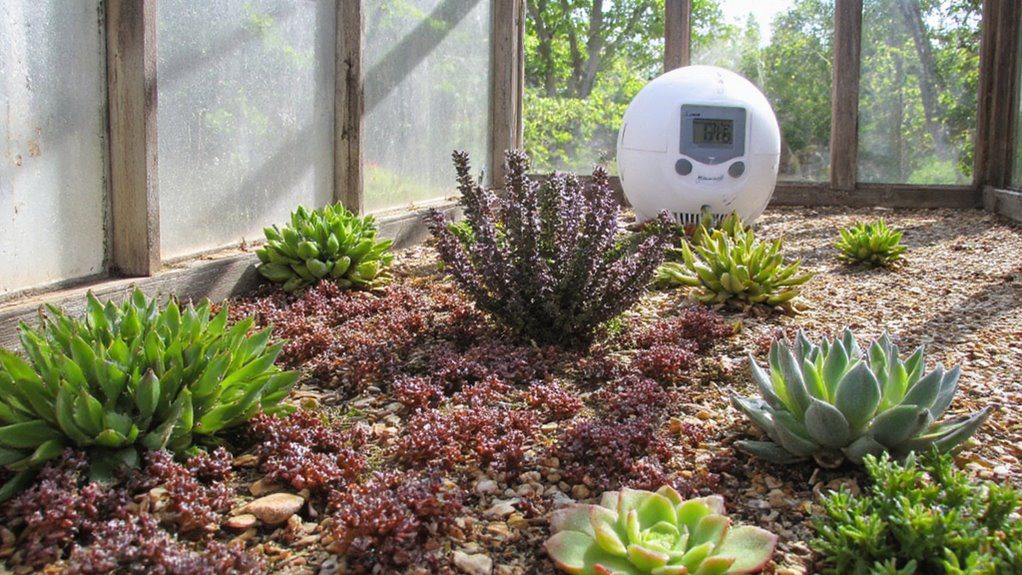
Controlling temperature and humidity is essential for maintaining succulent health and preventing stress-related issues.
I keep temperatures between 60-80°F, avoiding extremes that can cause damage.
Humidity should stay low, ideally below 50%, to prevent fungal growth.
Proper air circulation helps regulate both factors, ensuring succulents thrive in their environment without moisture buildup or heat stress.
Watch for Pests and Diseases
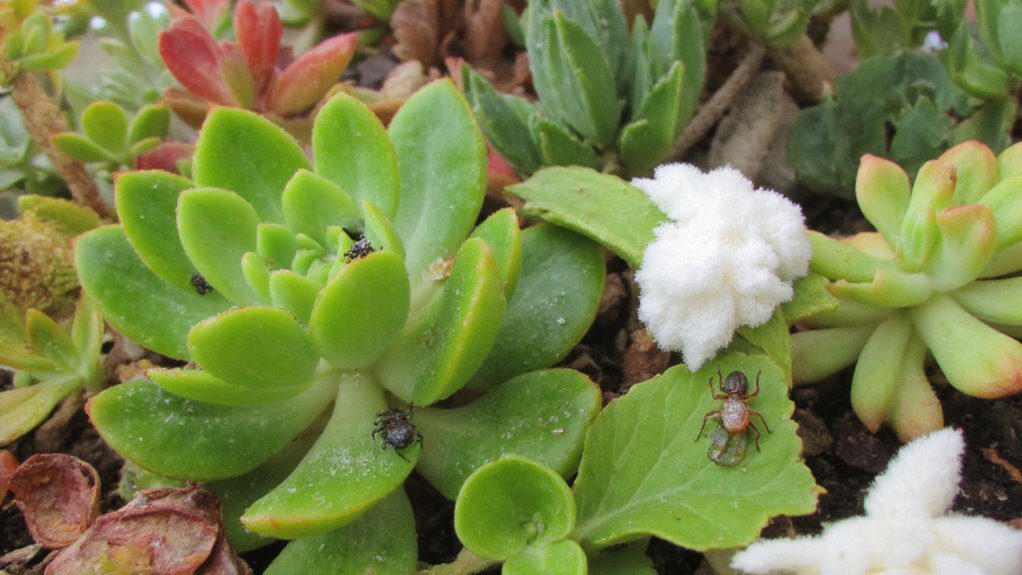
Several common pests and diseases can threaten succulents, so I stay vigilant to detect them early.
I regularly inspect leaves and stems for signs of infestation like mealybugs or fungal spots. Promptly removing affected areas and using appropriate insecticides or fungicides helps prevent spread.
Maintaining proper airflow and avoiding overwatering also minimizes disease risk, ensuring my succulents remain healthy and resilient.
Propagate Succulents Easily
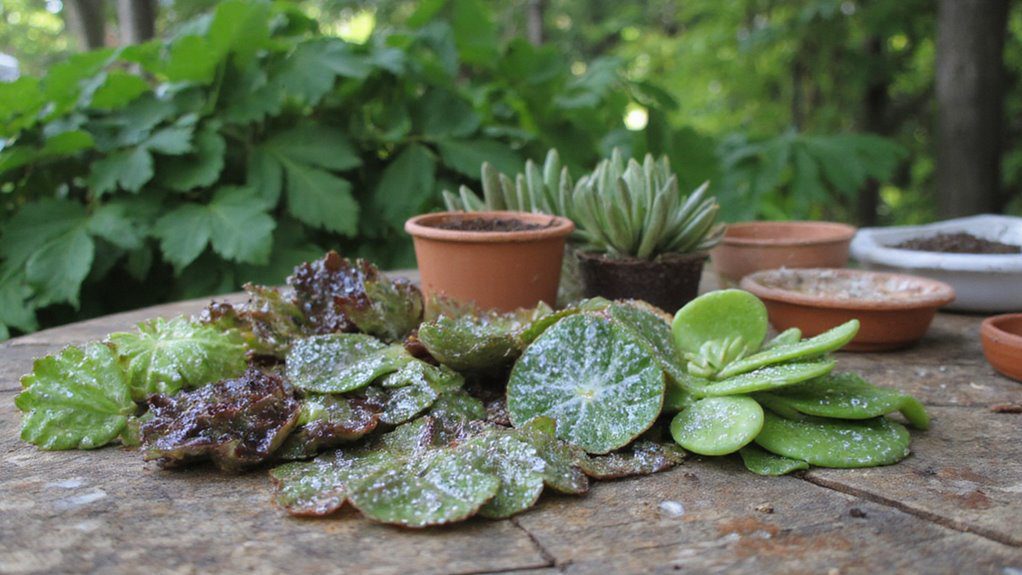
Keeping pests and diseases in check not only preserves the health of my succulents but also prepares them for successful propagation.
To propagate easily, I take healthy leaf or stem cuttings, let them callous for several days, then plant in well-draining soil. This method minimizes rot risk and encourages root development, ensuring strong, viable new plants.
Rotate Plants for Even Growth
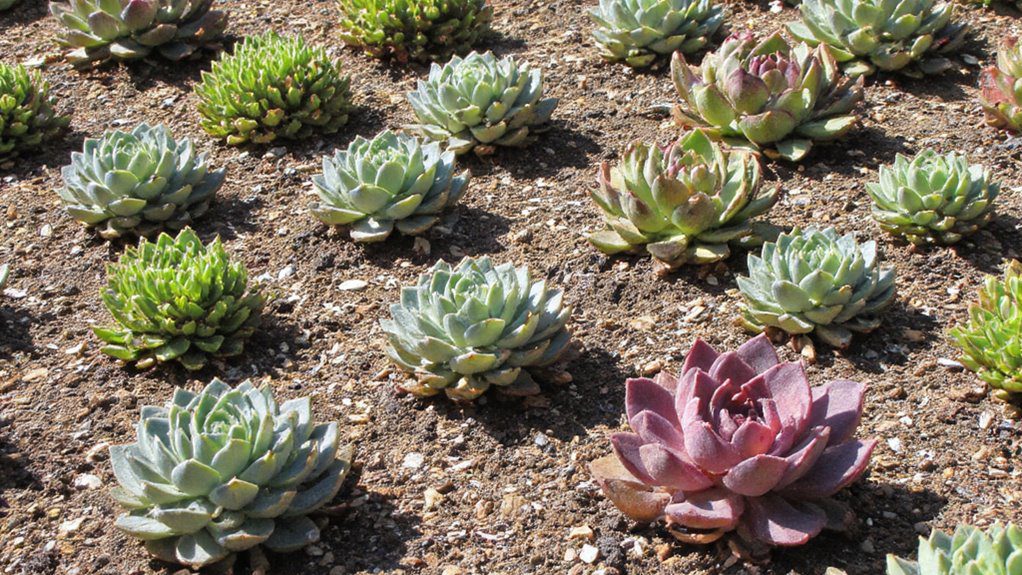
Although succulents can grow without much intervention, I rotate my plants regularly to ensure they receive even light exposure.
Uneven light causes succulents to stretch or lean, compromising their shape and health.
Rotating every week balances growth, promoting symmetrical development and stronger stems.
This simple practice optimizes photosynthesis efficiency and prevents weak, leggy plants, essential for a thriving succulent garden.