

I recommend 11 fantastic fruit trees perfect for patios, including dwarf apple varieties like Dwarf Gala and semi-dwarf peach trees, which produce abundant fruit. Dwarf cherry trees flourish in minimal space and yield sweet cherries. Fig and persimmon trees thrive in containers, needing proper sunlight and water. Choose durable containers sized 5-7 gallons, scaling up as needed, and ensure good drainage. Most trees require at least 6 hours of direct sunlight daily, with optimal watering and fertilization. Regular care and understanding pollination needs will enhance your harvest. If you'd like to uncover more tips for success, keep exploring.
Dwarf Apple Trees

When considering the addition of fruit trees to your patio, dwarf apple trees stand out as an excellent choice due to their manageable size and high-quality fruit.
Dwarf apple varieties, such as Dwarf Gala, thrive on ideal dwarfing rootstocks like Geneva 969. They flourish in full sun and well-draining soil, producing medium-sized, crisp apples within 2-3 years, perfect for fresh eating. Notably, these trees are self-fruitful, but cross-pollination with other varieties like Fuji or Pink Lady can enhance yields.
Semi-Dwarf Peach Trees
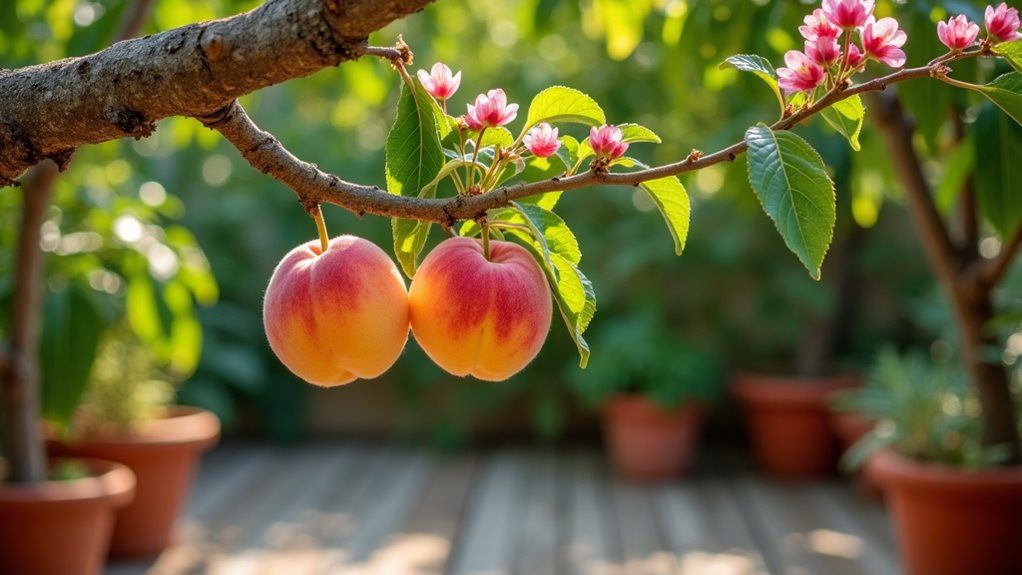
After considering dwarf apple trees, semi-dwarf peach trees emerge as another fantastic option for patio gardening. Their compact growth, reaching only 12-15 feet, fits perfectly in smaller spaces. With abundant medium to large fruits, you'll enjoy sweet, juicy peaches ideal for fresh eating or preserves. Plus, they require minimal maintenance and thrive in warm climates, making them a delightful choice for any patio. Semi-dwarf trees yield nearly double the fruit of dwarf trees, enhancing your patio gardening experience.
Dwarf Cherry Trees
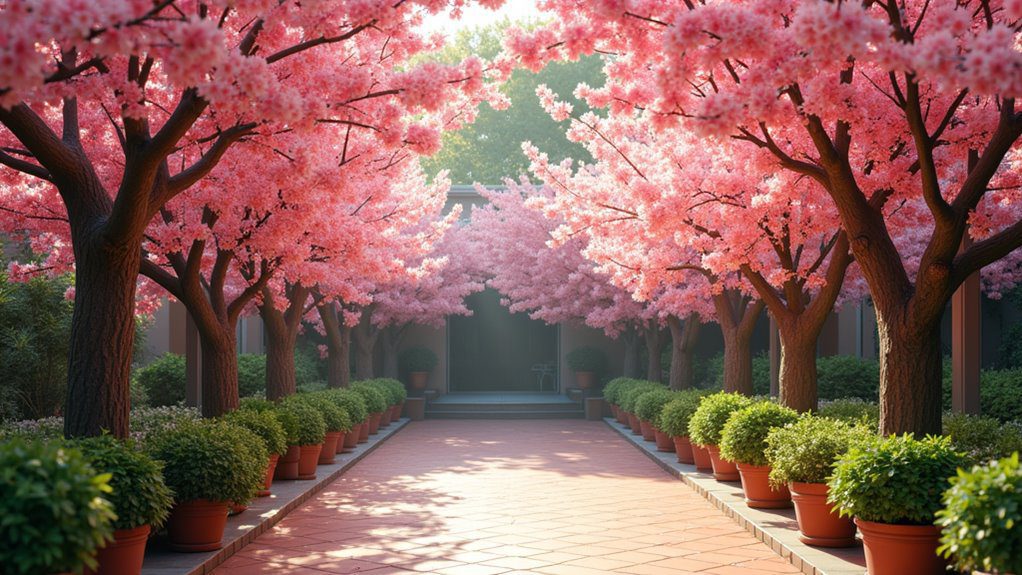
Dwarf cherry trees are an excellent choice for those looking to maximize their patio gardening potential. These compact dwarf cherry varieties thrive in full sun and require minimal space, making them perfect for small areas. With benefits like sweet, flavorful cherries and stunning seasonal interest, they're self-pollinating and yield best with cross-pollination. Regular care ensures a fruitful harvest, enhancing any patio setup. Additionally, they require 800-1000 chill hours during winter for optimal fruit production.
Fig Trees

Planting fig trees on a patio can transform your outdoor space into a lush oasis filled with sweet, succulent fruit. I recommend choosing from various fig tree varieties that suit your climate. Ensure proper container size and sunlight exposure, while being vigilant about fig tree pests. Regular checks and appropriate soil care will help you enjoy a bountiful harvest year after year. Additionally, maintaining optimal soil temperature is crucial for enhancing growth and yield.
Persimmon Trees

For those looking to enhance their patio with fruit-bearing trees, persimmons offer a delightful option. I recommend selecting from various persimmon varieties, as they adapt well to well-drained, sandy loam soil and full sun. To ensure successful fruit harvesting, maintain consistent watering and apply 4-6 inches of mulch for structure. With proper care, you'll enjoy a bountiful yield from your persimmon tree!
Blackberry Trees

When considering options for adding fruit trees to your patio, blackberry bushes stand out as a versatile and rewarding choice. I recommend selecting thornless blackberry varieties for ease of harvesting. Blackberry Plant Packs are available in Jumbo-3 and Jumbo-6, making it easy to start your berry garden. Pruning techniques are crucial; tip-prune new canes in spring and remove damaged canes to promote healthy growth. With proper care, you'll enjoy bountiful harvests in just a couple of years.
Container Requirements
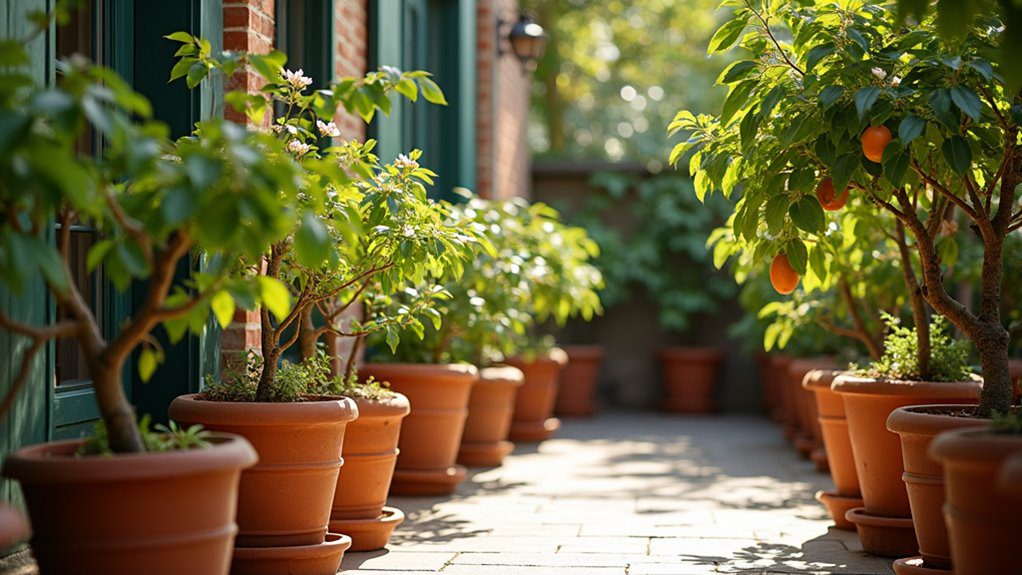
Selecting the right container is crucial for the success of your patio fruit trees.
I recommend 5-7 gallon containers for initial planting, scaling up to 10-30 gallons as they mature.
Opt for durable container materials like terracotta or fiberglass, ensuring they've drainage solutions, such as holes and gravel layers, to prevent waterlogging. Adequate drainage will support healthy root development and overall growth.
Sunlight and Planting
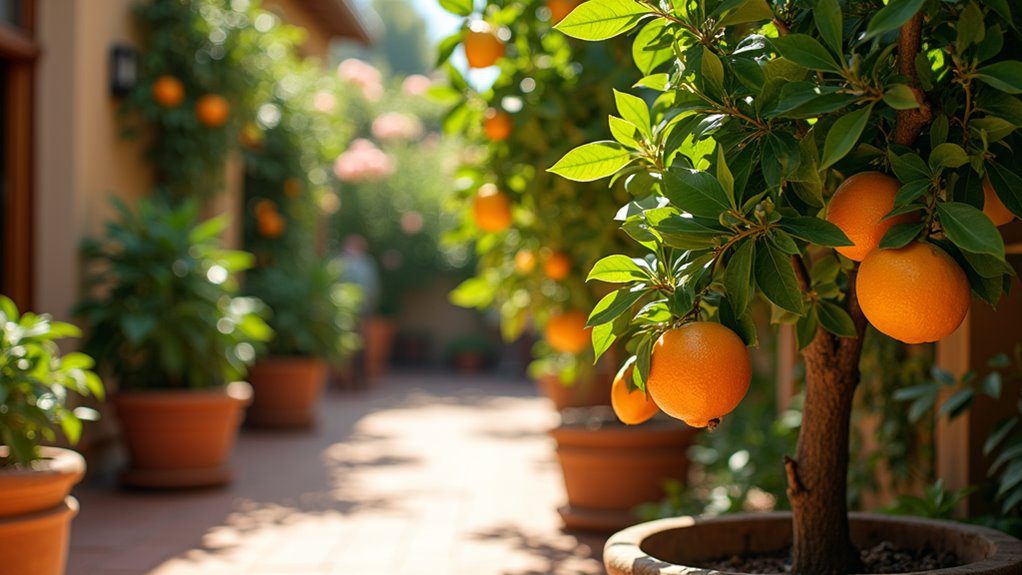
Understanding the sunlight needs of fruit trees is essential for successful growth on your patio.
Most varieties require at least 6 hours of direct sunlight exposure daily, while dwarf citrus may need up to 12.
Plant in south-facing areas with optimal spacing to ensure good air circulation.
Moreover, consider afternoon shade during extreme heat to prevent leaf burn and promote healthy growth. Optimal exposure is crucial for achieving vibrant foliage and bountiful fruit production.
Watering and Fertilization
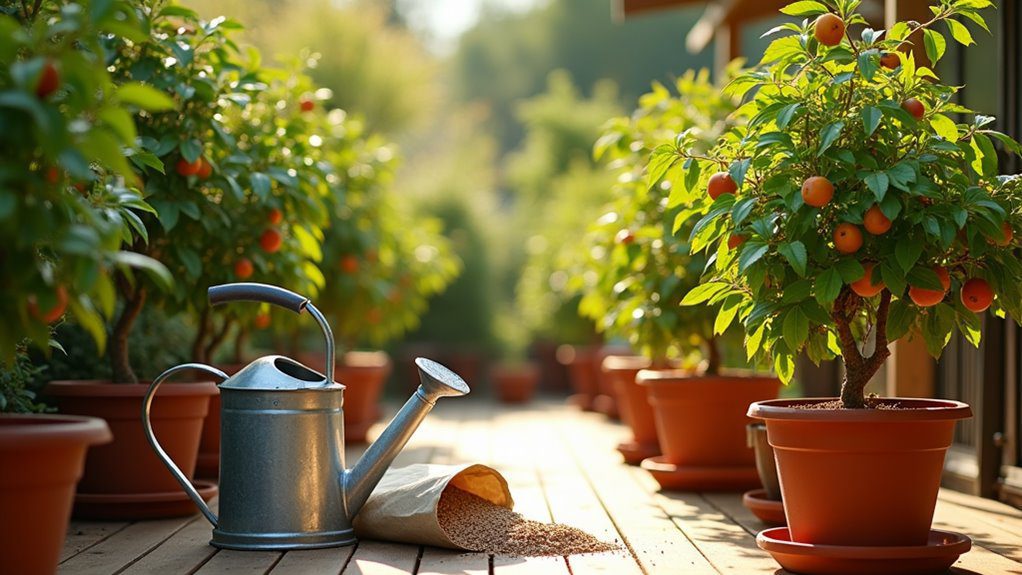
After ensuring your fruit trees receive adequate sunlight, the next step in their care involves proper watering and fertilization.
I recommend using drip irrigation for efficient watering techniques and aiming for about 1 inch of water weekly. Proper watering is essential for preventing dehydration and ensuring optimal nutrient uptake in your trees. For fertilization schedules, apply a slow-release, balanced fertilizer in early spring, adjusting based on soil test results to meet your trees' specific nutrient needs.
Pollination Requirements
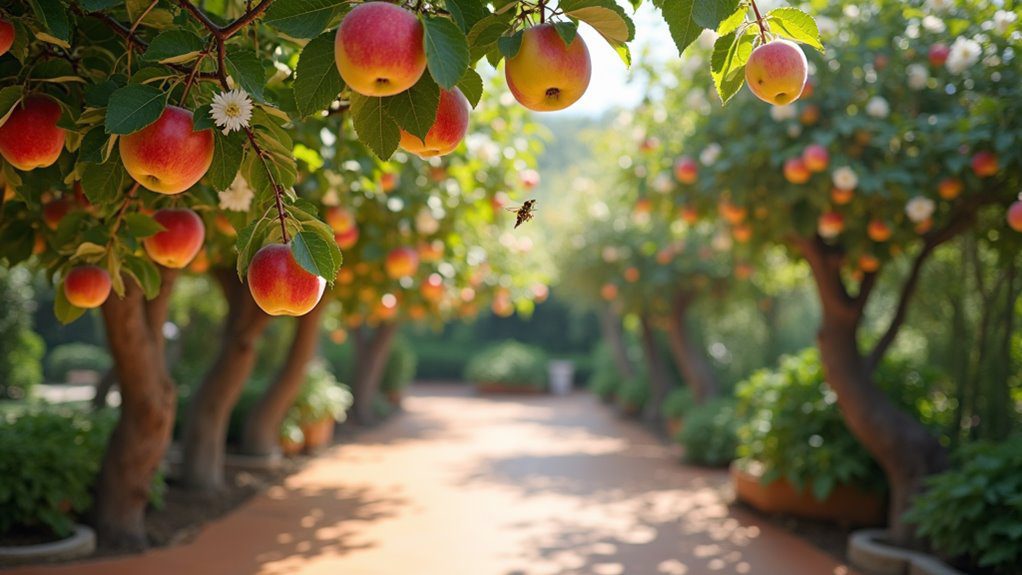
How can you ensure a fruitful harvest from your patio fruit trees? Understanding pollination requirements is crucial.
Many self-pollinating varieties, like apricots and sour cherries, thrive without additional trees. However, for pears and most sweet cherries, you'll need compatible pollinators to enhance yields. Successful pollination is essential for fruit development and should not be overlooked.
Be mindful of bloom times and distances; they significantly impact pollination compatibility and overall fruit production.
Maintenance and Care
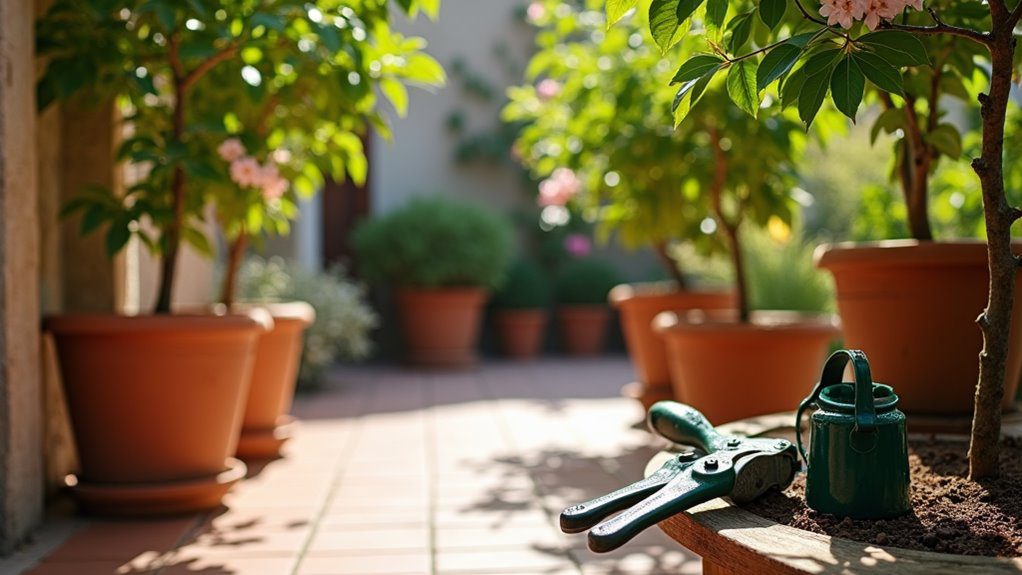
Ensuring successful pollination is just the beginning; proper maintenance and care play a vital role in achieving a bountiful harvest from your patio fruit trees.
Focus on soil health by monitoring moisture levels with a meter and mulching to retain moisture.
Employ effective pruning techniques in summer and winter to promote air circulation and remove damaged wood, ensuring thriving trees.