

If you're looking for easy fruit trees to grow, I've found 11 varieties that can thrive in various conditions. Pear and fig trees are particularly forgiving, while plum and apple trees require minimal care. Cherry trees, though needing specific pollination, can still be manageable. I've learned that proper soil—sandy, loamy, and well-draining—is crucial for all these trees. Establishing effective watering and pruning routines enhances fruit production too. Choosing self-pollinating varieties like peaches simplifies your garden experience. If you want to explore more about selecting and caring for these trees, there's plenty more to consider.
Pear Trees
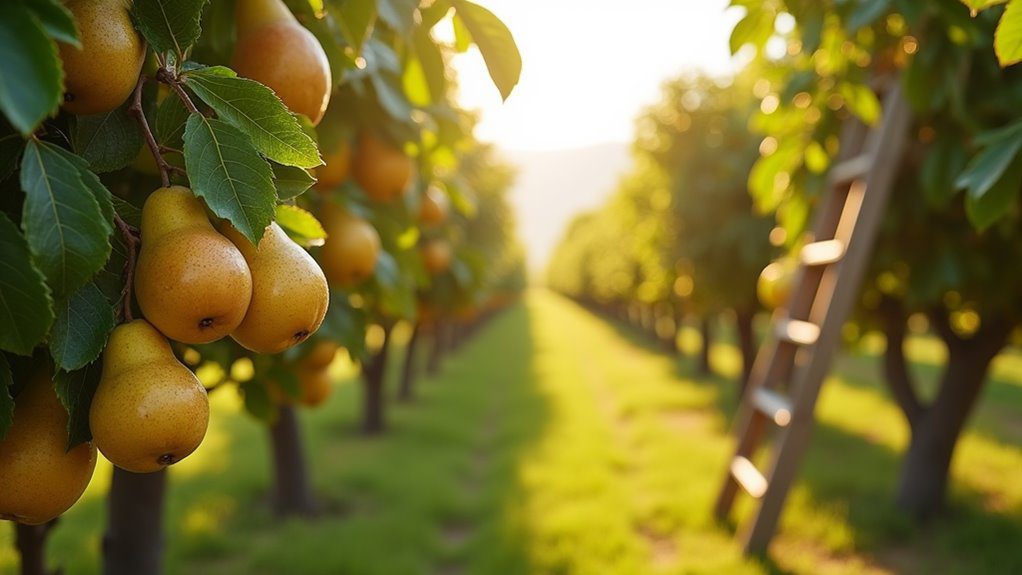
When I think about growing fruit trees, pear trees often come to mind as a top choice for both novice and experienced gardeners.
Selecting the right pear tree varieties is essential, and I recommend planting them in well-draining, loamy soil. Moist, free-draining soil is crucial for the healthy growth of pear trees, as it promotes root development and nutrient absorption.
Utilize proper planting techniques by ensuring adequate spacing—20-100 feet for standards—and positioning them in sunny, sheltered spots to maximize growth and fruit production.
Fig Trees
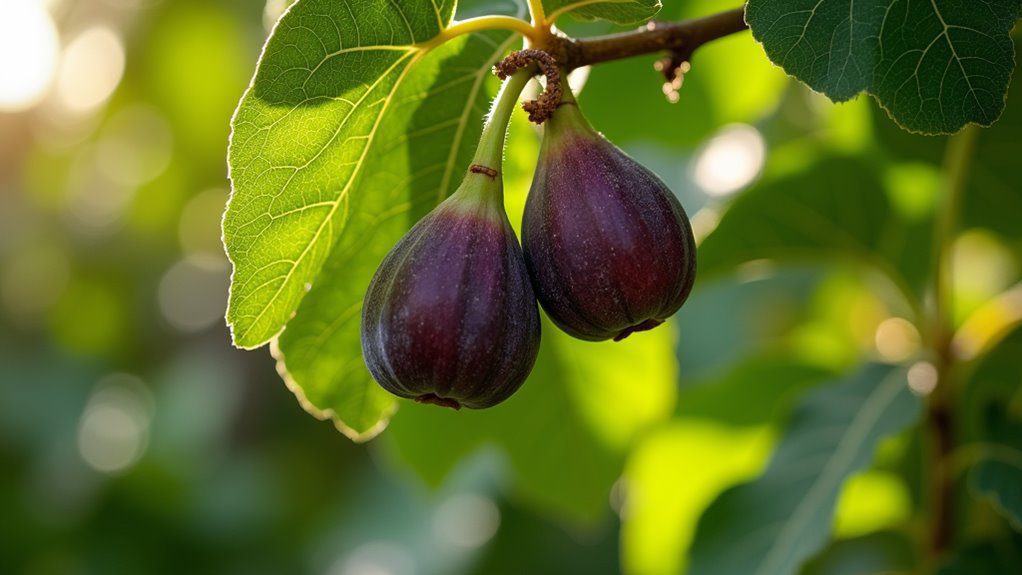
Fig trees are a fantastic addition to any garden, especially for those looking to grow fruit with minimal fuss. They thrive in warm, dry climates and require full sun. Some hardy fig varieties can withstand winter temperatures as low as 0°F, but they need winter protection in colder zones. Well-drained soil is essential for optimal growth, helping to prevent root rot and ensuring the health of the tree. Container gardening helps ensure survival during frost, making them versatile and manageable.
Plum Trees

Plum trees offer a rewarding experience for gardeners seeking to cultivate delicious fruit with relatively low maintenance. When choosing plum varieties, consider their chill hour requirements and ensure they thrive in sunny spots with well-drained, slightly acidic soil. Regular pruning enhances fruit flavor and yield, while consistent watering during early growth is crucial. Soil requirements are essential for healthy plum tree development, as they prefer well-drained, loamy soil with a slightly acidic to neutral pH. Planting multiple trees aids in successful cross-pollination.
Cherry Trees
Cherry Trees
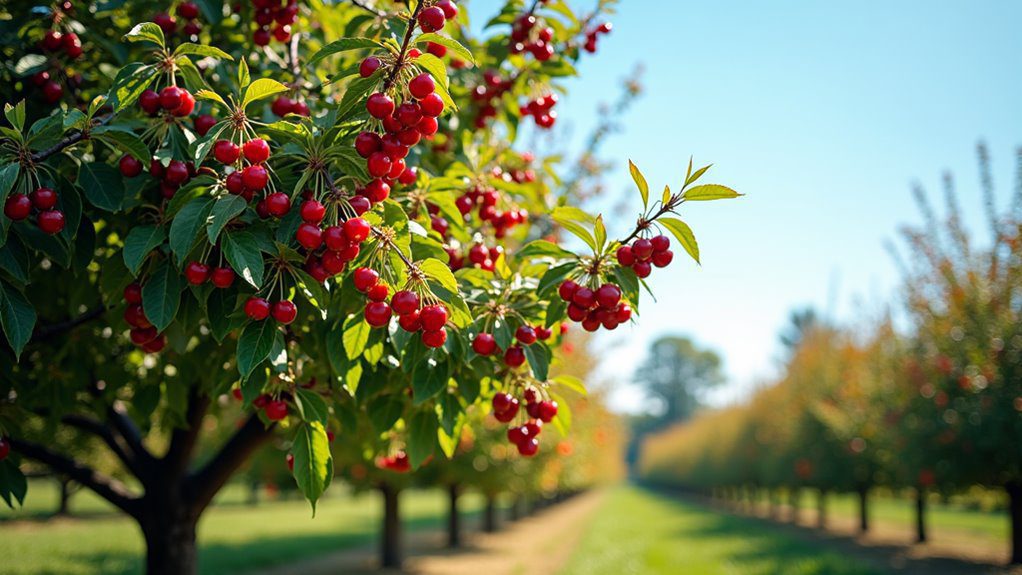
After exploring the rewarding experience of growing plum trees, let's turn our attention to cherry trees, which also offer a delightful addition to any garden.
When selecting cherry tree varieties, consider their pollination needs. Sweet cherries require another sweet cherry variety for proper pollination to ensure optimal fruit production.
For proper cherry tree spacing, standard trees should be 35-40 feet apart, while dwarf types can be 8-10 feet or 20 feet apart, ensuring healthy growth and fruit production.
Apple Trees

When it comes to growing fruit trees, apple trees stand out as one of the easiest and most rewarding choices.
For success, select apple varieties suited to your climate and ensure they receive full sun—at least 6-8 hours daily. Most apple trees require cross-pollination with another variety to enhance fruit production.
Plant in well-drained soil with a pH of 6.0 to 7.0, and remember that proper spacing aids in air circulation and disease resistance.
Peach Trees

Peach trees offer a delightful addition to any home orchard, bringing both beauty and delicious fruit. When considering variety selection, I focus on those suited for my USDA zone and climate. Effective pest management is crucial; I've found that regular monitoring and using organic treatments help keep pests at bay. With the right care, these trees thrive and produce bountiful harvests. Additionally, selecting disease-resistant varieties can significantly enhance the overall health and productivity of the trees.
Disease Resistance
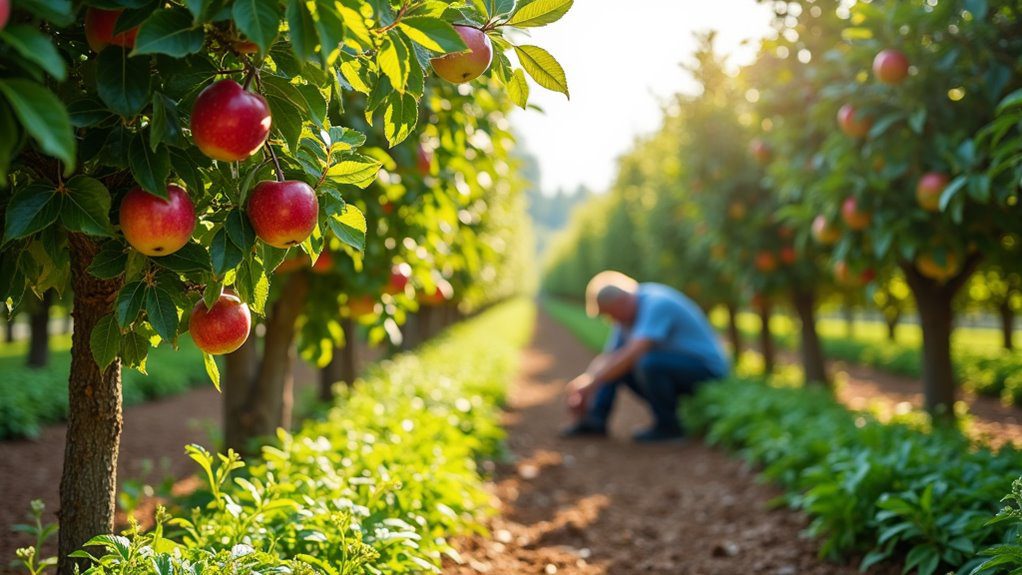
Growing fruit trees like peaches brings not only joy but also the challenge of managing their health against various diseases. Implementing effective disease management strategies through resistance breeding can significantly reduce the need for chemical treatments. Trees like Liberty apples or Kieffer pears exhibit natural resistance, ensuring healthier fruit, increased yields, and a simplified gardening routine, making our efforts more rewarding. For instance, Liberty apples stand out as the most disease-resistant variety, which further enhances their appeal for home gardeners.
Pollination Needs
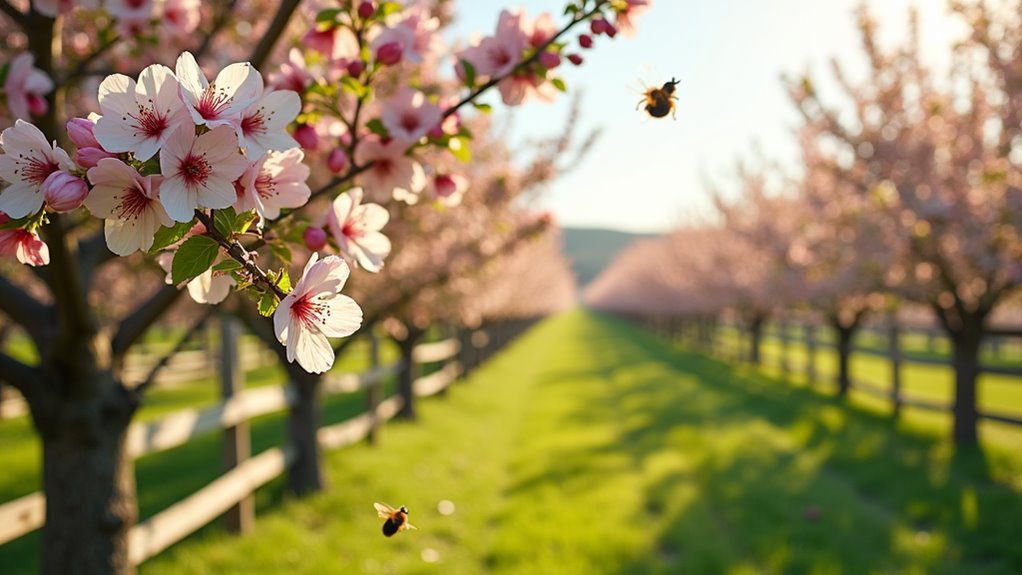
Understanding pollination needs is crucial for successfully cultivating fruit trees, as it directly impacts fruit production. Self-pollinating trees like peaches and figs offer self-pollination benefits, simplifying care. However, employing cross-pollination strategies with compatible varieties, such as apples and pears, can enhance yields. For trees like apples, which are self-unfruitful trees, ensure your trees bloom simultaneously and are planted within 100 feet for optimal pollination results and consistent fruit production.
Soil Requirements
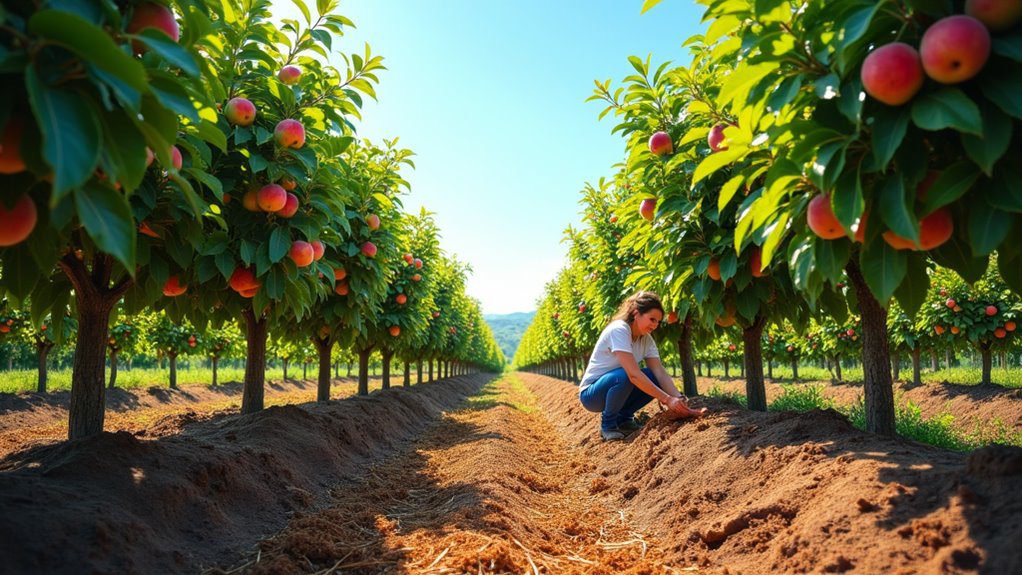
To achieve healthy fruit production, attention to soil requirements is vital.
Fruit trees thrive in well-drained soil with a sandy, loamy texture. Ideal soil composition includes equal parts sand, peat, and bark, allowing moisture retention and effective drainage. Additionally, appropriate soil care is essential for successful growth and can significantly impact the quality and taste of the fruit produced.
Additionally, each tree type has specific pH levels, like apple trees preferring 5.0-6.5, while blueberries need a more acidic range of 4.0-6.0.
Growth Rate
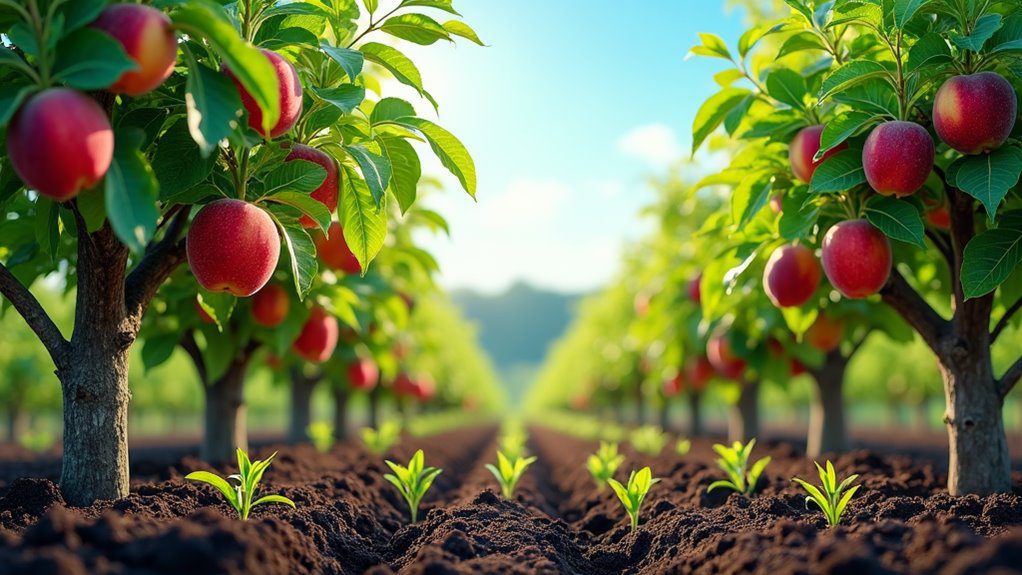
Assessing growth rates is crucial when selecting fruit trees for your garden, as it directly influences how quickly you'll enjoy their produce. Factors like rootstock selection significantly affect fruiting time; for instance, M27 can yield in 1-2 years. Additionally, understanding growth conditions like climate and tree size helps you choose the right variety to maximize your harvest efficiently. For example, dwarf trees often bear fruit within the first year, making them an excellent choice for quick yields.
Maintenance Tips

When it comes to successfully growing fruit trees, effective maintenance is key to ensuring healthy growth and bountiful harvests.
I recommend annual pruning techniques to maintain shape and boost fruit production.
Establish a watering schedule, watering early in the morning at the base to prevent fungal issues.
Remember to use lukewarm water and avoid splashing leaves to protect against diseases.