

In Zone 9, I've discovered that a variety of fruit trees thrive, thanks to the mild winters and extended growing season. I often recommend low-chill peach varieties like Tropic Snow and Santa Barbara, which require fewer chill hours. Citrus trees, such as Meyer lemons and Yuzu, also flourish here. Don't forget tropical fruits like bananas and avocados, which love the warmth. Suitable apple varieties exist as well. To maximize success, I always check soil pH and implement effective pest management strategies. If you're excited to learn about specific varieties and care tips, there's even more to explore!
Ideal Climate for Fruit Trees
In Zone 9, understanding the ideal climate for fruit trees is crucial for successful cultivation.
Climate considerations, like temperature fluctuations, directly affect chill hours, which are essential for dormancy and fruit production. Trees need between 32°F and 45°F to accumulate sufficient chill hours. Additionally, the mild winters in Zone 9 allow for a longer growing season, which benefits the overall health and productivity of fruit trees.
Local microclimates can further influence which varieties thrive, so always assess your specific environment before planting.
Low-Chill Peach Varieties

Selecting the right peach varieties for Zone 9 can make all the difference in a successful harvest, especially when considering the unique climate conditions. Low-chill benefits allow varieties like Tropic Snow and Santa Barbara to thrive with fewer chilling hours. Additionally, many Burchell peach varieties are specifically bred for disease resistance and hardiness, making them ideal for diverse climates. Utilizing effective peach pollination techniques enhances fruit yield, ensuring sweet, juicy peaches that flourish in our warm winters. Choose wisely for optimal results!
Citrus Tree Options

Citrus enthusiasts will find that Zone 9 offers a wealth of options for planting vibrant and productive citrus trees. Meyer lemons and Yuzu boast impressive cold tolerance, down to 20°F and 10°F, respectively. For optimal citrus tree care, plant during cooler months, use organic fertilizers, and protect with mulch and frost blankets during cold snaps. Choose varieties suited for your space and climate, as citrus trees thrive in Northern California's favorable conditions.
Tropical Fruits for Zone 9

Tropical fruits bring a unique flavor and diversity to your garden in Zone 9, but choosing the right varieties is essential for success. I've found that avocados and passionfruits thrive well, while mangoes require serious cold stress management. Consider hardy tropical fruit varieties like starfruit and Asian guava, and always prepare to protect your trees during colder spells for optimal growth. Additionally, understanding local microclimates can greatly influence the success of your fruit trees.
Suitable Apple Varieties

When it comes to growing apple trees in Zone 9, understanding the specific chill hour requirements is crucial for success. I recommend varieties like 'Anna' and 'Dorsett Golden,' both needing 250-300 chill hours. For effective apple tree selection, consider planting multiple types to enhance pollination strategies. Additionally, 'Ein Shemer' thrives without chill hours, providing flavorful apples in our warm climate. Low chill apple trees are particularly suited for warmer climates, making them excellent choices for gardeners in this region.
Olive Tree Choices
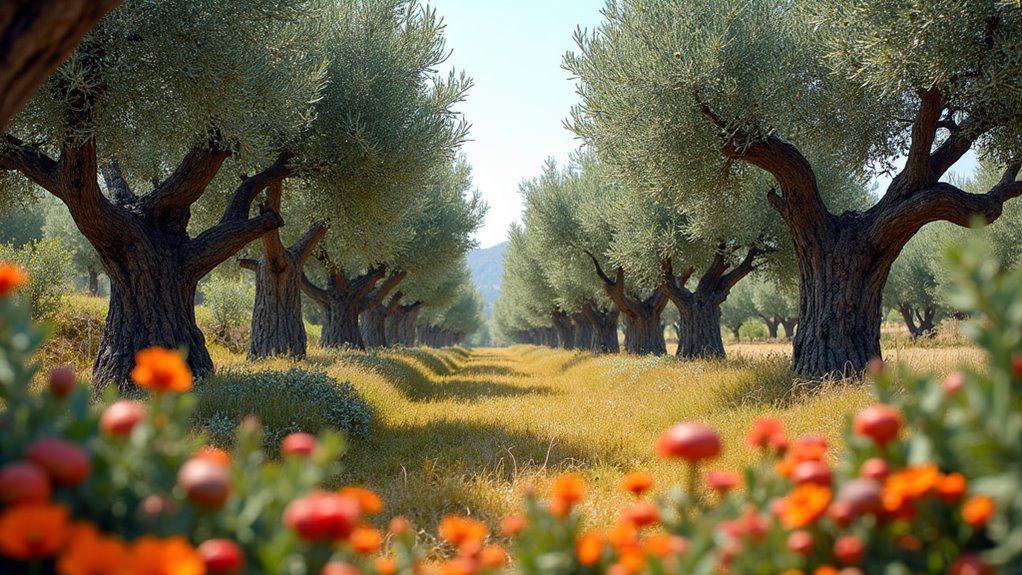
Selecting the right olive tree varieties for your garden can significantly impact your success in Zone 9. I recommend considering self-fertile options like 'Arbequina' and 'Frantoio' for ease, but planting other varieties such as 'Manzanillo' and 'Sevillano' enhances pollination strategies. Olive trees require at least 8 hours of direct sunlight to thrive, which is crucial for optimal fruiting. Space trees about 10-20 feet apart to maximize cross-pollination, which boosts fruit size and quality, ensuring a fruitful harvest.
Best Planting Times

Choosing the right olive tree varieties is just the beginning; timing your planting is equally important for ensuring a successful harvest in Zone 9. I recommend planting in early spring, from February to April, or late summer to early fall, September to November. Use effective planting techniques and make seasonal adjustments for frost risks, especially in Zone 9a, to optimize growth and establishment. Additionally, consider the best fruit trees for your specific zone to maximize fruit production potential.
Soil Requirements
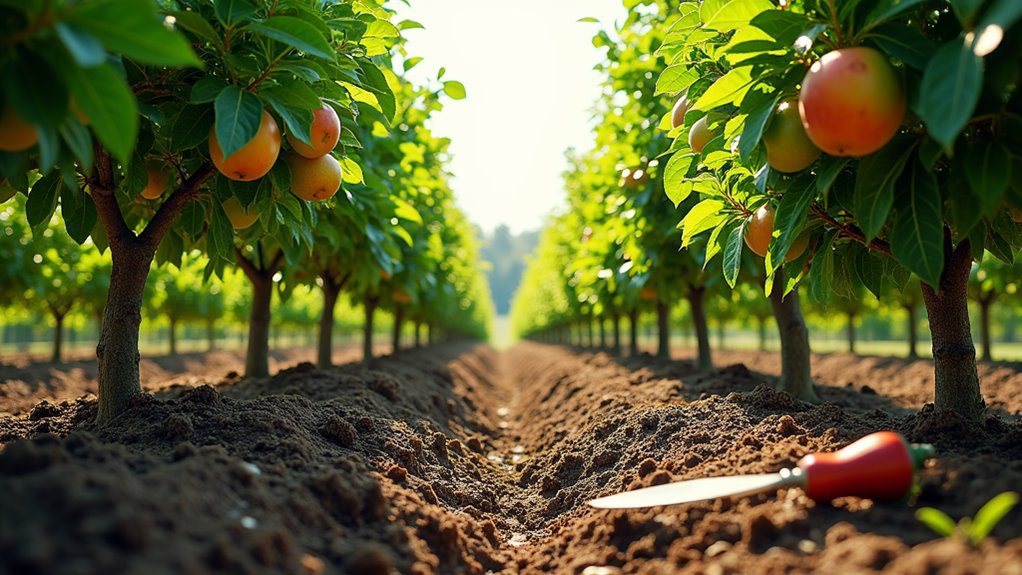
To ensure your fruit trees thrive in Zone 9, understanding soil requirements is crucial. Aim for a soil pH between 6 and 7, ideally around 6.8. Proper nutrient balance is essential; regular soil tests can identify deficiencies. Well-draining, fertile soil with organic amendments like compost improves drainage and fertility, while lime or sulfur can adjust pH as needed for optimal growth. Well-draining, fertile soil is preferred for fruit trees, ensuring healthy root development and tree growth.
Care and Maintenance Tips

Understanding soil requirements lays the groundwork for successful fruit tree cultivation, but ongoing care and maintenance are just as important for ensuring their health and productivity. I recommend using deep watering methods in the morning to minimize evaporation and employing precise pruning techniques—removing dead wood and maintaining spacing—to promote airflow. Regularly tidying the area, ensuring a healthy environment for your fruit trees, is crucial to monitoring common signs of distress.
Pest and Disease Management

When it comes to maintaining healthy fruit trees in Zone 9, effective pest and disease management is crucial for maximizing yields and ensuring longevity. I prioritize pest identification, using methods like insecticidal soap for aphids and pheromone traps for codling moths. Regular inspections are essential to check for signs of pests, helping to catch any infestations early. For disease prevention, I remove infected materials and apply fungicides early, ensuring I monitor for symptoms to maintain tree health.
Harvesting and Yield Insights
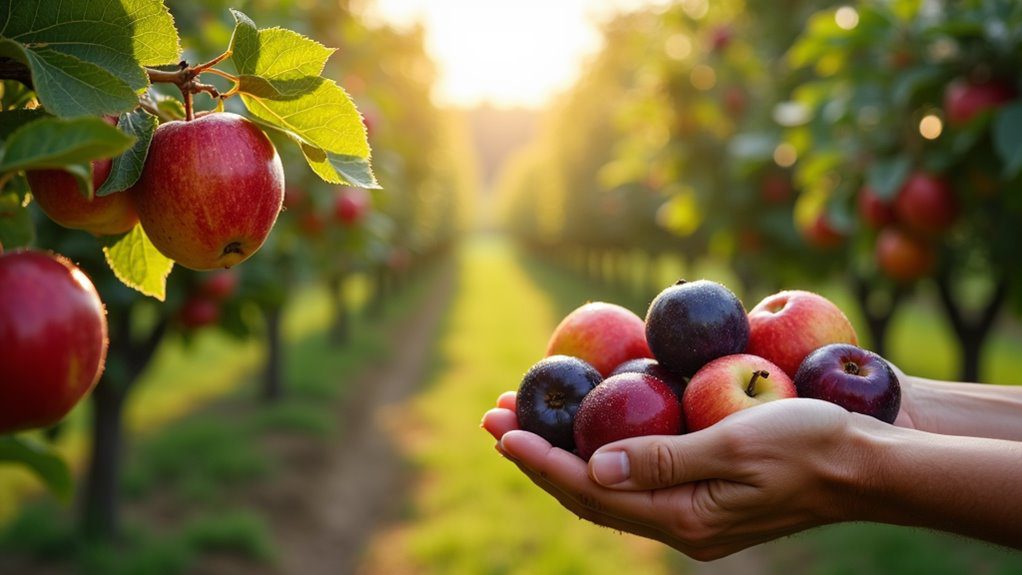
Harvesting fruit trees in Zone 9 requires careful attention to timing and techniques to ensure optimal yields.
I use pruning shears for delicate fruits and a ladder for higher branches, always handling them gently.