

To prepare my perennials for winter, I start by pruning them back, cutting close to the crown for healthier regrowth. I always use sharp, sterilized tools to prevent disease. Next, I remove any dead foliage to enhance air circulation. After that, I apply a 2- to 4-inch layer of organic mulch to insulate the soil and protect roots from harsh temperatures. I also ensure my bulbs are dug up and stored correctly if they're tender. Lastly, I keep an eye on soil moisture to avoid dehydration. There's a lot more I can share to ensure my plants thrive in spring.
Preparing for Winter Care

As the days grow shorter and temperatures drop, I find it crucial to prepare my perennials for the impending winter. I conduct a thorough pest inspection, identifying any signs of disease or damage. I remove dead foliage and address moisture management by ensuring the soil remains moist but not waterlogged. Keeping soil frozen aids in root establishment, providing a stable foundation for my plants to thrive come spring. Additionally, ensuring that the soil has good drainage capabilities can help prevent waterlogging during winter, which is essential for root health. Composting the debris helps maintain soil health, setting my plants up for a successful spring.
Pruning and Cutting Back
When winter looms, I make it a priority to prune and cut back my perennials to ensure they survive the cold months ahead. I focus on effective pruning techniques and cutting methods, using sharp tools for precision. Pruning promotes healthy growth, preventing disease as dead foliage attracts pests that harm plants. Additionally, proper timing and frequency of pruning can significantly impact the overall health of the plants. Here's what I do:
- Prune hostas, peonies, and daylilies in late fall.
- Cut stems close to the crown.
- Sterilize tools between cuts.
- Leave 1-2 inches of stem above ground.
Mulching and Soil Protection

Applying mulch correctly is one of the most crucial steps in preparing perennials for winter. I usually wait until after several hard frosts, applying a 2- to 4-inch layer of organic mulch materials like shredded leaves or pine needles. This mulch application insulates the soil, regulates temperature, and retains moisture, protecting the crowns and roots of my perennials from harsh winter conditions. Leaving debris helps shallow-rooted perennials avoid frost heaving during freeze-thaw cycles. Additionally, mulching with organic materials can enhance soil structure and moisture retention, providing the necessary support for perennials as they enter dormancy.
Bulb Care
Preparing bulbs for winter involves careful attention to a few essential steps to ensure their survival until spring.
Here's how I handle bulb care:
- Identify tender bulb types like dahlias and cannas.
- Carefully dig them up after the first frost.
- Ensure bulbs are dry before storage.
- Store in a cool, dark place, using appropriate bulb storage materials like peat moss. Additionally, it's important to dig up summer-blooming bulbs like gladiolus before winter to protect them from frost damage. Maintaining well-draining soil during the growing season can help ensure robust bulb health before winter storage.
General Maintenance
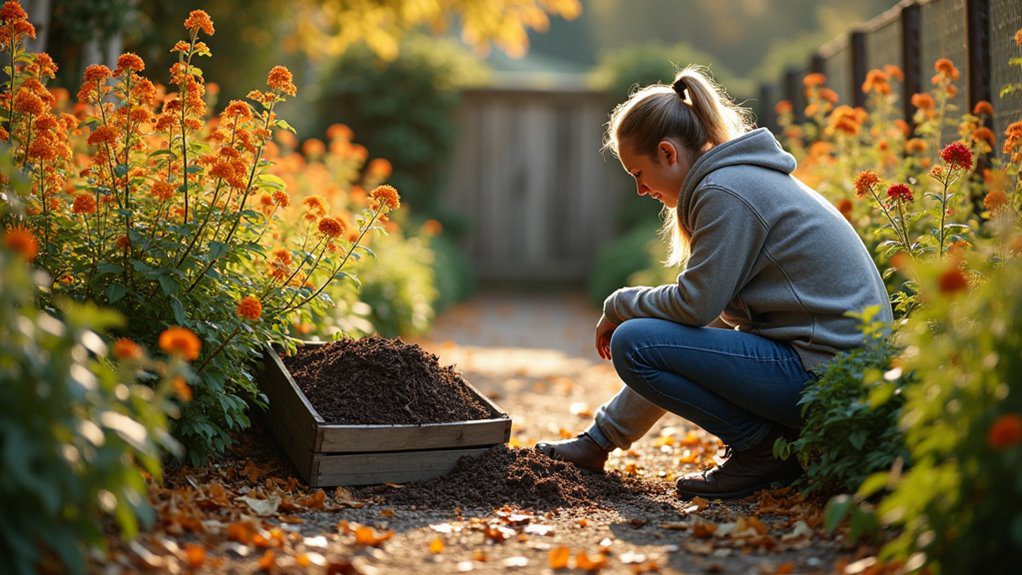
General maintenance of perennials during the winter months is crucial for their health and vitality in the spring. I focus on pruning herbaceous varieties to the ground, removing dead foliage, and applying a thick layer of organic mulch for insulation. Additionally, maintaining a thick mulch layer helps protect the roots from extreme temperature fluctuations.