

Grow thriving pumpkins in small spaces by choosing compact varieties like Baby Bear or Casperita. Utilize vertical growing methods with trellises for optimal space use. Enhance soil health with organic matter and continuous-release plant food. Water deeply in a circle around the plant, mulch with straw, and fertilize weekly for robust growth. Shield against diseases and pests for a plentiful harvest.
1. Selecting Space-Efficient Pumpkin Varieties

When choosing space-efficient pumpkin varieties, opt for small options like Baby Bear, Wee-B-Little, or Casperita to maximize yield in limited growing areas. These compact pumpkin varieties are perfect for small spaces, allowing you to grow pumpkins even in containers, raised beds, or on vertical trellises. By selecting mini pumpkins weighing less than four pounds, you can ensure a bountiful harvest while conserving space.
Small pumpkin plants that mature in around 100 days are ideal for those looking for quicker harvests in limited spaces. These varieties not only save time but also provide you with delicious pumpkins for fall decor and holiday decorations. When growing pumpkins in small spaces, it’s crucial to choose pumpkin types that are suitable for your specific area and needs.
Consider the versatility of these small pumpkin varieties when planning your garden to make the most out of your space while enjoying a successful pumpkin harvest.
2. Implementing Vertical Growing Techniques

To maximize your pumpkin yield in small spaces, consider implementing vertical growing techniques such as trellises and towers for optimal space utilization and plant health. Vertical growth methods like trellises provide essential support for the vines and pumpkins, reducing the risk of ground rot and enhancing air circulation to prevent diseases. By utilizing these support structures, you can ensure easier maintenance, monitoring, and harvesting of your pumpkins in limited spaces. Additionally, trellises and towers aid in pest management and offer improved sunlight exposure for the development of healthy fruits. The vertical approach allows you to grow multiple plants in a confined area, making the harvesting process more accessible and efficient. Embracing vertical growing techniques not only maximizes your pumpkin production but also promotes better plant growth and overall garden management in small spaces. So, invest in sturdy trellises or towers to elevate your pumpkin-growing game and reap the benefits of a thriving garden.
3. Maximizing Soil Health for Pumpkins
:max_bytes(150000):strip_icc()/GettyImages-610878486-e93062a5232b4674abca6bfc1eb425a7.jpg)
Enhancing soil health for your pumpkins can be achieved by incorporating organic matter like old compost to provide essential nutrients for optimal growth. When planting your pumpkin seeds, ensure the soil quality is rich by adding a few inches of compost. This will supply the necessary nutrients for healthy pumpkin growth. Adequate nutrition is crucial for your pumpkins to thrive, so consider using continuous-release plant food to support their development throughout the growing season.
Healthy pumpkin growth also relies on proper watering techniques. Utilize soaker hoses or drip irrigation systems to water your pumpkins effectively while avoiding issues like stem rot. Remember to water around the plant base to keep the leaves dry, preventing diseases and promoting robust growth.
Additionally, elevate developing pumpkins off the ground to prevent rotting and allow for adequate air circulation around the fruit. By maximizing soil health through organic matter and providing sufficient water and nutrients, you can set the foundation for successful pumpkin cultivation in small spaces.
4. Strategic Watering and Mulching

Water pumpkins deeply in a 2-foot circle around the plant to promote healthy root growth and ensure optimal moisture levels for successful cultivation in small spaces. Strategic watering plays a crucial role in maintaining the health of your pumpkins. Mulching with straw not only helps retain moisture but also suppresses weeds and shields pumpkins from soil-borne diseases, promoting root growth. Remember to avoid wetting the foliage while watering to prevent powdery mildew issues. Additionally, mulching assists in regulating soil temperature, creating an environment where pumpkins can thrive. For successful pumpkin growth in small spaces, consistency in watering and mulching practices is key.
| Watering Tips | Mulching Tips | Prevention Tips |
|---|---|---|
| Water deeply | Mulch with straw | Avoid wetting foliage |
| 2-foot circle | Retain moisture | Prevent powdery mildew |
| Promote root growth | Suppress weeds | Shield from diseases |
| Ensure moisture levels | Protect from diseases | Regulate soil temperature |
5. Fertilizing for Optimal Pumpkin Growth
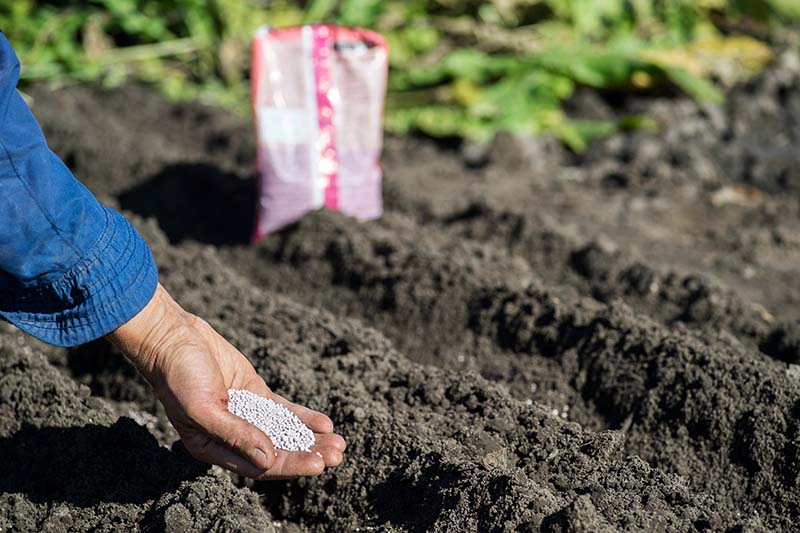
For optimal pumpkin growth in small spaces, make sure to regularly apply a balanced liquid vegetable fertilizer weekly to provide essential nutrients. This practice is crucial for promoting healthy pumpkin development. When fertilizing, target the base of the plant to avoid getting the fertilizer on the leaves, which could cause damage. In addition to liquid vegetable fertilizer, consider using compost as a natural mulch to enrich the soil and support robust fruit production. By consistently feeding your pumpkin plants with the right nutrients, you can encourage vigorous vine growth and prevent nutrient deficiencies. Proper fertilizing practices play a significant role in enhancing overall pumpkin plant health in limited gardening spaces. Remember, a well-fed pumpkin plant is more likely to thrive and produce a bountiful harvest, making fertilizing an essential aspect of successful pumpkin cultivation in small areas.
6. Disease Prevention and Harvesting Tips
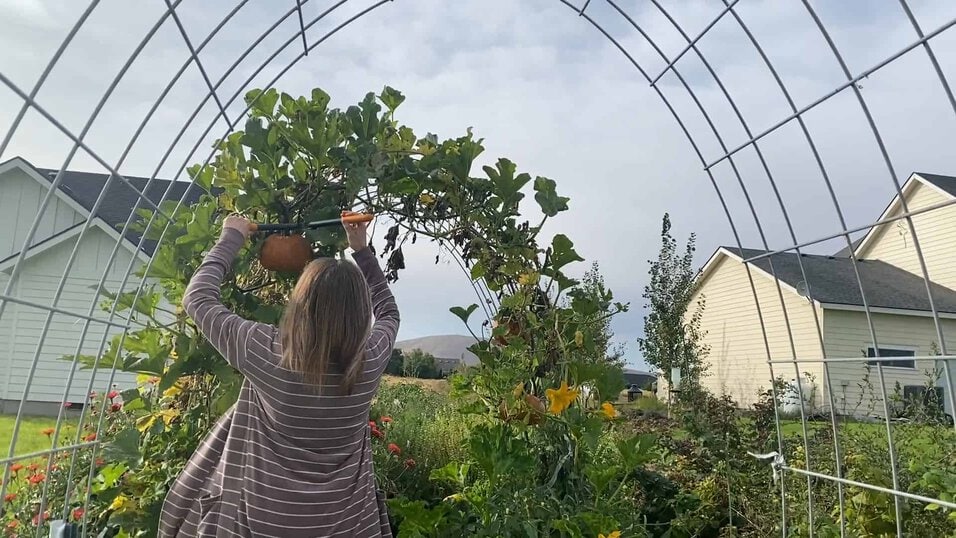
To prevent pumpkin diseases and ensure a successful harvest, focus on implementing effective disease prevention strategies and following proper harvesting techniques. Prevent powdery mildew by avoiding water splashing on leaves and ensuring adequate air circulation around the plants. Regularly monitor your pumpkins for signs of pests and diseases to address any issues promptly. Allow pollinators like bees to assist in fruit setting for a bountiful harvest.
When it comes time to harvest your pumpkins, wait until the skin color is fully developed, the stem is deep green, and the skin feels leathery and resilient when gently pressed. To harvest, cut pumpkins off the vine on either side of the stem with a clean knife. After harvesting, wash the pumpkins with a bleach solution to prevent rot, then store them in a cool, dry place. Following these disease prevention and harvesting tips will help ensure a healthy pumpkin crop for you to enjoy.