

If you're looking to transform your outdoor space, I've got 15 succulent landscape design ideas that will make your garden pop! Start by choosing a mix of succulent varieties that complement each other in size and texture. I love creating multi-layered gardens with berms that enhance drainage and visual interest. Incorporating hardscape elements like boulders and gravel adds character while keeping weeds at bay. Stick around to explore sustainable practices and tips for attracting wildlife to your succulent haven!
Choosing the Right Succulent Varieties
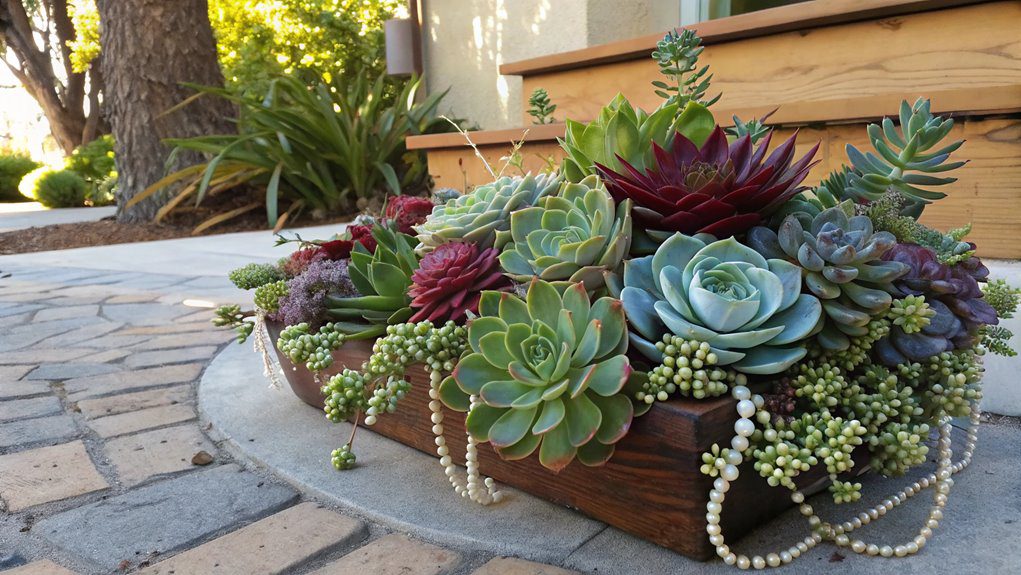
When selecting the right succulent varieties for your landscape, how do you ensure that each choice complements your vision?
I focus on size, growth patterns, and succulent care. For instance, pairing compact options like Paleleaf Yucca with towering Yucca treculeana creates dynamic contrast.
I also consider seasonal changes—some thrive in summer while others prefer cooler months, ensuring a vibrant landscape year-round. Additionally, understanding watering needs is crucial when combining different succulent varieties to maintain a healthy environment.
Designing a Multi-Layered Succulent Garden

How can you transform a flat garden into a captivating multi-layered succulent oasis?
By creating berms and valleys, I enhance drainage and visual harmony.
Layered plantings bring life to your space; mix heights and textures for interest.
Curved lines guide the eye, while crushed rock adds a polished finish.
Embrace gravity's gift—mounded soil showcases your succulents beautifully, resulting in a stunning, dynamic landscape. Additionally, using well-draining soil is essential to prevent root rot and ensure healthy growth.
Enhancing Drainage for Healthy Succulents

Creating a stunning multi-layered succulent garden not only involves selecting the right plants but also paying close attention to their drainage needs.
I always use pots with drainage holes and fast-draining soil, mixing light potting soil with perlite or pumice.
Adding drainage materials like gravel at the bottom ensures excess water flows away, keeping my succulents healthy and thriving. Proper drainage is essential for preventing root rot and promoting healthy growth.
Creating Visual Interest With Terrain Sculpting

While sculpting the terrain of my succulent garden, I find that incorporating hills and mounds transforms the landscape into a dynamic visual experience. These terrain variations not only improve drainage but also add sculptural elements that captivate the eye. Additionally, ensuring adequate soil depth enhances root growth and overall plant health in raised beds.
Incorporating Hardscape Elements in Your Design
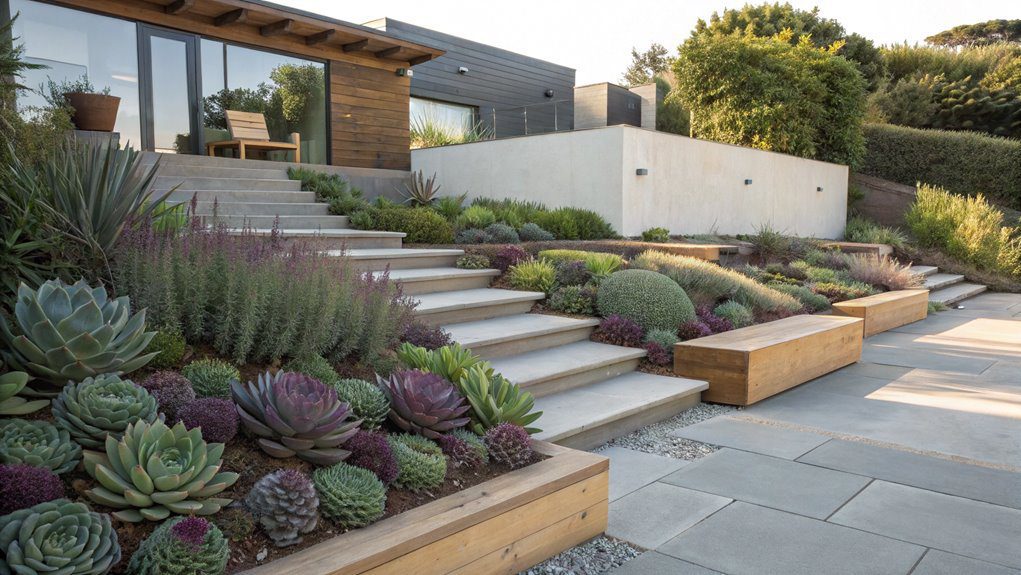
As I delve into the art of landscape design, I find that incorporating hardscape elements transforms my garden into a cohesive, functional space.
Strategic boulder placement adds definition and creates a natural flow, while gravel benefits extend beyond aesthetics, discouraging weeds and moderating soil temperature.
These elements not only enhance visual interest but also guide exploration throughout my succulent haven.
Selecting a Color Palette for Succulent Gardens
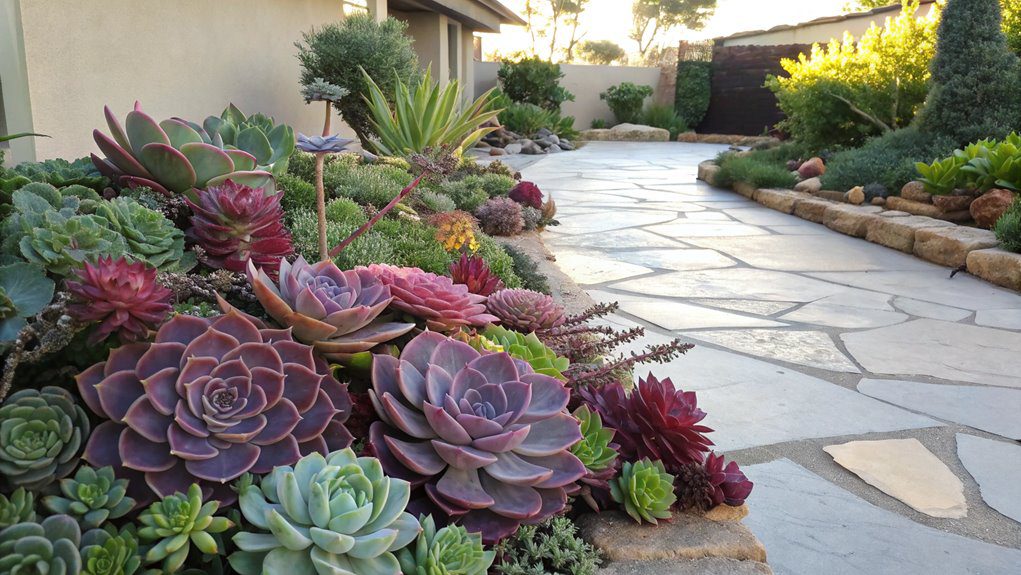
How do you choose the right color palette for your succulent garden?
Consider color psychology and seasonal palettes to evoke desired moods.
For instance, the 'Desert Bloom' palette balances warm and cool tones, while 'Berry Succulents' bursts with bold hues.
Combine lush greens and vibrant accents to create a captivating design, ensuring each plant's unique colors harmonize and uplift your space.
Maximizing Texture in Your Succulent Landscape
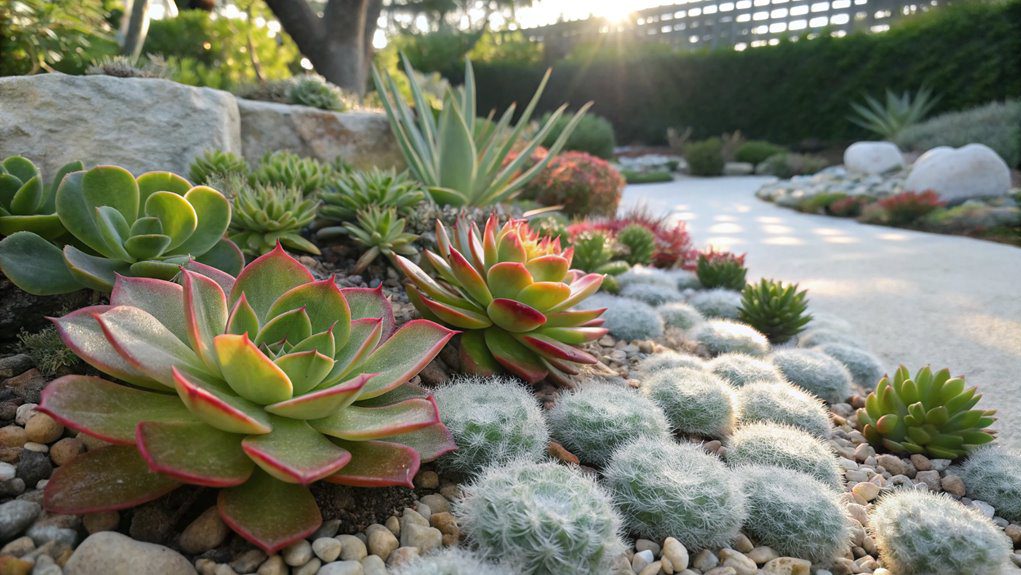
Texture is the heartbeat of a succulent landscape, transforming a simple garden into a vibrant tapestry of shapes and surfaces.
By mixing diverse succulent textures—fleshy leaves, spines, and rosettes—with contrasting elements like boulders and gravel, I create layers of interest.
These features not only enhance aesthetics but also stabilize soil and manage moisture, making the garden both beautiful and sustainable.
Grouping Plants for Naturalistic Compositions
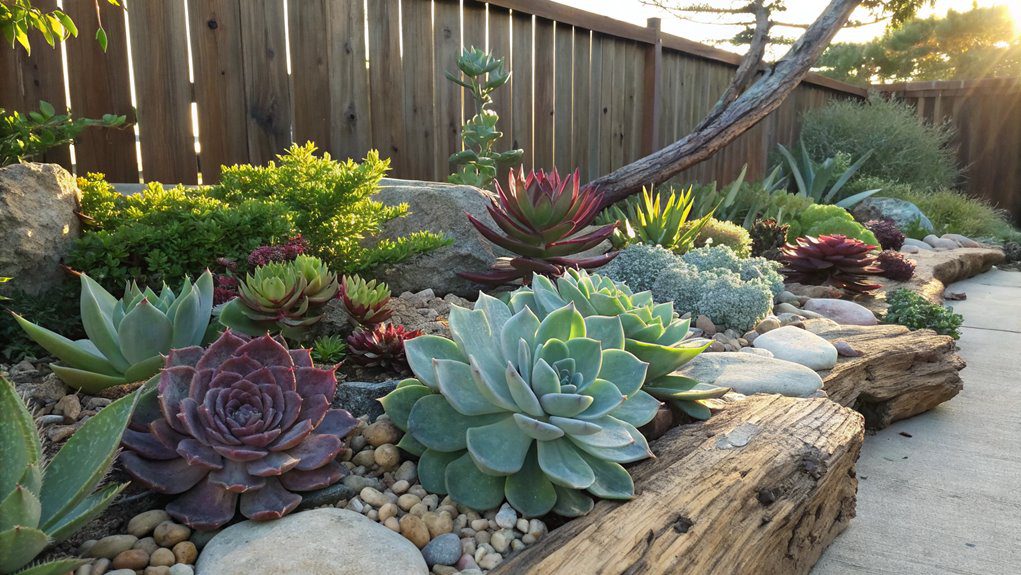
While planning a succulent garden, I find that grouping plants strategically creates a naturalistic composition that mimics the beauty of their native habitats.
I love experimenting with plant pairings that reflect seasonal shifts, such as pairing rosette-forming succulents with cascading types. This approach not only enhances visual interest but also ensures that all plants thrive together, creating a harmonious and inviting landscape.
Layering Techniques for a Cohesive Look

To achieve a cohesive look in your succulent garden, I focus on layering techniques that create depth and intrigue.
I use layering strategies by placing taller succulents at the back and shorter ones in front, maintaining visual balance.
Overlapping plant masses and varying heights fosters a dynamic landscape, while integrating hardscaping elements adds texture, ensuring every layer contributes to the overall aesthetic harmony.
Adding Water Features for Serenity

As I explore ways to enhance the tranquility of my garden, adding water features becomes an enticing option.
By incorporating succulents, I achieve stunning succulent aesthetics while promoting water conservation. These low-maintenance designs replace traditional water with textured plants, creating a serene environment.
With proper drainage and strategic placement, my succulent fountain offers year-round beauty, effortlessly blending nature and tranquility.
Utilizing Containers for Versatile Planting
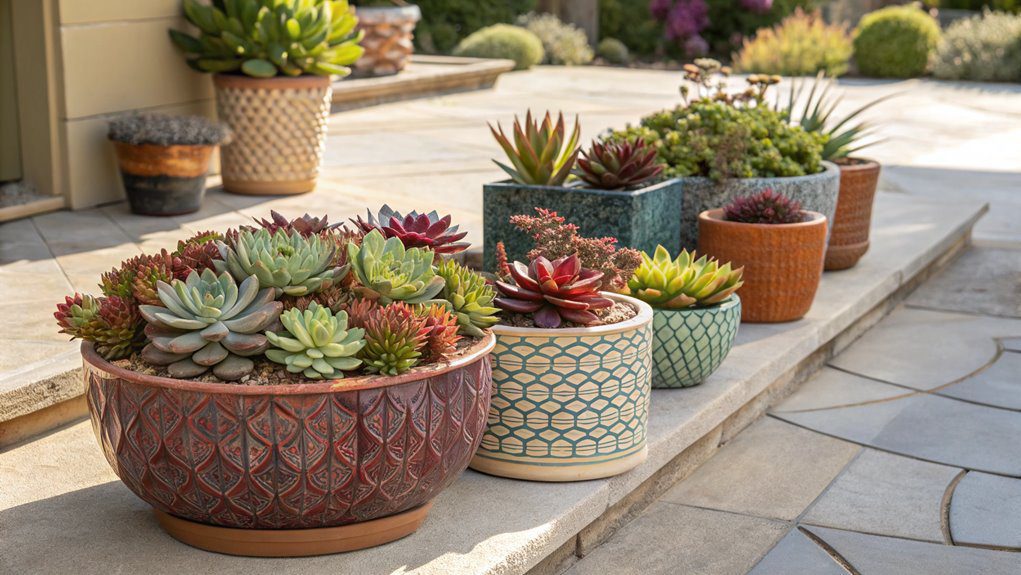
Utilizing containers for versatile planting has transformed my approach to gardening, allowing me to create dynamic displays in any space.
I love experimenting with container combinations, mixing textures and colors that complement my succulents.
Seasonal arrangements keep my garden fresh, while proper drainage ensures healthy growth.
With thoughtful placement and eye-catching designs, my urban oasis thrives, inviting joy and creativity into my outdoor life.
Incorporating Groundcovers for Added Depth

While planning my garden, I discovered that incorporating groundcovers not only adds depth to the landscape but also enhances the overall aesthetic with minimal effort.
The groundcover benefits are remarkable, providing vibrant seasonal colors and reducing weed growth.
Choosing low-growing succulents like Creeping Sedum and Ice Plants creates a lush tapestry, transforming bare areas into a stunning visual feast while thriving in well-draining soil.
Designing Pathways and Access Points

After enhancing my garden's depth with vibrant groundcovers, I started considering how pathways and access points could further elevate the design.
I chose durable pathway materials like decomposed granite and natural stepping stones, ensuring easy access design for maintenance.
These elements framed my succulents beautifully, creating a harmonious flow while providing stable, visually appealing routes throughout my garden, enhancing both function and aesthetics.
Sustainable Practices in Succulent Gardening

As I delved deeper into succulent gardening, I discovered how these resilient plants embody sustainable practices that not only benefit my garden but also the environment.
Using sustainable materials like compost enriches the soil, while eco-friendly tools minimize my carbon footprint.
Attracting Wildlife With Plant Selection
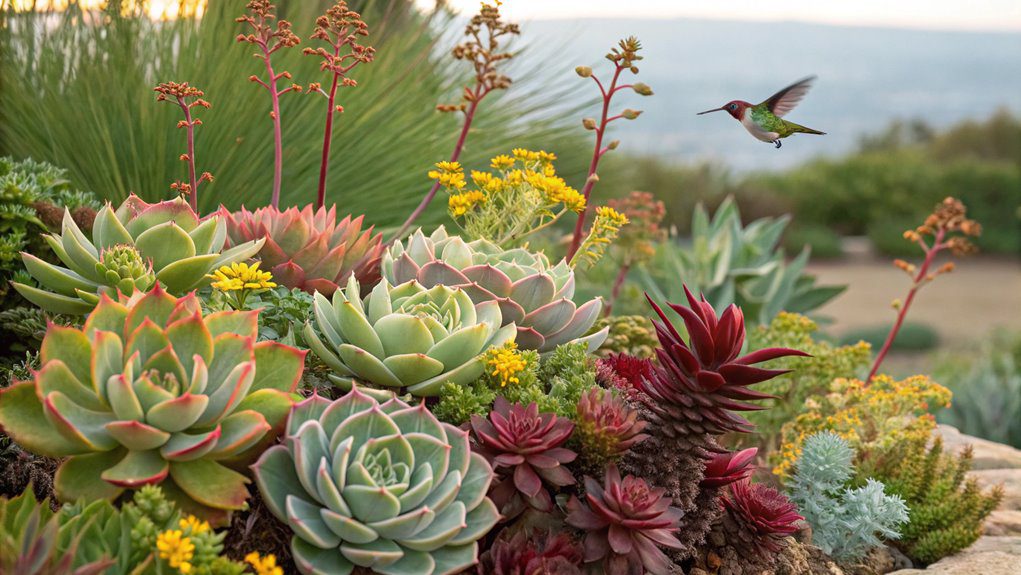
Creating a vibrant garden that attracts wildlife begins with thoughtful plant selection.
I focus on plant compatibility, choosing succulents like Dudleya and Penstemon that entice bees, hummingbirds, and butterflies with their nectar-rich flowers.
I also consider wildlife behavior, placing taller plants for perching and nesting.