

When I set out to create my koi pond, I realized that each decision shapes its ecosystem. I started by choosing a sunny spot but ensured there were shaded areas for the koi to retreat during peak hours. For depth and design, I mixed shallow and deep spots to enhance habitat diversity. I opted for mechanical and biological filters to keep the water crystal clear while adding plants for natural filtration. Adding aeration systems like fountains keeps the oxygen levels up. I even implemented sturdy barriers to ward off predators. Trust me, there’s so much more to explore that can elevate your pond!
1. Choosing the Right Location
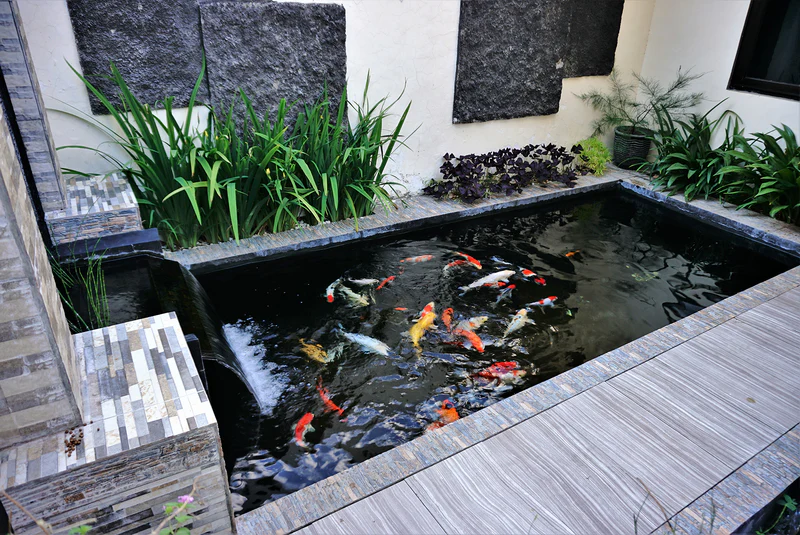
When it comes to choosing the right location for your koi pond, the first step is to assess the sunlight and shade in your yard. I found that achieving a sunlight balance is crucial; too much sun breeds algae, while too little can harm my koi. Look for shade options to protect them during peak hours, ensuring they thrive in a healthy environment. Additionally, the proper pond size directly impacts koi health and water quality, so ensure your chosen location can accommodate a larger pond.
2. Designing for Depth and Shape
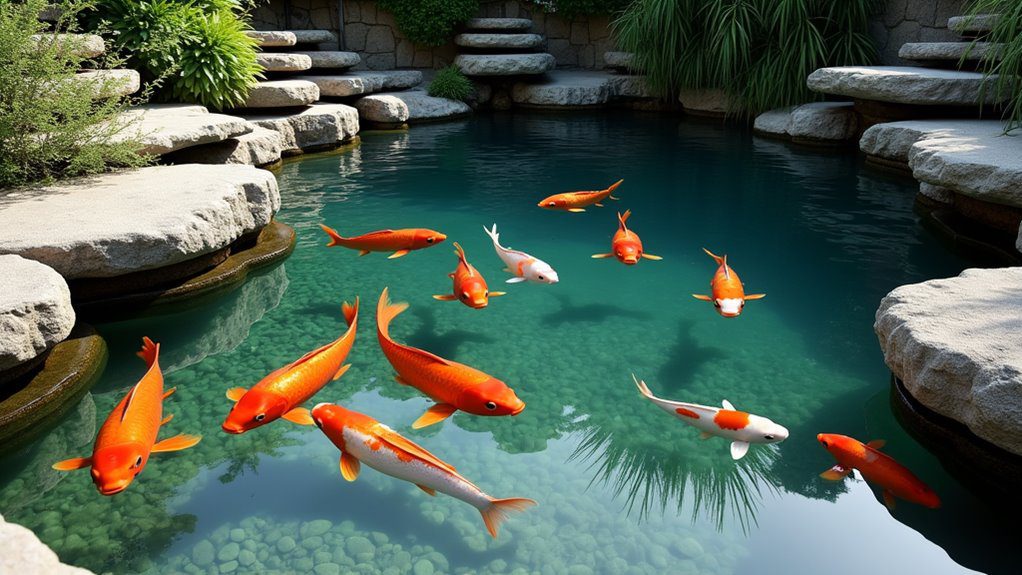
As I dive into designing the depth and shape of my koi pond, I quickly realize that these elements are crucial not just for aesthetics but also for the health of my aquatic life. I’m aiming for depth variations to create refuge for my koi and using shape considerations to enhance habitat diversity. Depth influences ecosystem health and balancing deep and shallow areas ensures stability and minimizes nuisance plants.
3. Selecting Filtration Systems
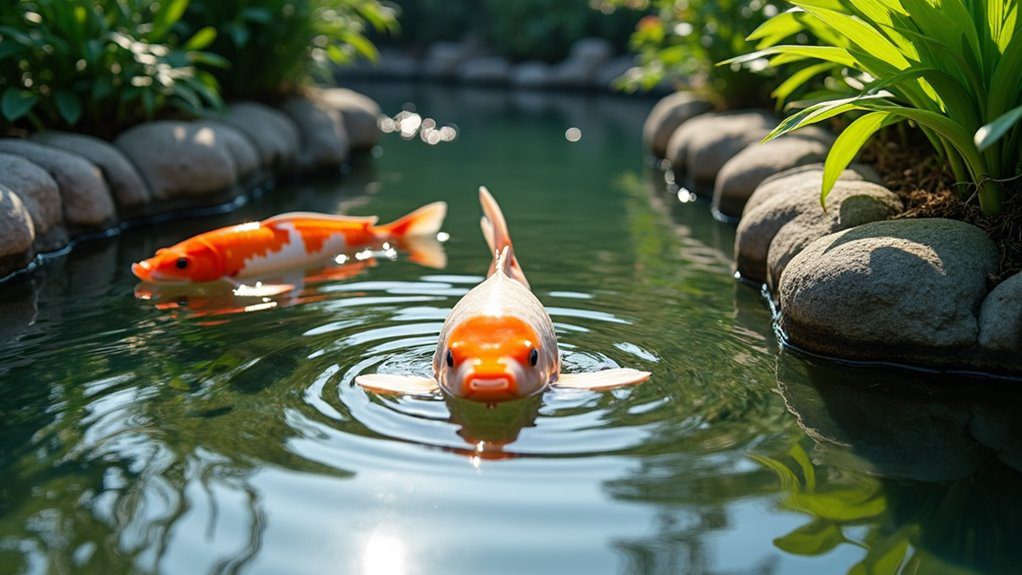
In the intricate dance of maintaining a thriving koi pond, selecting the right filtration system is paramount to ensuring both clarity and health for my aquatic companions.
I often weigh filtration types—mechanical, biological, and UV filters—while keeping filter maintenance in mind. For my setup, external pressurized filters offer robust performance, but I also appreciate the simplicity of submersible options for smaller ponds. Utilizing mechanical filters as the first line of defense helps to significantly reduce visible debris in my pond, ensuring a cleaner environment for my koi.
4. Incorporating Water Pumps
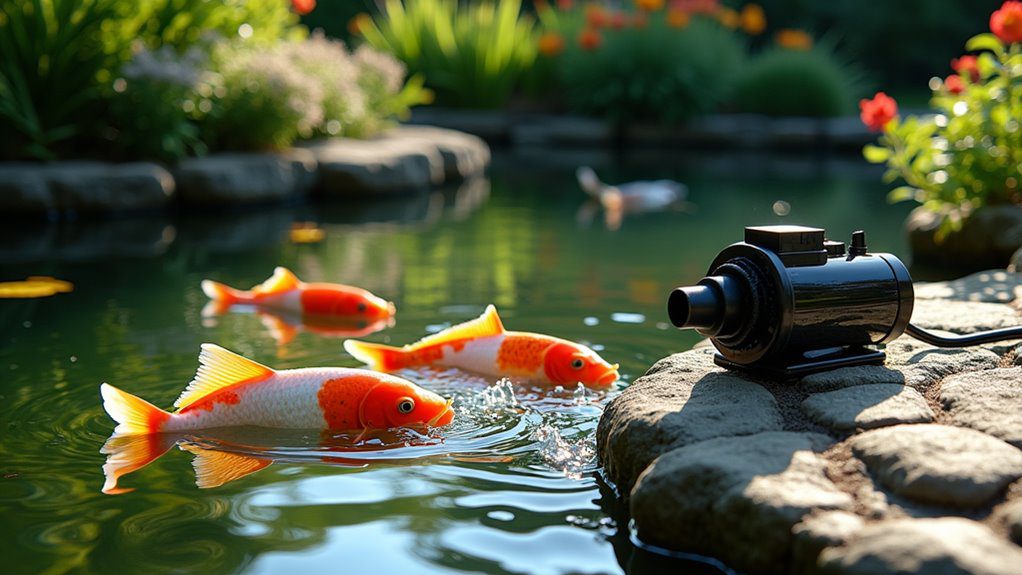
How do I ensure my koi pond not only looks stunning but also maintains optimal water quality?
I choose the right pump types, like submersible or external pumps, to suit my pond’s needs. Direct drive pumps can provide high pressure, making them ideal for greater heights in larger pond setups. Regular pump maintenance is crucial; I clean pre-filters and check for wear.
5. Enhancing With Pond Plants

Transforming your koi pond into a vibrant ecosystem starts with the right selection of aquatic plants. The pond plant benefits are immense; they filter water, absorb excess nutrients, and provide essential oxygen. Aquatic plants play a crucial role in oxygen production, as their photosynthesis process releases oxygen vital for the survival of fish and beneficial bacteria.
I love mixing aquatic plant varieties like submerged and floating plants, creating shade and beauty. This not only enhances aesthetics but also fosters a thriving habitat for fish and wildlife.
6. Balancing Fish and Ecosystem

Striking a harmonious balance between fish and the ecosystem is crucial for a thriving koi pond. I focus on fish compatibility and proper ratios to ensure that species coexist peacefully. Maintaining at least 50% plant cover supports ecosystem dynamics, while avoiding overfeeding helps prevent nutrient overload. Regular monitoring of water quality and allowing natural processes to unfold are key to achieving stability and health. Larger ponds maintain stable temperatures, which further supports the health of both fish and plants in the pond.
7. Understanding the Nitrogen Cycle
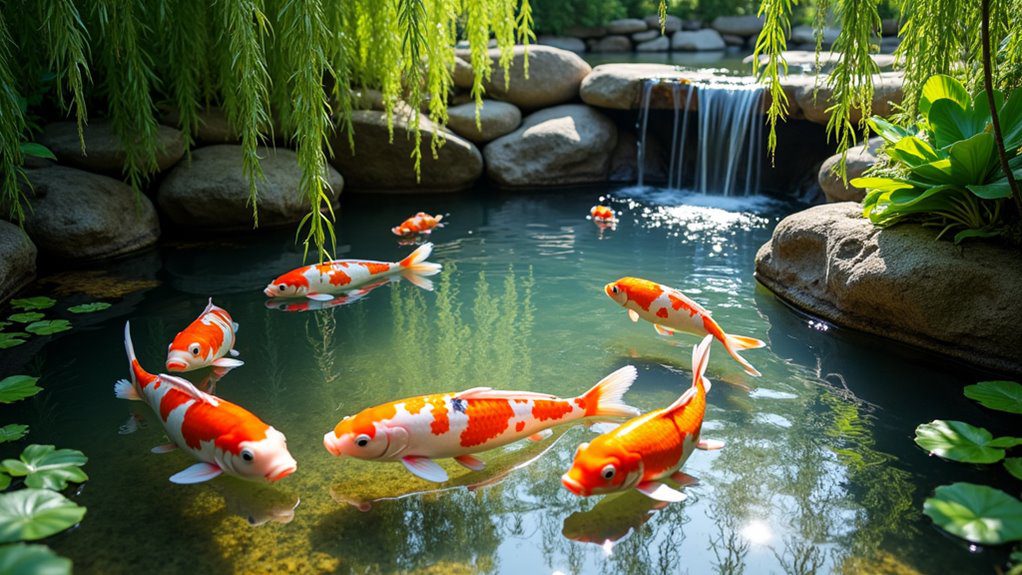
Maintaining a balanced ecosystem in your koi pond naturally leads to a deeper understanding of the nitrogen cycle, a vital process that keeps everything thriving. Nitrogen’s importance can’t be overstated, as it enters through rainfall and debris, releasing ammonia. Beneficial bacteria like Nitrosomonas and Nitrobacter convert this toxic ammonia into harmless nitrates, ensuring a healthy environment for your fish and plants. Nitrifying bacteria play a crucial role in this process, as they help transform harmful substances into nutrients that support aquatic life.
8. Adding Waterfalls and Features
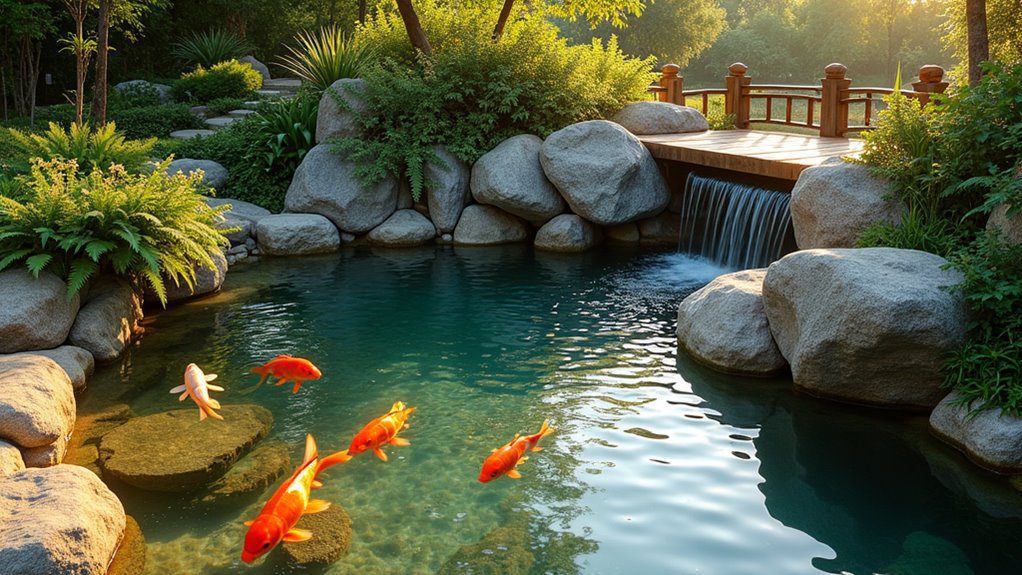
Water features, like waterfalls, can dramatically enhance the beauty and tranquility of your koi pond, creating a serene atmosphere that invites relaxation. I love framing the waterfall with large boulders to achieve stunning waterfall aesthetics. Incorporating hidden features, such as a small waterwheel or subtle lighting, brings movement and charm, making the pond an enchanting focal point that’s both functional and visually captivating. Additionally, using continuous water circulation in your design will help maintain water quality and clarity, ensuring a healthy environment for your koi.
9. Creating Fish Hides

Enhancing the beauty of your koi pond goes beyond just stunning waterfalls; it also involves creating safe havens for your fish.
I love using fish cave materials like large cut pipes or drop-in caves to craft natural camouflage. Integrating these shelters during construction or simply tossing them in provides fish with essential hiding spots, helping them thrive while blending seamlessly into the pond’s environment. Additionally, consider creating varying depths in your pond, as this will provide more diverse habitats for your koi to explore and hide.
10. Implementing Aeration Systems

Implementing an aeration system can transform your koi pond into a thriving aquatic ecosystem.
By utilizing aeration methods like floating fountains or submersed aerators, I’ve experienced incredible aeration benefits, including increased oxygen levels and reduced fish kills. These systems enhance water circulation and slow eutrophication, ensuring a healthier environment for my koi while adding aesthetic appeal to the pond. Additionally, maintaining high levels of dissolved oxygen is crucial for the overall health of aquatic life in the pond.
11. Automating Water Replacement
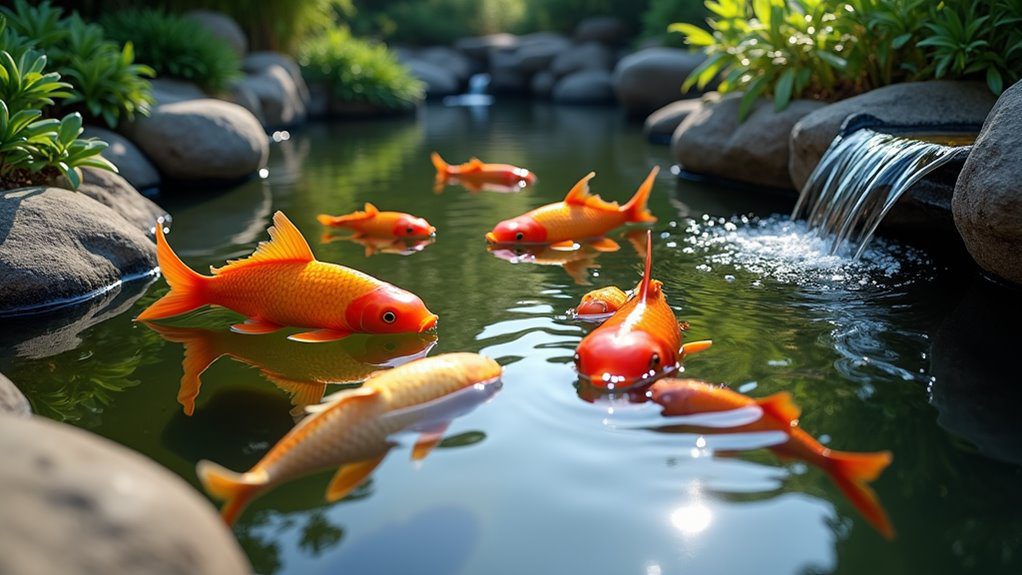
With the vibrant ecosystem in my koi pond flourishing thanks to the aeration system, I found that maintaining optimal water levels became increasingly important.
I installed a timed flow system, adding 600 liters daily while emphasizing water conservation.
Using a dechlorinator for tap water ensures system reliability, reducing chlorine impact.
Float valves and sensors automate management, keeping my pond healthy and thriving effortlessly.
12. Maintaining Regular Cleaning
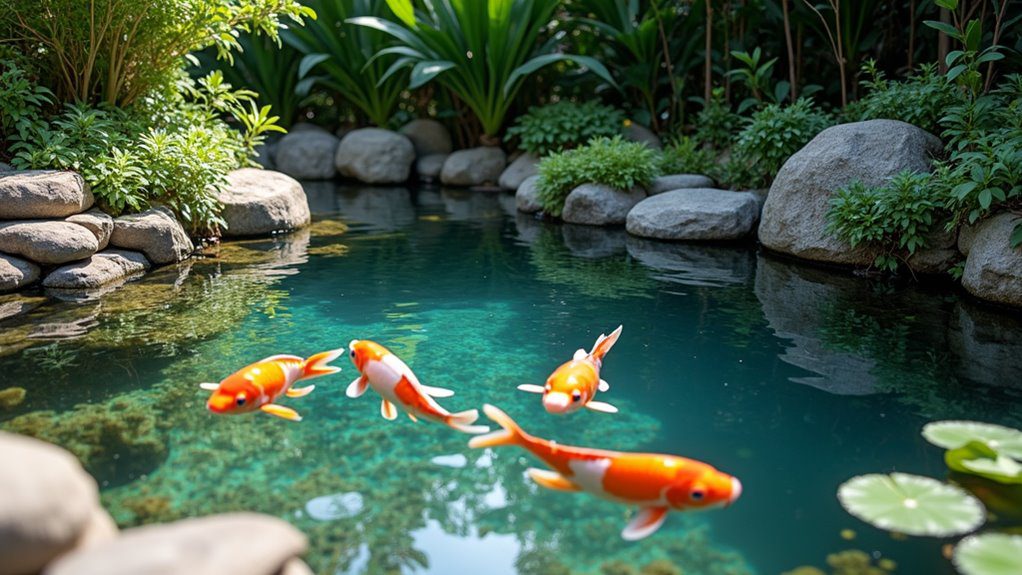
The key to a thriving koi pond lies in the commitment to regular cleaning and maintenance.
I stick to a strict cleaning schedule, vacuuming debris and manually removing floating algae weekly.
Power washing every few months keeps stubborn algae at bay.
I also ensure my filtration equipment is clean, which is essential for effective algae control.
This diligence keeps my pond healthy and beautiful.
13. Ensuring Predator Prevention
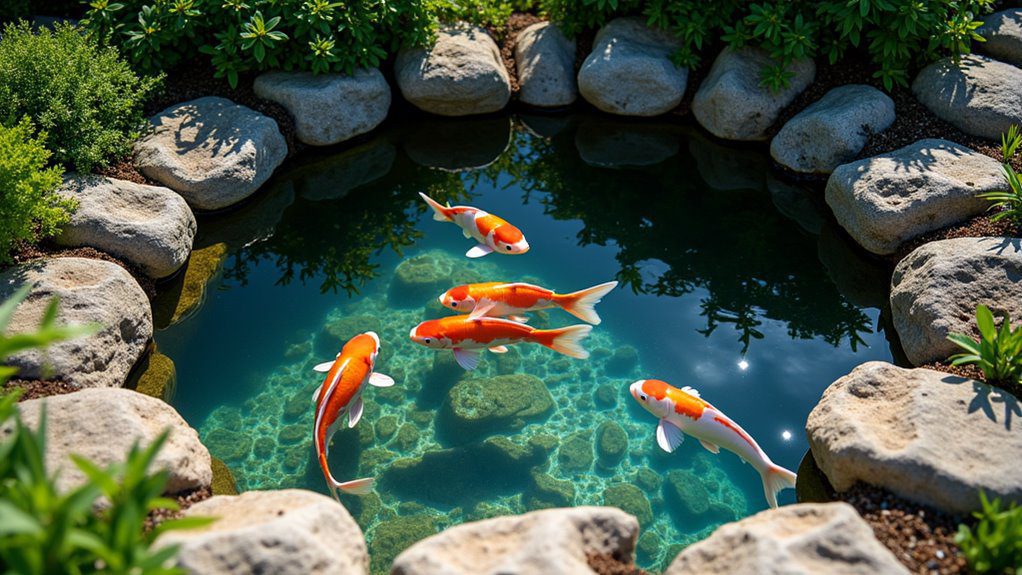
Creating a koi pond that thrives amidst nature’s threats requires strategic planning to ensure predator prevention.
I focus on predator proofing by designing deep water sections and layered structures to limit access. I incorporate natural deterrents like aquatic vegetation and underwater hiding places.
Physical barriers, such as sturdy netting and fencing, further safeguard my fish, making them less vulnerable to lurking predators.