

If you're gardening in Zone 4, I recommend considering fruit trees like Apple (Liberty, Freedom), American Plums (Alderman), and Sour Cherries (Meteor). These varieties are cold-hardy and can withstand harsh winters, ensuring reliable production. Don't overlook Pears and Peaches, as well, but make sure to check for suitable varieties. Optimal sunlight plays a crucial role; aim for at least 6 hours daily. Soil testing is essential, targeting a pH between 6.0 and 6.5. Additionally, pruning techniques will enhance growth and yield. There's much more to uncover, so let's explore these fascinating options together.
Apple Trees

When cultivating apple trees in Zone 4, I've found that choosing the right varieties is crucial for success. The apple tree benefits of hardiness and disease resistance are significant, but challenges like powdery mildew can arise. Varieties like Liberty and Freedom thrive in our climate, offering reliable harvests. Notably, the Combo Heritage Apple showcases unique heirloom varieties that are also well-suited for this region. Understanding these factors helps ensure a fruitful and resilient apple tree experience.
Plum Trees
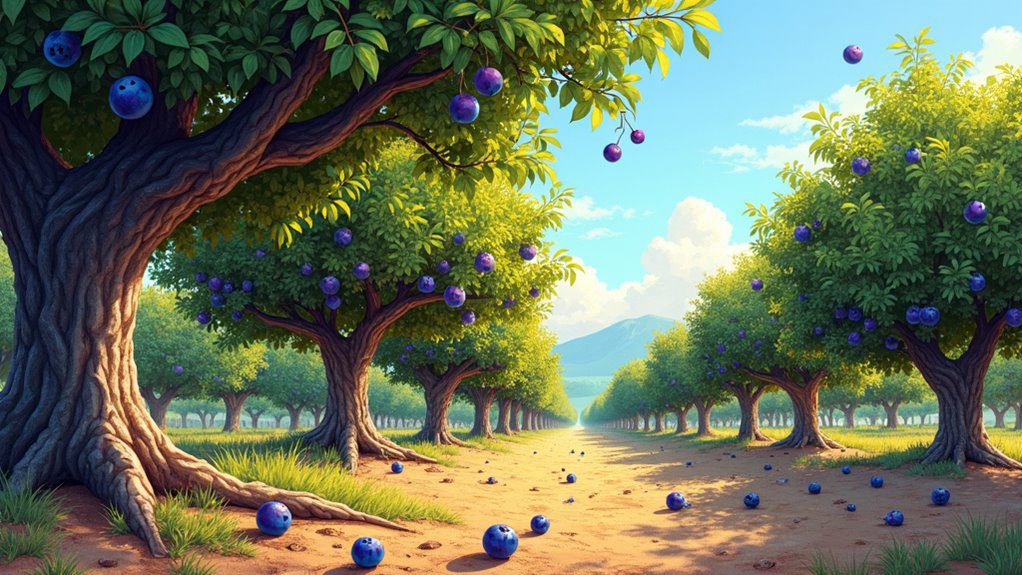
Plum trees can be a rewarding addition to any Zone 4 garden, but selecting the right cold-hardy varieties is essential for successful cultivation. I recommend options like the American, Superior, and South Dakota plums. Remember to practice fruit thinning, spacing fruits about 3-4 inches apart for optimal size. Ensure proper pollination and maintain well-drained soil for the best results. Additionally, over 100 species of plums exist, providing a diverse selection for home gardeners.
Cherry Trees
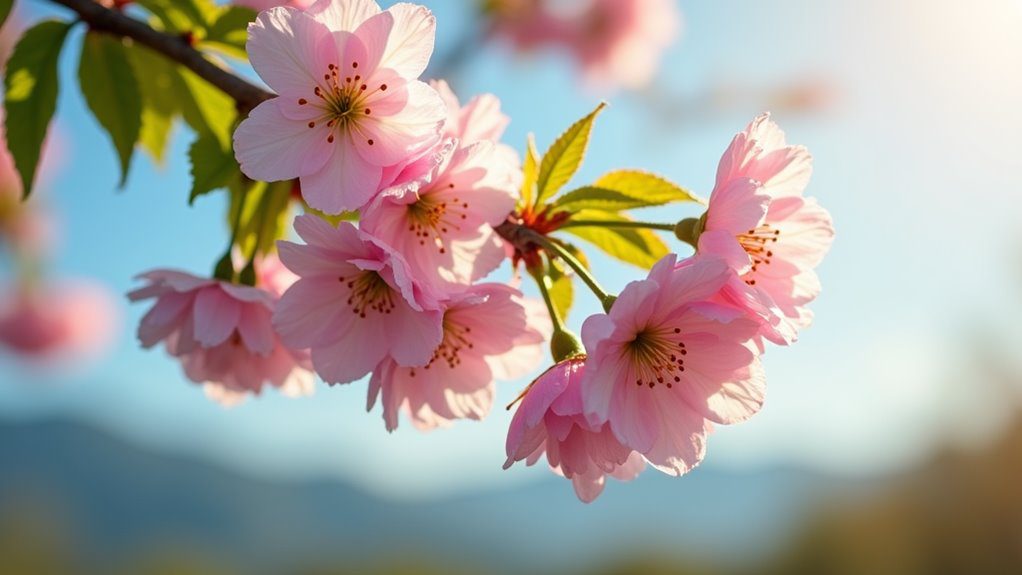
After exploring the rewarding world of plum trees, let's turn our attention to cherry trees, which also thrive in Zone 4.
Notable cherry tree varieties include 'Early Richmond' and 'Carmine Jewel.' Cold-hardy varieties are particularly well-suited for this climate, ensuring successful growth and fruiting.
For optimal cherry tree care, ensure full sun and well-drained soil.
Regular watering, strategic pruning, and pest protection are essential for healthy growth and fruitful yields in your garden.
Pear Trees
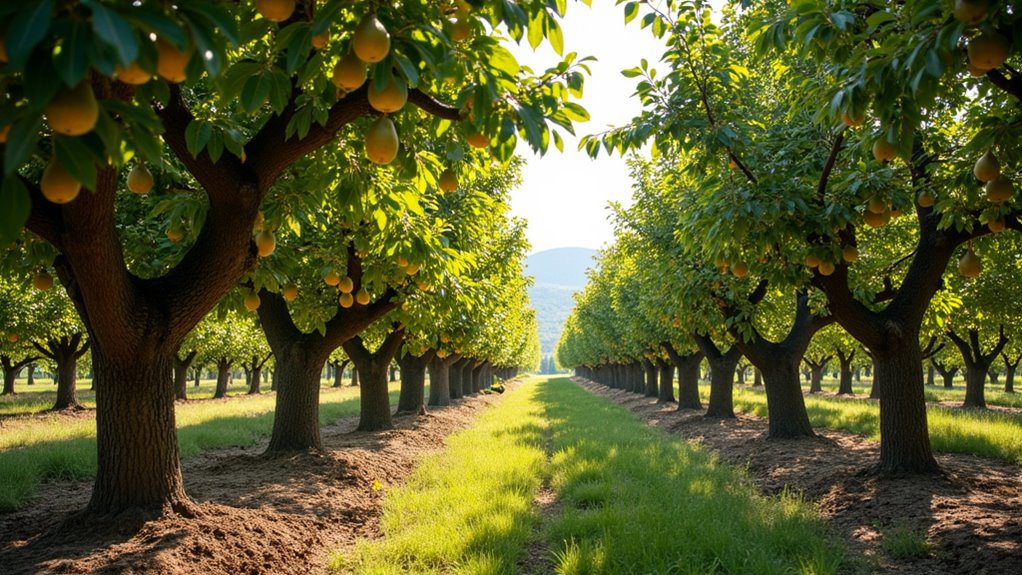
Exploring the world of pear trees reveals their impressive adaptability and hardiness, making them an excellent choice for gardeners in Zone 4. With various pear tree varieties like Marble Hill and Lorraine, these trees thrive in northern climates and offer significant fruit tree benefits. They're self-fertile, produce delicious pears, and require proper care to maximize yield and health. The Marble Hill pear, known for its medium to large Comice-type pears, is particularly celebrated for its sweetness and creaminess.
Peach Trees

While pear trees have established themselves as hardy options for gardeners in Zone 4, peach trees also offer exciting opportunities for those looking to expand their fruit-growing repertoire.
Hardy peach tree varieties like Contender and Reliance thrive here with proper peach tree care. Cold spring temperatures are essential to prevent bud die-off, so focus on late-blooming types to minimize frost damage, and ensure they get enough sunlight and winter protection for optimal growth.
Apricot Trees
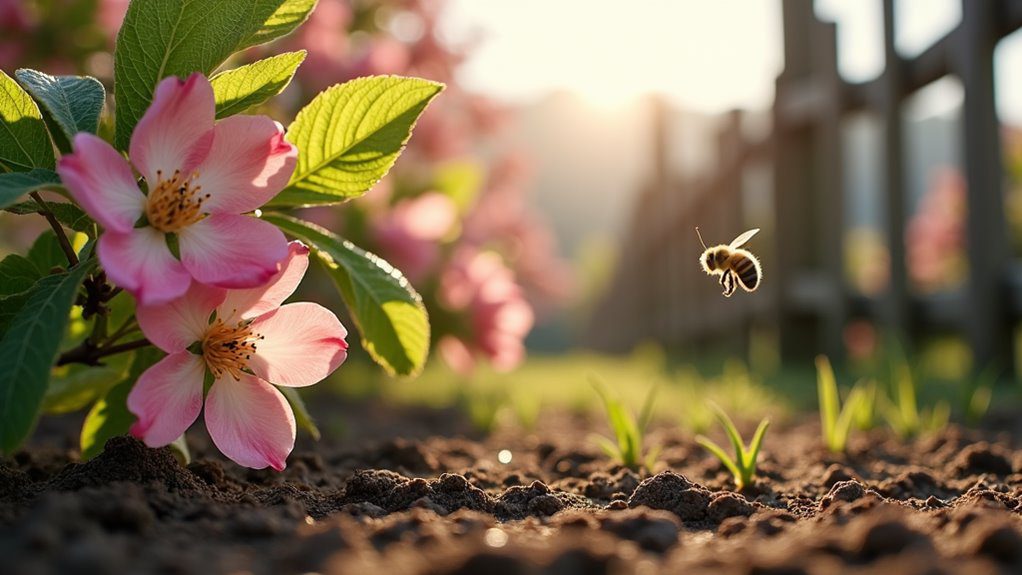
Apricot trees present a unique challenge and opportunity for gardeners in Zone 4, as their early blossoms make them particularly vulnerable to late frosts. To ensure successful fruiting, I recommend selecting apricot varieties like Westcot or Moongold, which may require frost protection measures. General hardiness of apricot trees means that with proper care, they can thrive even in challenging climates. Cross-pollination enhances yield, so consider planting multiple varieties to improve fruit set and overall tree health.
Cold-Hardy Varieties
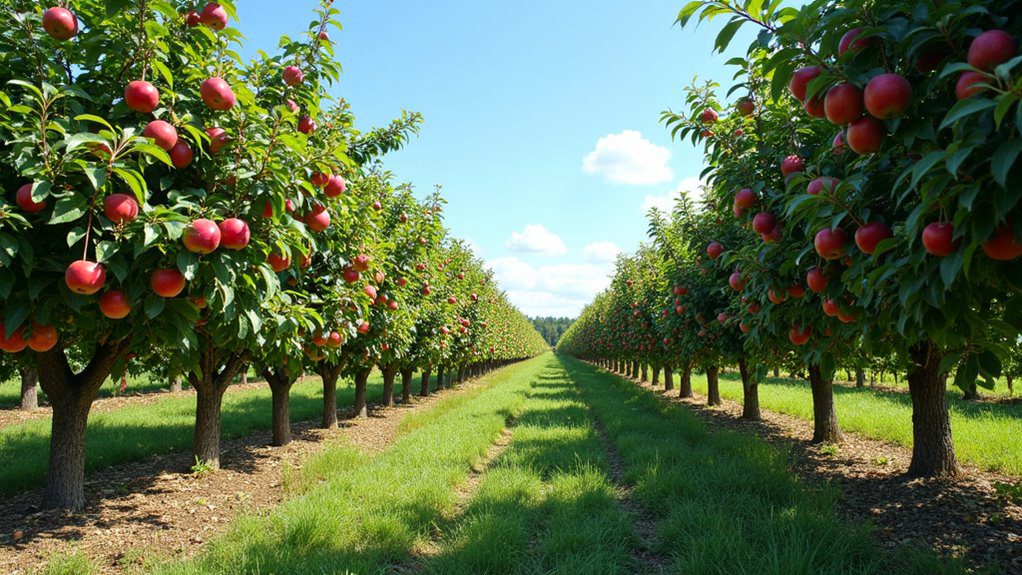
When it comes to selecting cold-hardy fruit trees for Zone 4, understanding the specific varieties that thrive in these challenging conditions is crucial for successful gardening. Apple trees like Honeygold and Lodi boast excellent cold hardiness, while American plums such as Alderman ensure reliable fruit production. Additionally, sour cherries, including Meteor, withstand harsh winters, providing flavorful yields in your garden. It's beneficial to check labels for zone information before planting to ensure the best choices for your climate.
Planting Considerations

Planting fruit trees in Zone 4 requires careful consideration to ensure optimal growth and productivity. I recommend testing the soil well in advance, making necessary soil amendments to achieve a pH of 6.0 to 6.5. Additionally, pay attention to tree spacing; proper distances promote air circulation and minimize competition, ultimately enhancing fruit production and tree health in your garden. Selecting high-value extensive trees can also maximize yields while reducing maintenance efforts, making them ideal for Zone 4 conditions.
Pruning Techniques
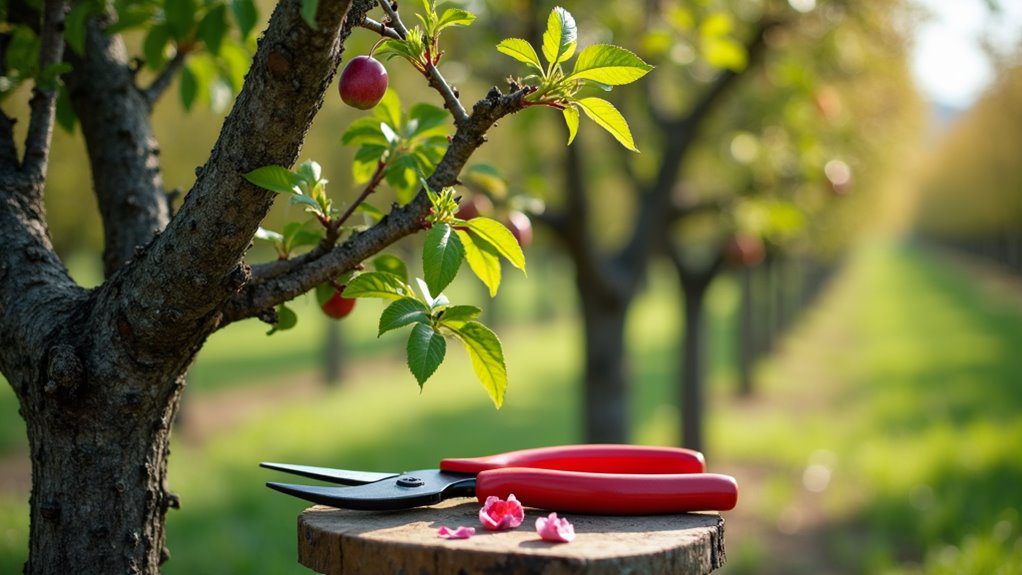
After ensuring your fruit trees are properly planted and established, the next step is mastering pruning techniques to enhance their health and productivity. Pruning timing is crucial; I recommend tackling apple trees in late winter or early spring. For precise cuts, I rely on ergonomic pruning tools like bypass shears, which help me remove crowded branches, promoting better light penetration and air circulation. Regular pruning enhances tree health, ensuring that your trees remain vigorous and productive throughout their growing seasons.
Sunlight Requirements
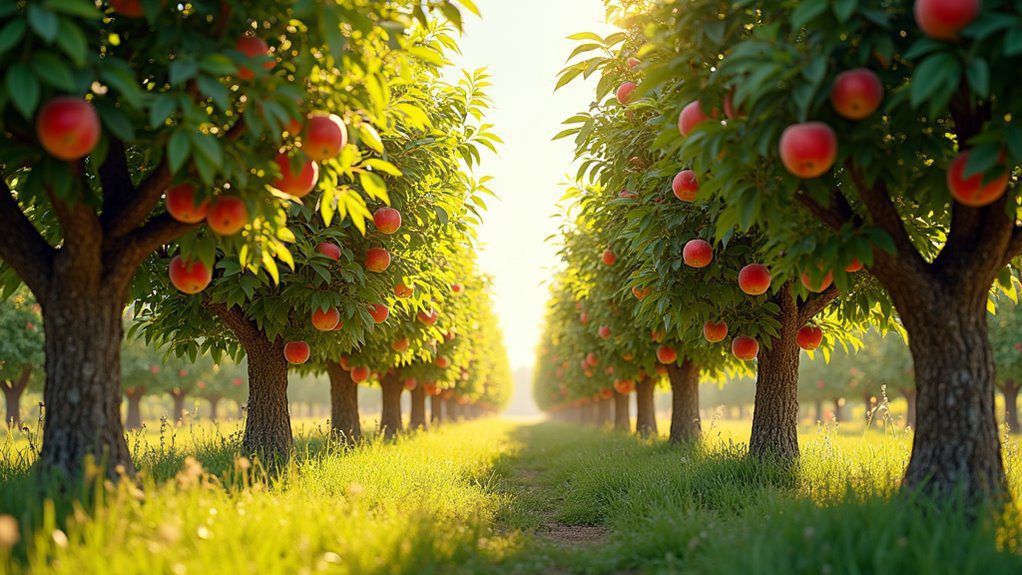
Understanding the sunlight requirements for fruit trees is essential for their successful growth and productivity.
Most trees need at least 6 hours of direct sunlight exposure daily, while apple and cherry trees require 8 hours. Trees receiving less than 6 hours of sunlight experience reduced fruit yield and a sickly appearance.
Proper tree spacing ensures each tree receives adequate light. Avoid shady areas and position your trees for maximum southern exposure to promote healthy flowering and fruit production.
Microclimate Awareness
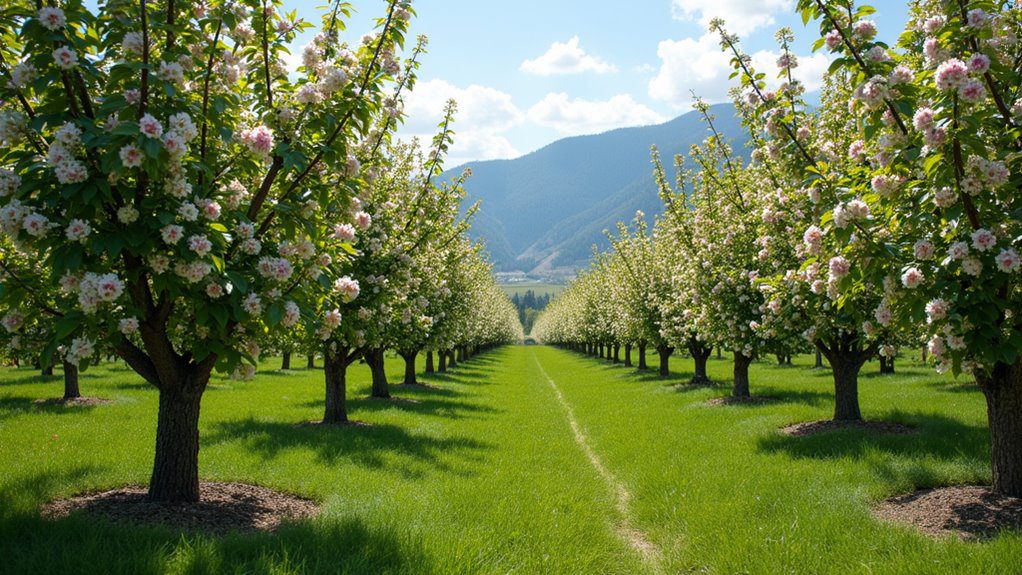
In Zone 4, being aware of microclimates is crucial for optimizing the growth of fruit trees.
Elevation and topography play significant roles, as higher spots often provide frost protection. I avoid low-lying areas where cold air settles.
Additionally, I position trees where wind barriers are present, which enhances microclimate effects, ensuring my trees benefit from warmth while minimizing frost risk.