

I've discovered 11 essential care tips for air plants that can keep them thriving. First, I soak them for 15-40 minutes weekly or mist them 2-3 times, using rain or distilled water. Good air circulation is crucial, so I let them dry for 1-2 hours upside down after watering. They thrive in bright, indirect light, ideally near east or west windows. I also ensure temperatures stay between 60-80°F and maintain humidity levels. Regularly checking for pests is essential too. By following these guidelines, you can enjoy a healthier collection of air plants while discovering more vital practices.
Watering Methods

When it comes to watering air plants, there are two primary methods to consider: soaking and misting.
I soak my plants for 15 to 40 minutes using rainwater or distilled water, ensuring optimal water quality. Regular care includes soaking and misting; misting 2 to 3 times a week helps maintain hydration between soaks. Adjusting watering frequency based on climate is crucial for their health and longevity.
Drying and Air Circulation

Drying air plants properly is essential for their health, and it typically takes only 1 to 2 hours after watering. I gently shake off excess moisture and lay them on their side or upside down. Good air circulation is crucial; avoid enclosed spaces to prevent rot. Ensuring thorough drying techniques ensures they absorb nutrients and dry adequately without risking dehydration or burn.
Lighting Requirements
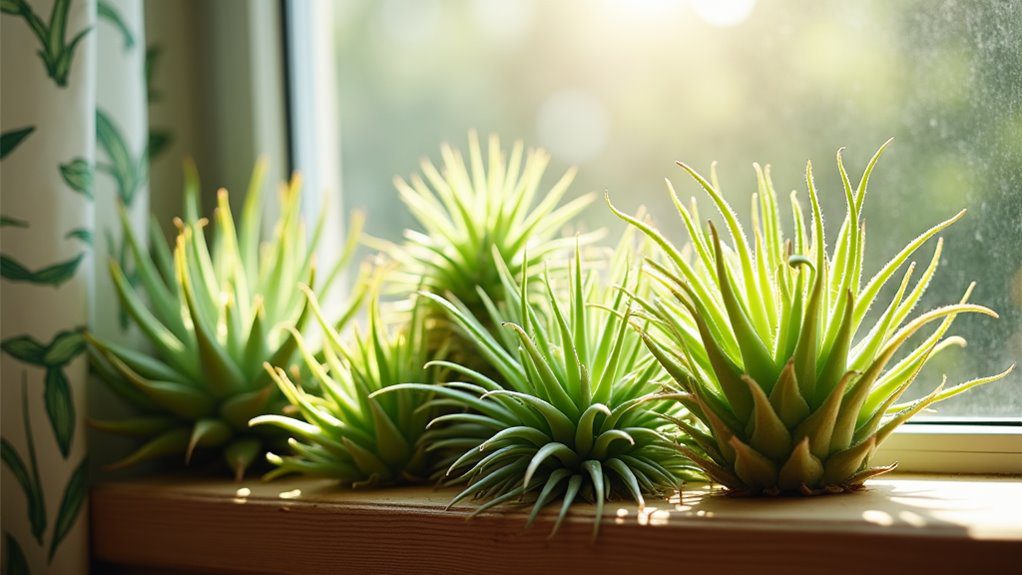
Proper care for air plants goes beyond just drying and air circulation; lighting plays a vital role in their overall health. They thrive in bright, indirect light that mimics their natural habitat under tree canopies. I recommend placing them near east- or west-facing windows, avoiding direct sunlight. For low-light situations, consider using full-spectrum grow lights to ensure adequate light exposure. Air plants prefer bright indirect light, as direct sunlight can cause damage, especially through glass.
Temperature and Humidity

Maintaining the right temperature and humidity levels is crucial for the health of air plants. Ideally, I keep them between 60-80°F, as temperature extremes can hinder growth. They thrive in humid environments, so I adjust watering in dry winters and mist weekly. Placing a tray of water nearby also helps increase humidity levels, ensuring my air plants stay vibrant and healthy. High humidity levels are crucial for their overall well-being and can prevent stress during dry conditions.
General Maintenance

Air plants require diligent care to thrive, and understanding their general maintenance is essential.
Regular pest management is crucial; inspect your plants for pests and treat them promptly. Humidity levels play a significant role in air plant health, so ensure that the environment is adequately humidified.
Plant repotting isn't typically necessary, but if you notice any decay or damage, consider repositioning your air plants in a more suitable environment.
Maintaining proper watering and light conditions will also support their health.
Special Considerations

When caring for your air plants, there are several special considerations to keep in mind that can significantly affect their health and longevity. Ensure your display arrangement allows for proper air circulation and avoids water accumulation. Proper care and attention are essential for their optimal growth especially when adjusting watering techniques. Remember to rotate your plants periodically for even light distribution while monitoring humidity and temperature closely.
Choosing the Right Water

Selecting the right water for your air plants is crucial for their health and growth. I recommend using rainwater or spring water, as these water sources are rich in essential minerals. Avoid distilled or filtered water, lacking in necessary nutrients. Ensure the water quality is high, free from contaminants and chemicals. Always use room temperature water to prevent shocking your plants. A combination of soaking, misting, and dunking can optimize air plant care, helping to maintain their hydration levels effectively.
Soaking vs. Misting
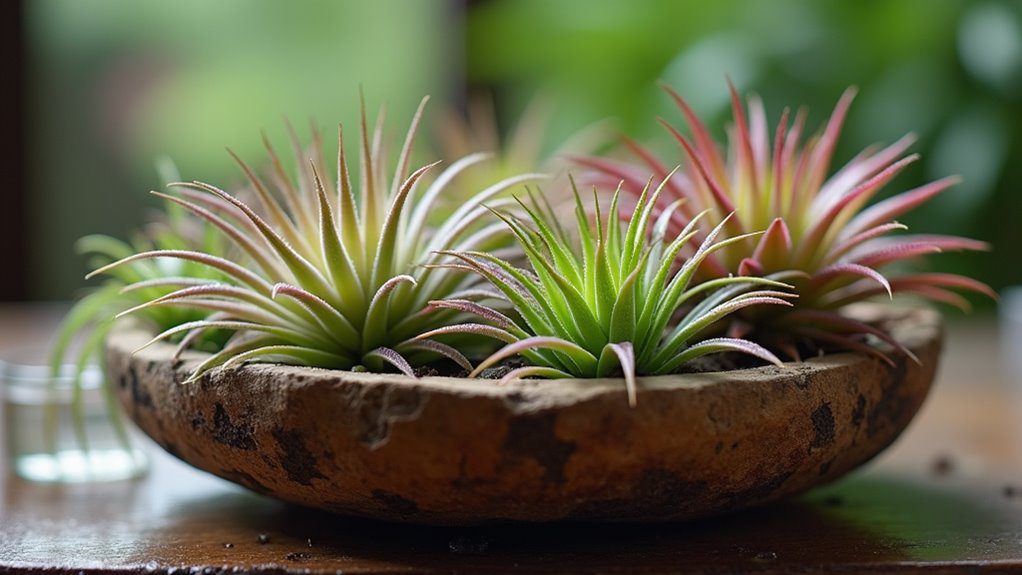
Understanding how to hydrate your air plants effectively is vital for their well-being, and both soaking and misting play important roles in this process.
I soak my air plants every week, ensuring they stay thoroughly hydrated. Regular watering is essential for air plants to thrive, both indoors and outdoors.
For misting, I employ effective misting techniques 2-3 times a week, particularly in dry climates, to maintain moisture balance and support their specific needs.
Avoiding Rot and Disease

To keep my air plants thriving and disease-free, I focus on preventing rot, which is primarily caused by overwatering.
I never submerge them for longer than 20-30 minutes and ensure they dry completely within four hours. Avoiding prolonged submersion is key to preventing trapped moisture that can lead to rot.
Good air circulation is vital for disease prevention, so I avoid closed containers.
Regular pest management helps me identify issues early, keeping my plants healthy.
Fertilization Tips
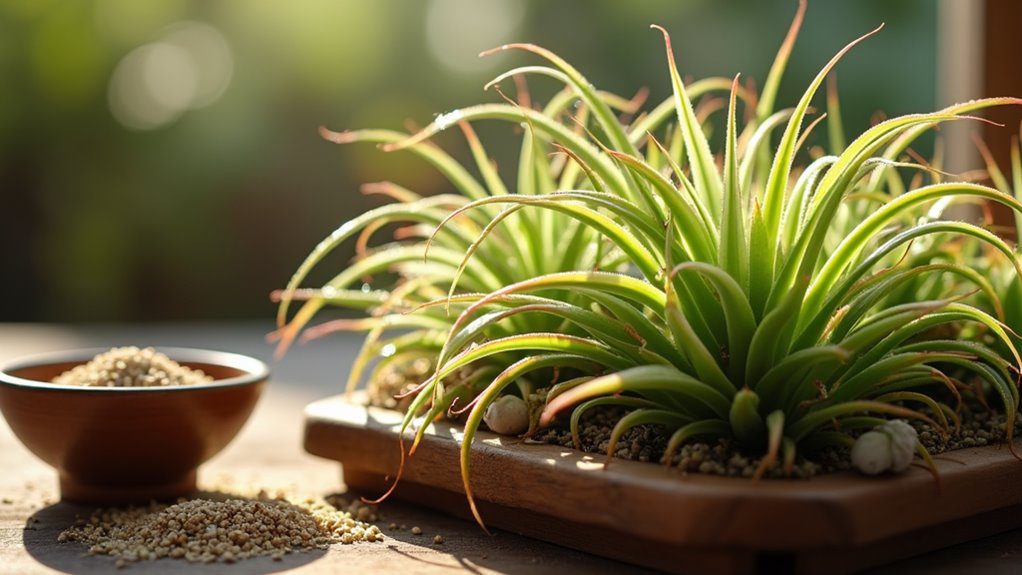
When it comes to fertilizing air plants, I find that while it's not strictly necessary, it can significantly enhance their growth and blooming potential. I recommend using air plant-specific fertilizers or diluted water-soluble houseplant fertilizers. Apply fertilizers via misting or soaking methods, ensuring the plants are thoroughly wet but not waterlogged. Fertilizing monthly, or bi-monthly in optimal conditions, promotes healthy growth and offsets. Regular care and observation can help manage plant health and ensure that your air plants thrive.
Container Selection

Selecting the right container for air plants is crucial for their health and growth.
I recommend using ceramic, clay, or glass planters that allow for good air circulation. Avoid materials like copper and those that retain moisture.
Consider container aesthetics; clear glass or open weave baskets enhance visual appeal while providing adequate airflow.
Always ensure the planter complements the size and future growth of your air plants.