

As I reflect on Nigeria’s rich and complex history, I can’t help but pinpoint 10 major events that have fundamentally shaped its course. From the annexation of Lagos in the 19th century to the recent #EndSARS movement, these milestones have left deep imprints on the country’s social, political, and economic landscapes. Yet, they’re often simplified or bypassed in conversations. So, I ask you to join me now as we dissect these events, not just as isolated incidents, but as interconnected threads in Nigeria’s continuing narrative. Surely, there’s more to them than what meets the eye, wouldn’t you agree?
1. The Arrival of the British

When the British first set foot in Nigeria, annexing Lagos in 1861, it marked the beginning of significant changes in the country’s history. The arrival of the British brought about an end to the transatlantic slave trade, which had been a lucrative but horrific enterprise. Their initial interest lay in curtailing this inhumane practice and promoting the palm oil trade, which held more promise for their industrial revolution back home.
The British influence in Nigeria grew stronger with the activities of the Royal Niger Company. The company had been granted a royal charter by Britain to administer and control what would later become Nigeria’s Northern and Southern Protectorates. By wielding economic power, the company effectively extended British influence across large swaths of the country, reshaping Nigeria’s pre-colonial socio-economic landscape.
The British agenda in Nigeria was further formalized at the Berlin West Africa Conference of 1884-1885, where European powers partitioned Africa amongst themselves. Nigeria fell under British control, setting the stage for more direct and intensified interference.
The early 1900s saw the British conquest of the Fulani Emirates, a significant shift in the political landscape of Nigeria. This conquest effectively dismantled the powerful Islamic states in Northern Nigeria, further consolidating British control.
The British arrival in Nigeria, therefore, marked a turning point that would significantly alter the course of the country’s history. The events of this period laid the foundation for the transformations that would occur in the subsequent years, shaping Nigeria as we know it today.
2. The Amalgamation of 1914

Shifting our focus to 1914, we find the Amalgamation event that united the Northern and Southern protectorates of Nigeria under British colonial rule. This monumental event brought diverse ethnic groups into a single administrative entity, setting the foundation for Nigeria’s modern political structure.
The Amalgamation of 1914 was more than just an administrative decision; it was a significant turning point in Nigeria’s history. The British colonial rulers, in an attempt to simplify their governance, melded over 250 diverse ethnic groups with distinct cultures, languages, and traditions into one nation. This fusion, while it fostered national unity to some extent, also led to enduring challenges and tensions.
The blending of such a vast array of ethnic groups wasn’t without its trials. The differences in cultures, traditions, and even political systems often resulted in misunderstandings and conflicts. The amalgamation ignited a power struggle among the groups, each vying for control, recognition, and resources.
However, despite the difficulties, the Amalgamation of 1914 played a crucial role in shaping Nigeria’s socio-political landscape. It set the stage for the emergence of a unified national identity, albeit one fraught with complexities.
To this day, the amalgamation continues to impact Nigeria’s dynamics, influencing everything from politics to social interactions.
3. Independence From British Rule

Moving forward to October 1, 1960, we find Nigeria freeing itself from the shackles of British colonial rule, marking a major milestone in its historical journey. This momentous event, commonly referred to as independence, was brought to fruition by the relentless efforts of several brave souls, chief among them being Nnamdi Azikiwe and Obafemi Awolowo. These two icons, among others, were instrumental in guiding Nigeria towards its much-deserved sovereignty.
The path to independence wasn’t a stroll in the park. It was a tough road, filled with negotiations, constitutional conferences, and the formation of political parties. Nigeria’s independence leaders, notably Azikiwe and Awolowo, adopted a blend of diplomatic and political strategies to successfully disentangle Nigeria from the grip of British colonial rule. They were tireless advocates of self-governance and their efforts eventually paid off.
As Nigeria shook off the mantle of colonialism, it was greeted with enormous anticipation and joy. The newfound freedom brought with it a sense of hope and optimism. It was a moment that marked a significant turning point in Nigerian history, ushering in a new era of self-governance and the establishment of a national identity.
Three years after gaining independence, in 1963, Nigeria became a republic with Nnamdi Azikiwe as its first president. This was another pivotal event in the country’s history, signifying the complete break from British colonial rule. It was a testament to the indomitable spirit of the Nigerian people, their thirst for freedom, and their determination to shape their own destiny.
4. The First Military Coup

Despite the initial optimism following independence, the political landscape of Nigeria took a dramatic turn with the country’s first military coup on January 15, 1966. Spearheaded by Major Chukwuma Kaduna Nzeogwu, this coup was a defining moment in our history that reshaped the political future of our nation.
Driven by disenchantment with the political leaders of the time, Nzeogwu and a group of young military officers made a daring attempt to overthrow the government. They were successful, and the coup resulted in the assassination of several prominent figures, including Prime Minister Abubakar Tafawa Balewa.
It’s important to note that these events weren’t just isolated incidents, but were part of a larger pattern that would lead to instability and strife in the years to come.
The repercussions of this coup were far-reaching, and it set the stage for a series of events that ultimately contributed to the Nigerian Civil War. This was a tragic and tumultuous period in our history that saw brother pitted against brother, causing untold suffering and loss.
The first military coup proved to be a catalyst for this conflict, and its aftershocks can still be felt to this day.
In retrospect, it’s clear that the first military coup was a turning point in Nigerian history. It marked the end of the initial post-independence optimism and signaled the start of a new, more turbulent era. Understanding this event is key to grasping the complexities of Nigeria’s past and the challenges that we continue to face as a nation.
5. The Biafra War Saga

Often considered the darkest chapter in Nigerian history, the Biafra War, also known as the Nigerian Civil War, took place from 1967 to 1970. Triggered by the secession of the southeastern region of Nigeria, the conflict stemmed from deep-seated ethnic and political tensions. The mainly Igbo ethnic group, led by Odumegwu Ojukwu, declared the region an independent Republic of Biafra, sparking a fierce battle for sovereignty.
Despite being vastly outnumbered and outgunned, the Biafran forces, largely made up of the Igbo ethnic group, held their own for over two years. However, the Nigerian government’s blockade of Biafra resulted in widespread famine and disease, exacerbating the already dire condition of the war-stricken people. It’s estimated that over a million people lost their lives, most of them civilians from the Igbo ethnic group. The images of starving Biafran children, with distended bellies and skeletal frames, are some of the most haunting relics of this war.
In January 1970, Odumegwu Ojukwu fled the country and the Biafran forces surrendered. The region was reintegrated into Nigeria, but the scars of the war remained deeply etched in the nation’s psyche.
The Biafra War saga is a grim reminder of the devastating effects of ethnic and political strife, forever shaping Nigeria’s history and serving as a stark warning against the perils of disunity. The war’s legacy continues to reverberate through Nigerian society, fuelling calls for justice, reconciliation, and national unity to this day.
6. The Oil Boom Era
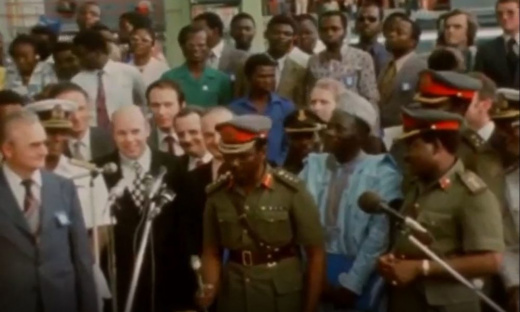
The 1970s ushered in Nigeria’s Oil Boom Era, a period marked by skyrocketing global oil prices that catapulted the country into the ranks of major oil producers and exporters. This sudden surge in oil revenue transformed Nigeria’s economic landscape, pushing it towards rapid growth and prosperity. The country’s economy, once primarily agricultural, became heavily reliant on oil, changing its fabric forever.
The oil boom era wasn’t just about revenue and economic growth, though. It was a time of significant infrastructural development fueled by oil wealth. Roads, bridges, schools, hospitals – the nation was modernizing at an unprecedented pace. But this era wasn’t without its challenges.
The rush of wealth brought with it an undercurrent of corruption and inequality. The distribution of oil revenue became a contentious issue, leading to disparities in wealth and development across regions. Moreover, the heavy reliance on oil made the economy vulnerable to global oil price fluctuations. When prices fell, so did the nation’s fortunes.
Additionally, the oil boom era left an indelible mark on Nigeria’s environment. Oil exploration and extraction activities led to severe environmental degradation, a problem the country still grapples with today.
7. Return to Civilian Rule
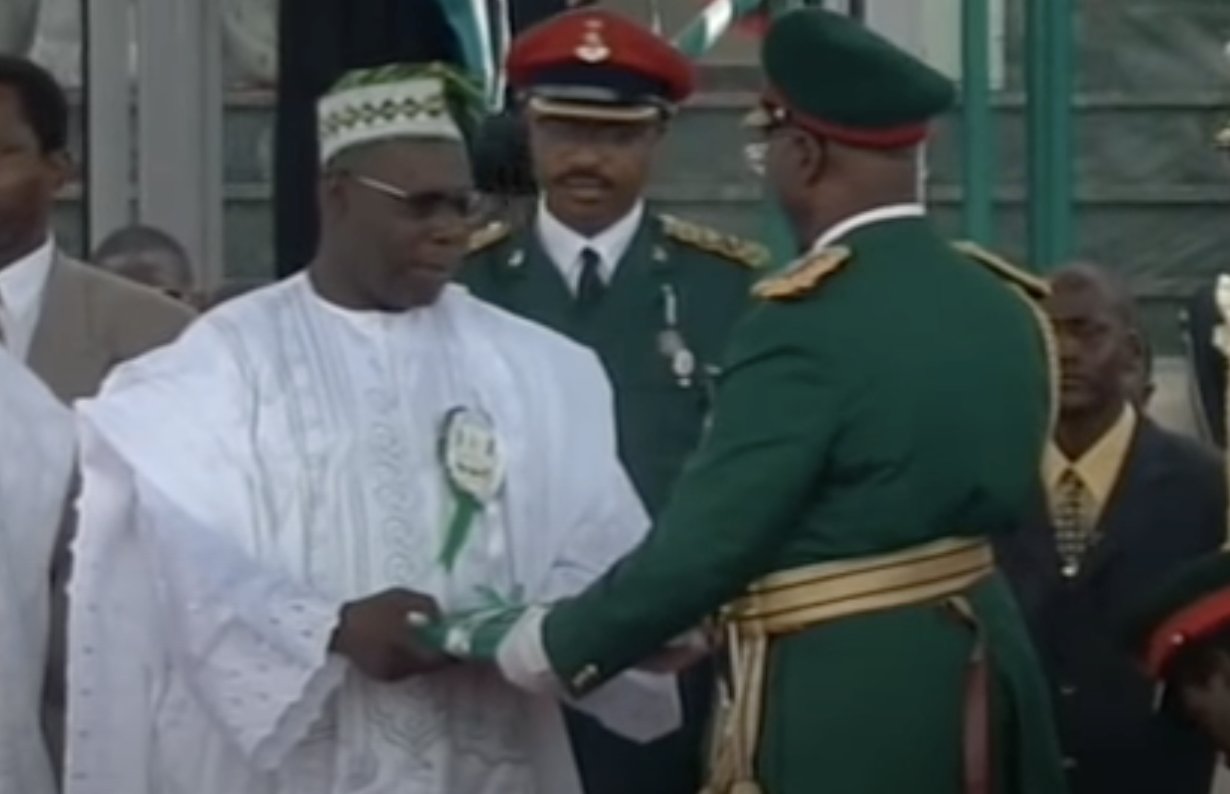
While the oil boom era left a lasting impact on Nigeria’s economy and environment, 1999 marked a significant shift as the nation welcomed back civilian rule after years of military dictatorship. It was a year of immense change, with the death of General Sani Abacha leading to a transition that ushered in a new era of governance.
Olusegun Obasanjo, a one-time military head of state, was sworn in as Nigeria’s president, marking a monumental turning point in Nigeria’s political landscape. His inauguration signaled the end of over a decade of military rule that had been marked by corruption and human rights abuses. Obasanjo’s administration was seen as a beacon of hope for political stability and economic development.
The return to civilian rule wasn’t an easy process. It was fraught with tension, uncertainty, and fears of a possible return to military dictatorship. However, Nigerians heaved a sigh of relief as the transition was successful, representing a glimmer of hope for a democratic Nigeria.
This period wasn’t just about the return to civilian rule, but it was also about the rebirth of Nigeria’s democracy. It brought about fundamental changes in the way the country was governed and offered Nigerians the opportunity to have a say in their country’s affairs. It was a pivotal moment that set the stage for the democratic growth Nigeria experiences today.
8. The Sharia Law Controversy

In 2000, a significant shift rocked Nigeria’s religious and legal landscape when 12 states in the northern region reintroduced Islamic Sharia law, sparking intense controversy. This move escalated the religious tensions that were already simmering beneath the surface, causing violent riots and resulting in thousands of deaths. It was a period of trepidation and uncertainty, with the fears of non-Muslims stoked by the potential for discrimination and human rights violations.
The reintroduction of Sharia law wasn’t just a religious issue; it had far-reaching implications for the socio-political fabric of Nigeria. It brought to the fore the complexities of religious and legal pluralism in the country. Nigeria, with its diverse religious groups and legal systems, was now grappling with the delicate task of managing these differences without causing social disruption.
The controversy surrounding Islamic Sharia law also sparked heated debates about the separation of religion and state. Critics argued that the move threatened to undermine the secular nature of the Nigerian state, while proponents maintained that it was a necessary step towards providing justice for the Muslim population.
The Sharia law controversy was one of the most significant events in Nigeria’s history because of its impact on the country’s religious dynamics, legal systems, and societal norms. It challenged the principles of equality and religious freedom, and raised pressing questions about the nature of legal pluralism in Nigeria. The controversy continues to shape the nation’s discourse and remains a potent reminder of the complexities and challenges of religious coexistence in Nigeria.
9. The Rise of Boko Haram

Boko Haram’s emergence in 2002 marked a dark chapter in Nigeria’s history, as the extremist group began to unleash a wave of violence and kidnappings that shocked the world. The group’s horrifying series of attacks, primarily targeting the northern states, led to widespread devastation and forced countless people to flee their homes.
The event that rocketed Boko Haram into worldwide infamy was the 2014 Chibok incident where over 200 schoolgirls were kidnapped. This event, along with others, underlined the group’s disregard for human rights and their willingness to employ ruthless tactics to instill fear and further their ideological cause.
Beyond their localized terror, Boko Haram’s influence extended to the international arena when a faction pledged allegiance to the Islamic State in 2016. This alliance birthed the Islamic State West Africa Province (ISWAP), further complicating the security landscape in the region.
The Nigerian government has been locked in a protracted battle to combat Boko Haram’s insurgency and restore security. These efforts have achieved varying degrees of success, but the group’s resilience and adaptability have made it a persistent threat.
10. The #EndSARS Movement
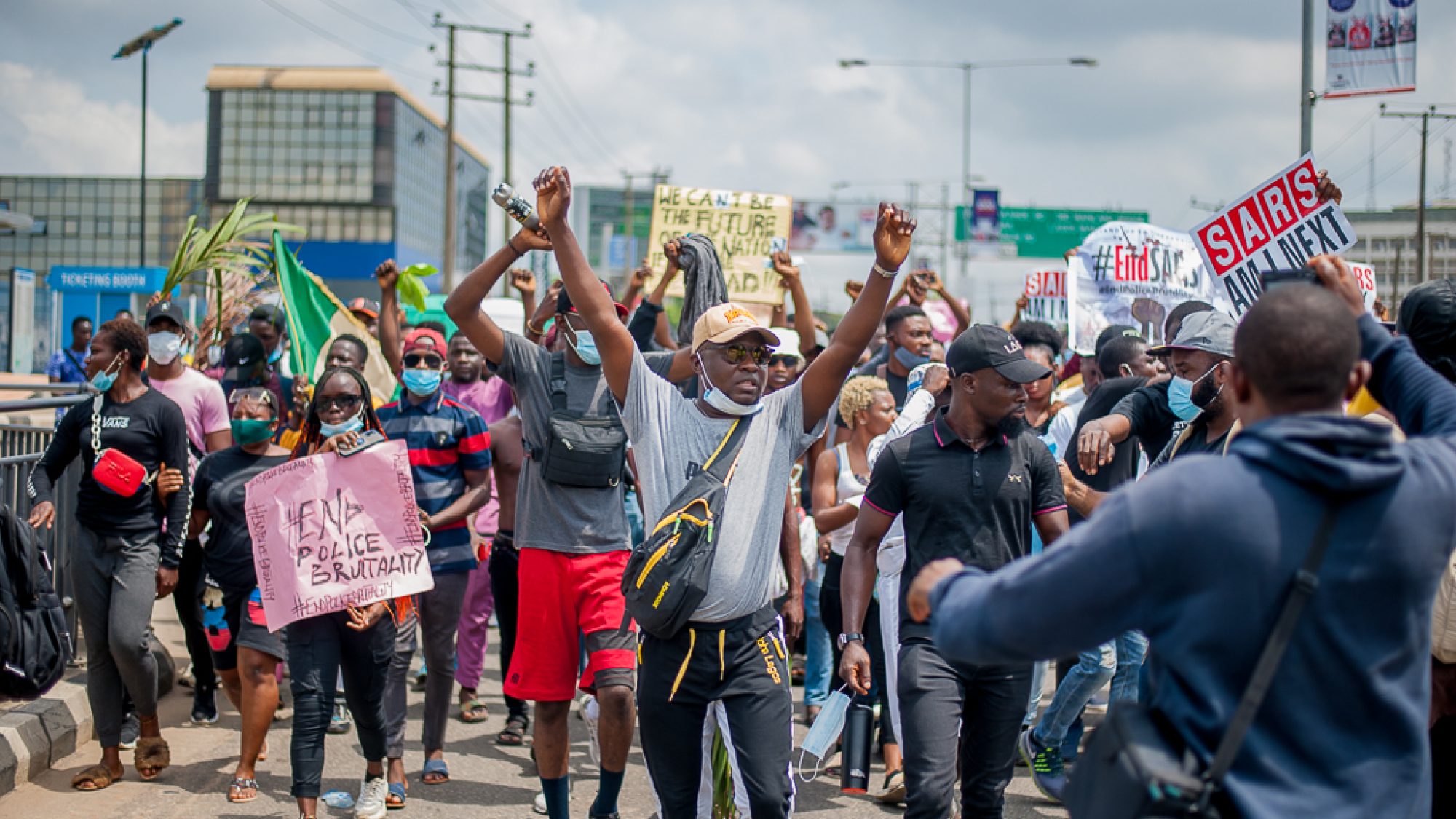
October 2020 marked a pivotal moment in Nigerian history, as the #EndSARS movement erupted in response to rampant police brutality and the abuses of the Special Anti-Robbery Squad (SARS). This outcry wasn’t just about a rogue unit but underscored the pressing need for comprehensive police reform in Nigeria.
Spurred by a collective desire for accountability, the #EndSARS movement soon gained momentum, spreading like wildfire across the nation and beyond. Social media was ablaze with shared experiences of brutality, rallying cries for justice, and heartrending images from the frontlines of the protests.
In spite of the largely peaceful nature of the demonstrations, there were instances of violence, leading to unfortunate casualties and destruction of property. This, however, didn’t deter the resolve of the protesters, their voices growing louder, their demands clearer.
The #EndSARS movement wasn’t just a national event; it sparked global conversations about police brutality and governance in Nigeria. It drew back the curtain on a systemic problem, shining a light on the grim reality that many Nigerians face daily.
The significance of this movement in shaping Nigeria’s modern history can’t be overstated. It was a stark reminder of the power of the people when united for a common cause. More importantly, it marked a turning point in the ongoing struggle for accountability, justice, and most importantly, a reformed police system. The echoes of #EndSARS resonate even today, a testament to the indomitable spirit of the Nigerian people in their fight against police brutality.