

I've discovered some truly captivating carnivorous plant terrarium ideas! Consider creating a stunning Venus flytrap display, showcasing their unique mechanism. Pitcher plants also make an eye-catching arrangement with their vibrant colors. I love mixing sundews for their sticky, shimmering appeal and incorporating butterworts for a touch of diversity. Australian pitcher plants can offer unique forms and textures, especially with layered substrates for optimal growth. Adding decorative elements like rocks or wood enhances beauty while improving moisture retention. If you're looking for more specific design strategies and plant pairings, there's plenty to explore next!
Venus Flytrap Terrarium Design

Creating a Venus Flytrap terrarium is an exciting way to bring a piece of the wild into your home.
For container selection, I recommend using a shallow, open dish to ensure proper drainage and prevent excess humidity. Excessive humidity can lead to plant stress and health issues, so choosing the right container type is essential for successful growth. It's important to use nutrient-poor soil to replicate the Venus Flytrap's natural habitat.
Substrate layering is crucial too; combine peat moss and sand, maintaining a 2-inch height while adding a drainage layer of gravel to keep the soil moist, yet not soggy.
Stunning Pitcher Plant Displays

Building stunning pitcher plant displays can elevate your indoor garden to a whole new level of beauty and intrigue. I love incorporating Nepenthes and Cephalotus for their striking pitcher plant aesthetics. For terrarium maintenance, ensure high humidity, bright indirect light, and proper drainage. Layering materials like sand and sphagnum moss creates a captivating environment that highlights these unique plants beautifully. Additionally, high humidity is crucial for supporting the health and growth of pitcher plants in a terrarium setting. Incorporating native plants can also enhance the ecosystem within the terrarium, fostering a balanced environment for your carnivorous plants.
Creative Sundew Arrangements

When it comes to arranging sundews in your terrarium, the possibilities are as vibrant and varied as the plants themselves. I love mixing species like _Drosera capensis_ and _D. binata_, ensuring optimal sundew care. Create layers with a proper substrate and maintain terrarium humidity between 60% to 90%. This balance promotes healthy growth and showcases their stunning beauty beautifully! Additionally, using a mix of peat moss and sand for the substrate will provide the necessary nutrients for these carnivorous plants. To ensure their health, it's also important to monitor soil moisture levels regularly, as sundews thrive in slightly moist conditions.
Butterworts in Unique Terrariums

For those passionate about cultivating butterworts, unique terrariums can truly transform your space into a vibrant miniature ecosystem.
I recommend using enclosed terrariums to maintain humidity and temperature for optimal butterwort care. Incorporate nutrient-free soil and decorate with sphagnum moss. High humidity is crucial for the health of these plants, ensuring they can capture their prey effectively. Maintaining the optimal soil pH is also essential for promoting nutrient uptake and overall plant health.
With bright indirect light and consistent moisture, your butterworts will thrive beautifully in their unique terrarium, adding charm to any room.
Australian Pitcher Plant Ideas

Creating a stunning terrarium featuring Australian pitcher plants can be an exciting endeavor for any plant enthusiast. These fascinating plants thrive in humid, lowland swamps within their native habitats. For optimal Australian pitcher plant care, use a well-drained, sandy mix enriched with sphagnum moss, and provide indirect light. Keeping the temperature between 65°F to 85°F ensures a vibrant and healthy terrarium. Additionally, maintaining a moist, well-drained sandy substrate is crucial for their growth and overall health.
Sun Pitcher Plant Showcase

The Sun Pitcher Plant, with its striking appearance and captivating nectar-filled pitchers, offers a stunning focal point for any terrarium enthusiast. For optimal sun pitcher care, maintain high humidity levels and use a nutrient-poor substrate. Place it in the background of your setup, ensuring it gets bright light to thrive. With these conditions, you'll enjoy a thriving carnivorous centerpiece! Additionally, this plant's unique structure, designed for trapping prey, enhances its role in the ecosystem by contributing to biodiversity.
Layered Substrate Techniques
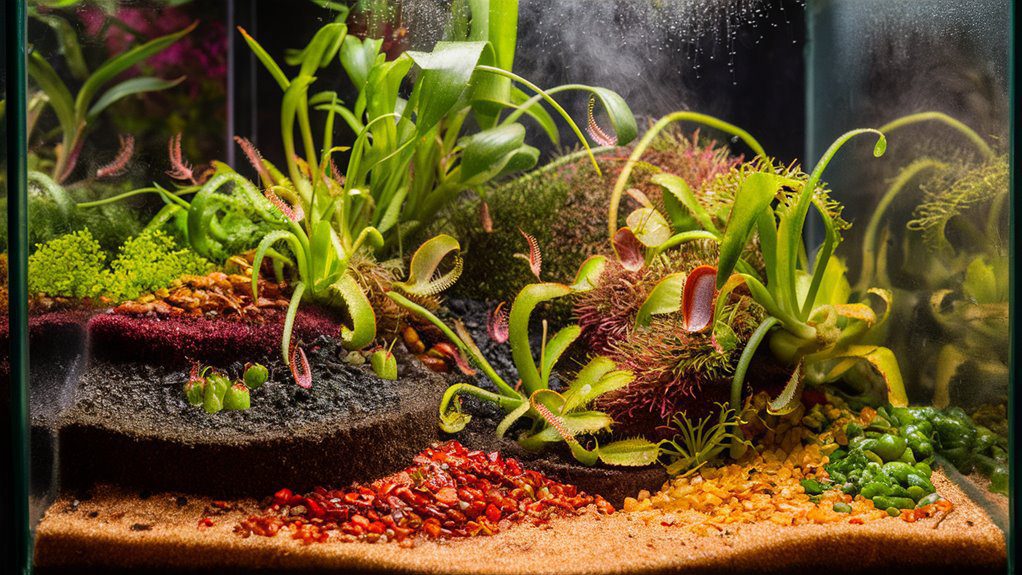
When it comes to crafting a successful carnivorous plant terrarium, mastering layered substrate techniques can make all the difference. The layered substrate benefits include improved drainage and tailored conditions for each plant species through substrate zone customization. Start with an inert drainage layer, followed by nutrient-poor soil, and finish with tailored surface layers to create the perfect environment for your carnivorous plants to thrive. Additionally, understanding plant compatibility is essential to ensure that each species can flourish in its designated substrate zone without hindering the growth of others.
Hardscape Inspiration for Terrariums

Incorporating hardscape elements into your carnivorous plant terrarium can elevate its aesthetic appeal and functionality significantly.
Grouping Plants for Impact

Grouping plants strategically can transform your carnivorous plant terrarium into a stunning visual display while ensuring all species thrive together.
Consider compatible plant companions like Venus flytraps with sundews, which share similar moisture balance needs. Using moss adds texture and helps maintain humidity without nutrients. Proper selection of plants is crucial for the success of your terrarium.
Avoid mixing temperate and tropical species to keep your plants happy and healthy in their unique environments.
Seasonal Adaptation Strategies

Successfully nurturing carnivorous plants in a terrarium requires a keen understanding of their seasonal adaptation strategies.
I've learned that implementing dormancy strategies is vital; reduce watering and lower temperatures during winter. Constantly wet soil is essential during the growing season to ensure healthy growth and vitality.
In spring, increase humidity control and provide ample sunlight.
As autumn approaches, prepare them for dormancy by cutting back on water and light, ensuring they're healthy and ready to thrive again.