

If you’re looking for companion plants for Echinacea, I’ve got a solid list for you. Consider Bee Balm, Lavender, and Black-Eyed Susan for their vibrant colors and pollinator attraction. Salvia, Agastache, and Coreopsis thrive in similar growing conditions, enhancing your garden’s aesthetics. Goldenrod and Butterfly Weed not only attract beneficial insects but also add striking visuals. Finally, Liatris brings a vertical structure that’s both attractive and functional. Together, these plants can create a dynamic and beautiful ecosystem. Stick around for more insights on maximizing your gardening experience and the specific benefits these companions bring.
1. Bee Balm

Although I find it essential to consider the right companions for Echinacea, Bee Balm stands out as a particularly beneficial addition to the garden. Its bee balm benefits include attracting pollinators and enhancing biodiversity. For optimal bee balm care, ensure it gets full sun, well-draining soil, and proper spacing. Regular deadheading promotes blooming, while mulching retains moisture and suppresses weeds for healthy growth. Additionally, Bee Balm pairs well with shrubs that prefer drier soils, creating a beautiful and harmonious garden environment. This plant is particularly effective at attracting honeybees, which are among the most common and efficient pollinators in garden ecosystems.
2. Lavender

In the realm of companion planting, lavender emerges as a valuable ally for Echinacea, offering numerous benefits that enhance both aesthetics and garden health.
Lavender benefits include pest repulsion, while its care is minimal, thriving in full sun and well-drained, slightly alkaline soil. Drought tolerance is a key trait for both plants, making them an ideal pairing in dry garden conditions. Additionally, their strong root systems help minimize washaway during heavy rain, ensuring a stable environment for growth.
Together, they attract pollinators and create a visually striking garden, maximizing space and resilience without competing for resources.
3. Black-Eyed Susan
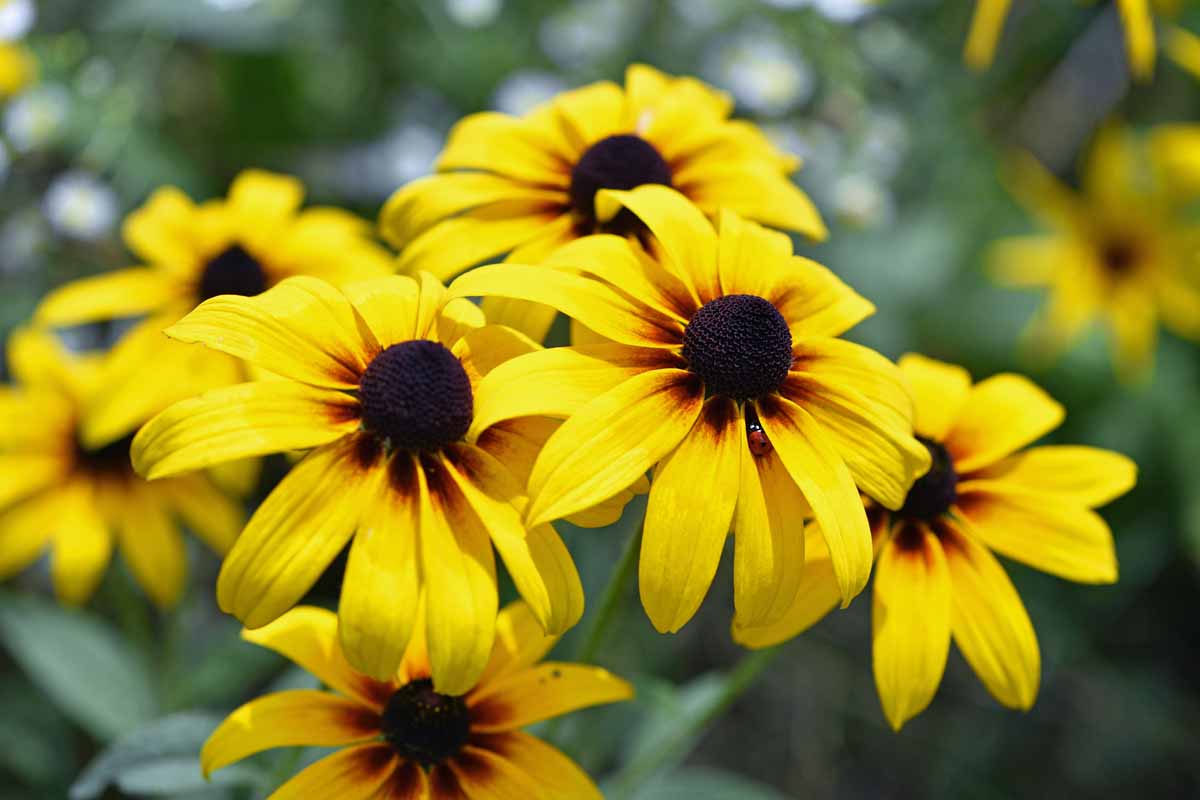
Black-Eyed Susan, with its vibrant yellow petals and dark centers, stands out as an excellent companion for Echinacea in the garden. It thrives in well-drained soil, requiring full sun and weekly watering. For optimal garden design, I place it behind shorter plants to create balance. Plus, it attracts pollinators, enhancing overall plant care and contributing to a lively, colorful landscape. Self-seeding perennials like Black-Eyed Susan can also provide continuous blooms from summer to fall, further enriching the garden’s beauty. Additionally, planting native flowers like nectar plants supports local butterfly species, creating a more diverse and inviting garden ecosystem.
4. Salvia

When considering companion plants for Echinacea, Salvia stands out as an ideal choice due to their shared love for full sun and well-drained soil.
With various Salvia varieties thriving in zones 5 through 9, they require moderate water and good drainage. Echinacea’s drought-tolerant nature allows it to coexist harmoniously with Salvia, enhancing the garden’s resilience. Additionally, incorporating organic matter into the soil can further improve drainage, creating an optimal environment for both plants.
Proper Salvia care, including spacing for air circulation, enhances the garden’s aesthetic and attracts beneficial pollinators, creating a vibrant ecosystem.
5. Agastache

Agastache is another fantastic option for your garden. With its drought-tolerant nature, Agastache benefits include attracting pollinators and enhancing visual appeal. Planting Agastache alongside native perennials like coneflower and yarrow can create a vibrant and harmonious landscape. For Agastache maintenance, minimal care is needed; simply deadhead spent flowers and mulch to retain moisture, ensuring a healthy, vibrant landscape.
6. Coral Bells

Although I often focus on the vibrant blooms of Echinacea, Coral Bells (Heuchera) deserve attention for their unique contributions to the garden.
These plants thrive in various light conditions and share similar soil preferences, making Coral Bells care straightforward.
Their colorful foliage enhances aesthetic appeal while attracting vital pollinators, providing ecological benefits that work in harmony with Echinacea, promoting a healthy garden ecosystem. Additionally, companion plants can enhance Coral Bells’ growth and overall health, creating a more robust garden environment.
7. Ornamental Grasses

Ornamental grasses play a vital role in enhancing the beauty and functionality of a garden, especially when paired with Echinacea.
These grass varieties add height and movement, creating a stunning backdrop. With seasonal colors ranging from green to purple, they provide textural contrast and visual interest. Additionally, classic combos such as Joe Pye weeds and black-eyed Susans complement the ornamental grasses beautifully, enriching the garden’s aesthetic appeal.
Plus, their low maintenance and drought resistance make them ideal companions, enriching the garden’s ecological value.
8. Sedum

Sedum, commonly known as stonecrop, is a versatile succulent that thrives in a variety of garden settings. I’ve found that sedum propagation methods, such as stem cuttings or division, are quite effective. For pest control, this plant’s resilience helps deter common pests, ensuring a healthy environment for echinacea. Its late blooms and low-maintenance nature make it an excellent companion in any garden. Additionally, sedum contributes to soil improvement by enhancing soil health with its diverse root structures.
9. Catmint

Catmint, with its striking blue flowers and aromatic foliage, is an ideal companion for Echinacea in any garden setting. Various catmint varieties thrive in full sun and well-drained soil, offering benefits like attracting pollinators and repelling pests. Its gray-green leaves provide a beautiful contrast, enhancing Echinacea’s vibrant display while being drought-tolerant, ensuring a low-maintenance yet stunning garden combination. Additionally, catmint is a notable companion plant that enhances aesthetics and pest management when grown alongside Echinacea.
10. Yarrow

Yarrow, known scientifically as Achillea millefolium, offers a plethora of benefits when paired with Echinacea in the garden.
Its yarrow benefits include attracting beneficial insects and enhancing pollination.
During yarrow cultivation, it enriches soil and controls erosion.
This low-maintenance plant repels pests and thrives in various conditions, making it an excellent companion for promoting biodiversity and ecological health in your garden.
11. Russian Sage

After exploring the benefits of yarrow in companion planting, it’s time to consider another remarkable plant: Russian sage (Perovskia atriplicifolia).
This drought-tolerant perennial attracts pollinators and resists deer. For optimal Russian sage care, plant it in well-drained soil, ensuring full sun. Its versatility makes it ideal for borders or containers, enhancing your garden’s design while complementing Echinacea beautifully. Additionally, its long blooming period from mid-summer to autumn ensures a continuous display of color in your garden.
12. Coreopsis

Coreopsis, often celebrated for its vibrant blooms and resilience, makes an excellent companion for Echinacea in the garden. Both thrive in full sun and well-drained soil, creating a stunning late summer display. Coreopsis varieties, like ‘Sunfire’, contrast beautifully with Echinacea’s colors. These Coreopsis companion plants attract pollinators, enhancing garden health while their unique textures add visual interest to your landscape. Additionally, Coreopsis is known for its low maintenance requirements, making it an ideal choice for busy gardeners.
13. Goldenrod

Goldenrod, with its striking golden flowers, is an ideal companion for Echinacea in the garden. The goldenrod benefits include pest control and improved soil health, making it a valuable partner. For goldenrod care, ensure proper spacing for air circulation and maintain consistent watering. Together, they attract pollinators and create a vibrant visual contrast, enhancing both biodiversity and garden aesthetics. Additionally, their combined growth patterns help to optimize resource use, promoting healthy growth in the garden.
14. Butterfly Weed

Butterfly Weed (_Asclepias tuberosa_) stands out in any garden with its vibrant clusters of orange or yellow flowers, providing not only stunning visual appeal but also significant ecological benefits. In butterfly garden design, it thrives in full sun and well-drained soil, attracting pollinators like bees and butterflies. Additionally, it serves as a host plant for Monarch butterflies, which further contributes to its value in supporting diverse pollinator populations. Pairing it with plants like Golden Alexander enhances pollinator benefits, creating a dynamic ecosystem.
15. Liatris

While exploring companion planting for Echinacea, I find Liatris to be an excellent choice due to its compatibility in growing conditions and aesthetic appeal. Liatris attracts a variety of pollinators, enhancing biodiversity. Its vertical structure adds architectural interest, enriching garden design. Additionally, Liatris plants are known for their vibrant flower spikes, which further enhance the visual appeal of the garden. Planting it alongside Echinacea creates a striking visual contrast while thriving in similar sunlight and soil conditions, making it a perfect companion.