

Setting up a simple IBC aquaponic system starts with choosing a food-grade IBC tote, ideally semi-clear to reduce algae while letting in light. I’ll cut the top and modify it for the fish tank, while the grow beds sit securely on top filled with lightweight media like clay pebbles for optimal drainage. Ensure your system is placed in a spot receiving 6-8 hours of sunlight, and install a water pump capable of cycling at least 225 gallons per hour. I’ll regularly check the water, maintaining pH and nutrient levels for fish and plant health. This ensures a stable setup poised for success, and there’s more to uncover as you optimize your system.
1. IBC Tote Selection

When selecting an IBC tote for your aquaponic system, it’s crucial to opt for one that’s food-grade quality. This ensures that no harmful residues jeopardize the health of your fish and plants.
In line with sustainable agriculture practices, using food-grade materials supports environmental health just as effectively as using organic inputs like worm castings and compost.
Standard IBC totes, which typically hold about 250 gallons, are ideal as they provide roughly 150 gallons of water perfect for use as a fish tank. Opting for a semi-clear plastic model minimizes algae growth while still allowing sufficient light for your plants.
Always source your IBC from reputable suppliers or verified recycling platforms like eBay or Craigslist to guarantee safety. Additionally, remember to check the tote’s dimensions, around 4 feet square, to ensure a good fit in your designated setup area.
2. Cutting and Assembling

First, remove the steel cage from the IBC tote to access the tank for modifications; it’s essential to re-bolt the cage bars afterward as they’ll support the grow beds.
Next, use an angle grinder or jigsaw to cut the top off the IBC tote, creating an open fish tank. Be precise in marking your cutting line to ensure a clean cut.
For the grow beds, split a second IBC tote into two halves and fill them with growing media like lava rock, which supports plant roots and ensures good water flow.
Ensuring good drainage is crucial, as the health of the plant roots depends on the balance of water and air in the soil.
When assembling the plumbing, choose PVC pipes of the right sizes, and drill a hole carefully to fit.
Always check for leaks with a water test before adding your fish and plants.
3. Ideal Location Setup
Selecting the right location for your IBC aquaponic system is crucial for ensuring optimal plant growth and system efficiency.
You’ll want to choose a spot that receives at least 6-8 hours of direct sunlight daily to promote healthy plant development.
It’s also essential to ensure the setup is easily accessible for routine maintenance and monitoring, which helps mitigate the risk of neglect and potential system failures.
Additionally, consider using full-spectrum or blue-tinted grow lights if the natural light is insufficient to support the plant’s needs, as this can enhance leaf development and overall plant health.
Consider the local climate and environmental conditions when deciding on placement.
If opting for an outdoor setup, be mindful of temperature fluctuations and weather extremes that may necessitate additional protective measures.
For indoor setups, secure a space with adequate ventilation to manage temperature and humidity while preventing potential leaks.
Always secure the metal cage to a stable base to avoid any tipping or instability.
4. Water Pump Installation

While installing your water pump, ensure it has the capacity to move at least 225 gallons per hour, which is critical for maintaining effective circulation in a 250-gallon IBC tote system.
Positioning the pump at least 1 foot above the tank base is key to efficiently lifting and pumping the water without risking damage during low water situations.
Utilize reinforced, kink-free pipes to keep the water flowing smoothly and prevent any interruptions in your system.
- Feel the relief of knowing your water pump automatically shuts off with a float switch during low levels, protecting your investment.
- Experience the ease of managing water flow with strategically placed T fittings and taps.
- Enjoy the clarity of water as your setup effectively circulates and cleans the water.
5. Media and Filtration Choices

Why consider clay pebbles as your starting medium in an IBC aquaponic system?
Clay pebbles are a top choice for beginners due to their lightweight nature and superb drainage capabilities, essential for a thriving aquaponic setup. They keep the root zone aerated, which is crucial for plant health.
Unlike heavier alternatives like river rock or lava rock, clay beads are easier to handle and install in your growing area.
To ensure your system runs smoothly, incorporating a swirl filter is wise.
This filtration method prevents larger debris from clogging the water pipes by using a barrel with a settling basket, facilitating efficient waste removal.
6. Plant and Fish Selection
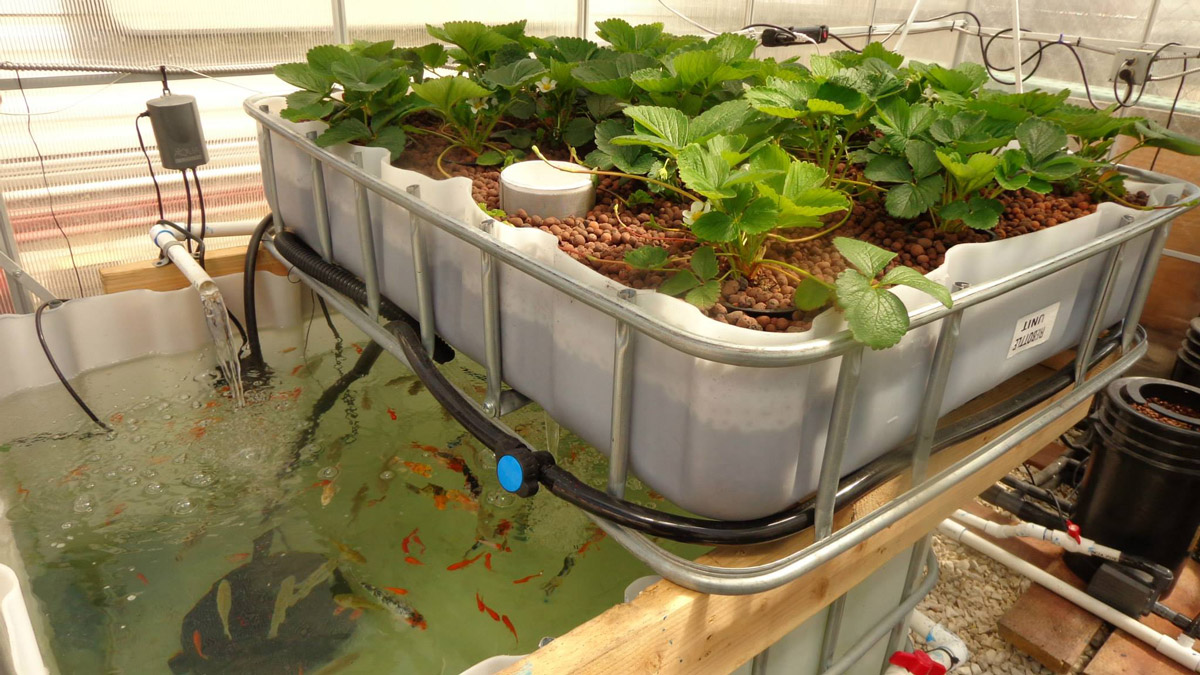
Choosing the right plants and fish for your IBC aquaponic system is critical to its success. Selecting suitable fish like tilapia or trout, depending on your climate, is essential for maintaining a healthy aquaponic environment.
For a 150-gallon system, you can house about 18 fish if you follow the guideline of 1 pound of fish per 8 gallons of water.
For plants, opt for varieties such as lettuce, spinach, basil, and mint. These not only grow quickly but also thrive with the nutrients provided by your fish, creating a symbiotic relationship within your system.
Consider these emotional aspects:
- Joy: Watching your fish swim while your plants flourish above.
- Pride: Harvesting your own sustainably grown herbs and greens.
- Peace: Cultivating a mini ecosystem that brings balance and beauty to your space.
7. System Cycling and Monitoring

To start cycling your IBC aquaponic system, you’ll need to introduce an ammonia source, such as fish food or pure ammonia, to kick off the growth of beneficial bacteria.
This initial step is crucial for converting ammonia to nitrites and eventually to nitrates. During the cycling process, which typically takes 4 to 6 weeks, you must monitor water parameters closely.
Use a reliable water testing kit weekly to check levels of ammonia, nitrites, and nitrates. Ideal readings should show ammonia and nitrites at 0 ppm and nitrates between 5-40 ppm.
Adjust inputs as necessary to maintain these conditions. Once ammonia and nitrite levels consistently read 0 ppm and nitrates are stable, your system is ready for fish, indicating a successfully established bacterial colony.
8. Oxygenation and Aeration Techniques

Ensuring your IBC aquaponic system maintains high oxygen levels is crucial for the health and productivity of both fish and plants.
Using an air pump that delivers at least 28.5 liters of air per minute ensures your fish tank remains well-oxygenated, meeting the vital needs of your aquatic inhabitants.
- Invest in a robust air stone: This tool disperses tiny air bubbles throughout the tank, vastly improving oxygen exchange and the overall aeration.
- Utilize oversized water pumps: Opt for a pump that circulates at least 225 gallons per hour. It not only distributes nutrients effectively but also enhances oxygen absorption through increased water movement.
- Regular checks: Always monitor the oxygen levels; maintaining a saturation of 6-8 mg/L is essential to prevent stress and fatalities in fish.
9. Managing Water Quality

After discussing how to optimize oxygen levels, let’s focus on another key aspect of IBC aquaponic systems: water quality management.
Regular monitoring of pH is crucial, aiming between 6.8 and 7.5 to ensure the health of both fish and plants. Weekly testing of ammonia, nitrite, and nitrate levels is essential; keep ammonia below 0.5 ppm and nitrites at 0 ppm, while aiming for nitrates between 20-40 ppm to promote healthy growth.
Proper oxygenation is also vital; I use air pumps and stones to meet the oxygen demands of the fish. Additionally, implementing a swirl filter helps capture debris, maintaining clean water flow and preventing blockages, especially in densely stocked systems.
Lastly, I make it a routine to replace 10-15% of the water weekly to balance nutrients and prevent harmful buildups.
10. Routine Maintenance Tips

Maintaining an IBC aquaponic system requires diligent routine care to ensure the health and productivity of both fish and plants.
Keeping a close eye on pH levels, ammonia, and water temperature forms the backbone of routine maintenance.
Here’s what you should focus on:
- Regularly Test pH Levels: Aim for a pH range of 6.8 to 7.2. Fluctuations can drastically impact the wellbeing of your system.
- Monitor Ammonia Levels: Keep ammonia at 0 ppm to avoid toxicity. This is crucial for fostering a safe environment for your aquatic life.
- Check Water Temperature: Ensure it remains within the ideal range for your specific fish species to promote optimal growth and health.